Is the electronics maker Sharp named after a pencil?
Yes. In Japan a mechanical pencil is called a “sharp pencil,” after a pencil Tokuji Hayakawa began making in 1915, and his company later took its name from it.
36samples
Ask for a “sharp pencil” in a stationery shop in London or New York and you may get a puzzled look, or an ordinary pencil with a freshly sharpened point. In Japan, though, shāpu penshiru, or shāpen for short, is the everyday word for what Americans call a mechanical pencil and Britons a propelling pencil. The Digital Daijisen dictionary lists it as wasei-eigo: English-looking vocabulary made in Japan.
So where did the “sharp” come from? The trail leads to a metalworker in 1910s Tokyo, and to the beginnings of the electronics company Sharp.
A 19th-century idea
Pencils that push out their lead were nothing new. According to the Victoria and Albert Museum in London, Sampson Mordan and John Isaac Hawkins took out a British patent in 1822 for a writing instrument that made the “frequent cutting or mending” of its point unnecessary. The Japanese encyclopedia Sekai Daihyakka Jiten says such pencils reached Japan in 1877, during the Meiji era (1868–1912), and were soon copied by craftsmen in Tokyo’s Asakusa district under the name kuridashi enpitsu, “push-out pencils.”
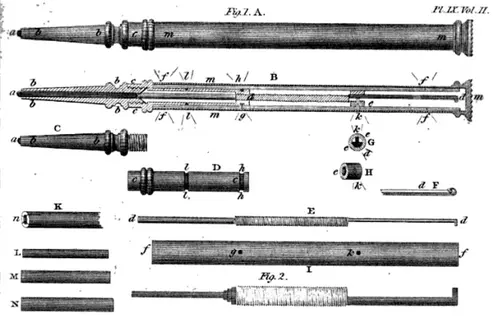

In the United States, a pencil called the Eversharp appeared in the 1910s. U.S. patent records show that its inventor, Charles R. Keeran of Illinois, applied for his patent in October 1913 and received it in March 1915. (Some Japanese encyclopedias say Keeran launched the Eversharp in 1838, a date the patent record doesn’t support.)
A better pencil from Tokyo
The man who made the metal mechanical pencil a success in Japan was Tokuji Hayakawa (1893–1980). According to Sharp’s official centennial history, he was pulled out of school in second grade and, before he turned eight, was sent to work as an apprentice to a metalworker. In 1912, not yet 19, he opened his own workshop in Tokyo, and his first registered invention was a belt buckle.
In 1915 a large stationery firm ordered a batch of metal fittings for mechanical pencils from him. The pencils themselves, with thick celluloid barrels, were clumsy and fragile, “like a luxury toy,” in the words of the company history. Hayakawa reasoned that a pencil as practical as a fountain pen could make a business, and he threw himself into improving it. He made the internal fittings from a single sheet of brass, shaped them into a tapering tube with a groove inside to guide the lead, and swapped the celluloid for a nickel-plated metal barrel.
Wholesalers were unimpressed. Metal didn’t go with kimono, they said, and it felt cold in winter. Itoya, the famous stationery store in Tokyo’s Ginza district, sent him back to revise his design again and again; by the end there were 36 versions. The breakthrough came from abroad. World War I had cut off supplies of German metal pencils, and a trading house in Yokohama asked for pencils to export. Once the pencil won a reputation overseas, orders poured in at home, too.
Ever ready, ever sharp
Hayakawa had planned to call his product the “Sharp Pencil.” Then Shotaro Fukui, whose firm held the sales rights in the Kansai region around Osaka, suggested “Ever-Ready Sharp Pencil”: a pencil whose point is always ready and always sharp. According to the company history, Fukui argued that “ready” sounded like “lady,” and that hinting at a favorite of foreign ladies would make the name a better advertisement. Hayakawa registered it as a trademark, but people soon shortened it to the name he had first had in mind, and “sharp pencil” became the Japanese word for any metal mechanical pencil.
The Nihon Kokugo Daijiten, Japan’s largest dictionary, traces the word to the English “eversharp pencil.” Either way, the Eversharp and the Ever-Ready Sharp sold the same promise: a point that never needed sharpening.
From pencils to radios
On September 1, 1923, the Great Kanto Earthquake destroyed Hayakawa’s factory. Two of his children were killed, and his wife, who had been badly burned, later died. Pressed to repay a debt, he handed his pencil business over to the Osaka firm that had been selling his pencils and moved to Osaka to teach its workers how to make them.
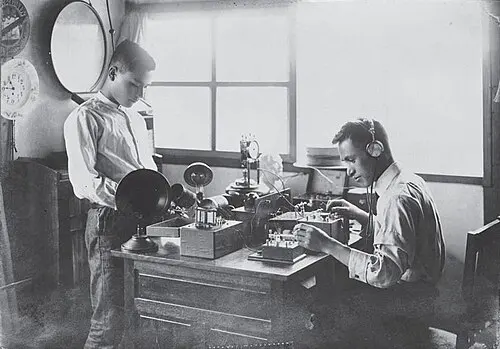
Exactly a year after the earthquake, on September 1, 1924, Hayakawa opened a new workshop in Osaka. Radio broadcasting was about to begin in Japan, and he started building crystal radio sets, which he branded “Sharp.” The company history says the name honored his popular pencil and also stood for the sets’ sensitivity. The firm later became Hayakawa Electric Industry and, in 1970, Sharp Corporation. The company didn’t give its name to the pencil; the pencil gave its name to the company.