Who invented karaoke?
No single person can claim it. Shigeichi Negishi built the first machine in 1967, and Daisuke Inoue’s device from around 1971 helped launch the boom.
1967
Microphone in hand, eyes on the lyrics scrolling across the screen, you sing along to the music. Karaoke was born in Japan and has spread so far that English simply borrowed the Japanese word.
So who invented it? Look into the question, and several “fathers of karaoke” step forward.
A word from the broadcasting business
Start with the name. According to an English-language report from the Japan Patent Office, karaoke was originally a technical term in the radio broadcasting industry. As opposed to a live performance or an orchestra, a tape of the accompaniment with no vocals was called a kara orchestra, kara meaning “empty,” and this was shortened to karaoke. The Japanese encyclopedia Nipponica likewise says the music industry used the word for backing-only tapes that singers used for practice and recording.
By the late 1960s, amateur singers had started singing along to karaoke tapes, and people in different parts of Japan began trying to turn the idea into a machine.
A Tokyo workshop, 1967
The machine generally considered the first was the Music Box, built in 1967 by Shigeichi Negishi, who ran a small business in Tokyo assembling electrical parts.
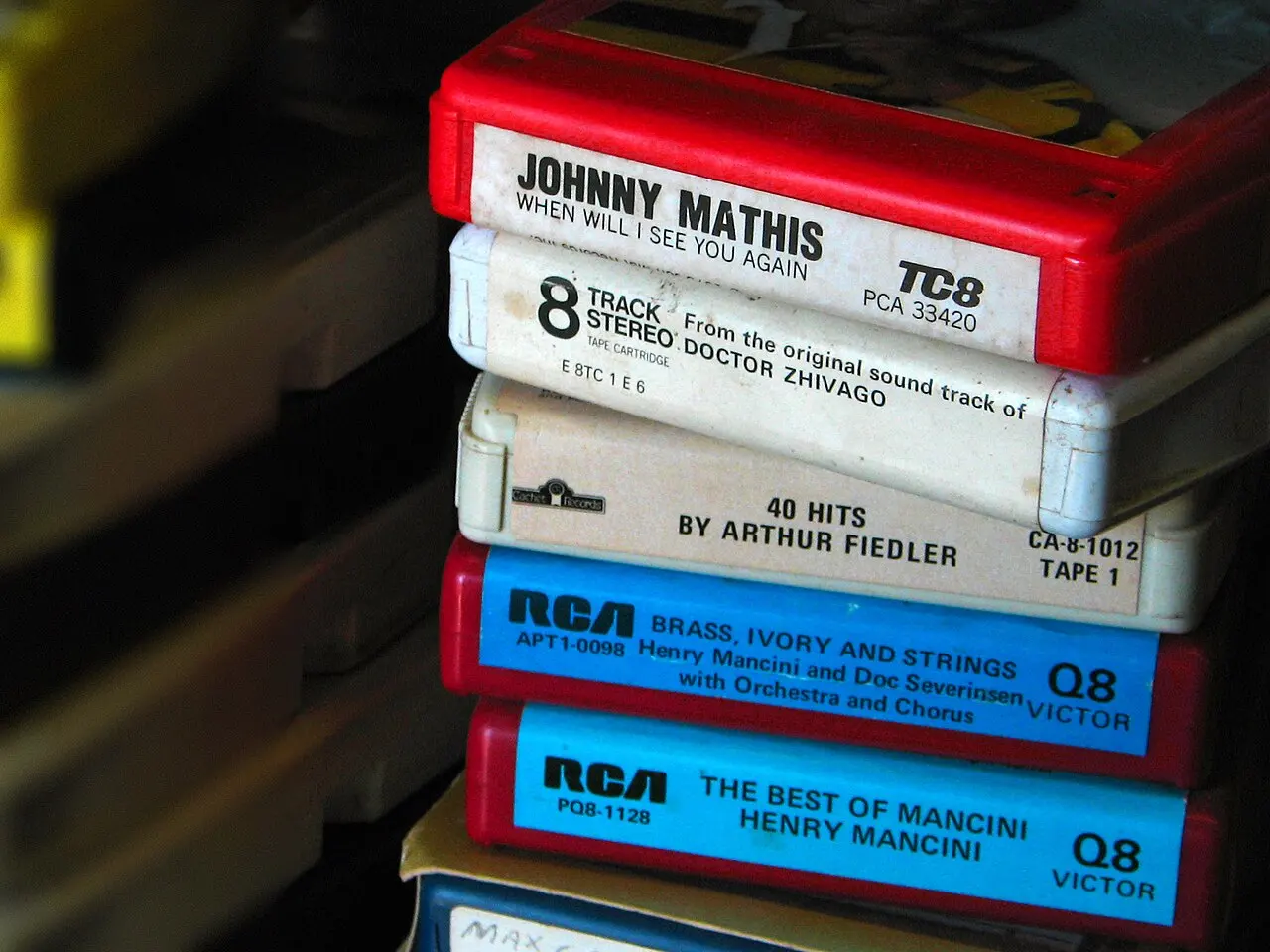
It combined an eight-track tape player with a microphone and a mixer to blend voice and backing music. It came with 20 instrumental tracks, a coin-operated timer that gave you 10 minutes of singing for 100 yen, and a lyrics card. A trading company leased the machines to restaurants, coffee shops and bars, and in 1969 the device was renamed the Sparko Box. Negishi later recalled that he had wanted to call it karaoke, but his distributor objected that the word sounded too much like kanoke, Japanese for “coffin.”
Negishi never took out a patent. At the time, he said, it would have cost 200,000 to 300,000 yen and taken about three years. After surveys and interviews, the All-Japan Karaoke Industrialist Association concluded that his was the first machine with the essential features of karaoke. In 2025 the IEEE, the world’s largest professional organization for engineers, recognized it as an IEEE Milestone, an honor for landmark achievements in electrical and electronic technology. Negishi had died the year before, in January 2024, at the age of 100.

A Kobe musician and the 8 Juke
The person best known around the world for spreading karaoke, though, is Daisuke Inoue, who played in a band in Kobe, accompanying customers who wanted to sing.
According to the Japan Patent Office report, Inoue took eight-track tapes, the kind used in car stereos, and built a device that mixed them with the sound from a microphone, adding a small amplifier and a coin timer that ran for five minutes per 100 yen. To fit into the smallest bars, its front measured only about 30 centimeters (12 inches) square. Known as the 8 Juke, it was completed around 1971 and became a big hit. According to the All-Japan Karaoke Industrialist Association, in 1971 Inoue made his own backing tapes with 40 songs on eight tracks and began renting them to bars.
Inoue never patented his device either. Even so, in 1999 Time magazine’s Asian edition named him one of the most influential Asians of the century. In 2004 he received the Ig Nobel Peace Prize, a tongue-in-cheek award, “for inventing karaoke, thereby providing an entirely new way for people to learn to tolerate each other.”
Others were working on similar ideas at the same time. In the Kansai region around Osaka, the amateur singing coach Toshiharu Yamashita sold backing tracks on eight-track tape. And in the Philippines, Roberto del Rosario, who held a patent on a sing-along system he developed in 1975, is often described as karaoke’s inventor.
Singing in a private box
What took karaoke further still was the karaoke box, a private room where you sing only for your own group. According to the Japan Patent Office report, the first karaoke box was created in 1985 in Okayama Prefecture by Yoichi Sato, a former truck driver who converted a truck’s cargo container. People too shy to sing in front of strangers could now enjoy it with friends, and families, women and high school students became new customers.
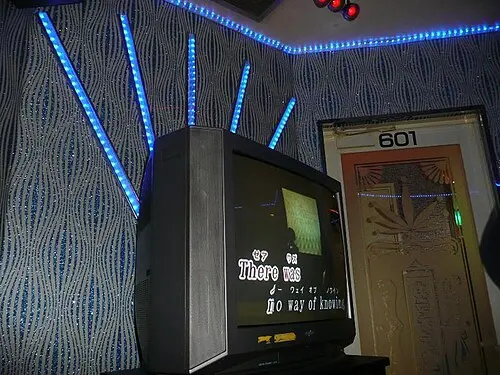

In the 1990s karaoke boxes spread into city centers, starting with Tokyo’s Sangenjaya district, and in 1992 “online karaoke,” which delivers backing tracks over communication lines, arrived. The All-Japan Karaoke Industrialist Association estimates that Japan’s karaoke market was worth about 510.8 billion yen in fiscal 2025.