When was the kotatsu invented?
It is said to have begun in the Muromachi period (1336–1573), when a wooden frame and quilt were set over a sunken hearth. Electric versions spread in the late 1950s.
Slide your legs under it on a cold day, and warmth seeps slowly into your whole body. Add a bowl of mandarin oranges, and it is all too easy to doze off. The kotatsu, a low table with a heater underneath and a quilt draped over its frame, is part of winter life in Japan.
Instead of heating a whole room, it warms only the small space enclosed by the quilt, an idea that feels very Japanese. So when, and how, did it come into being?
A frame over the hearth
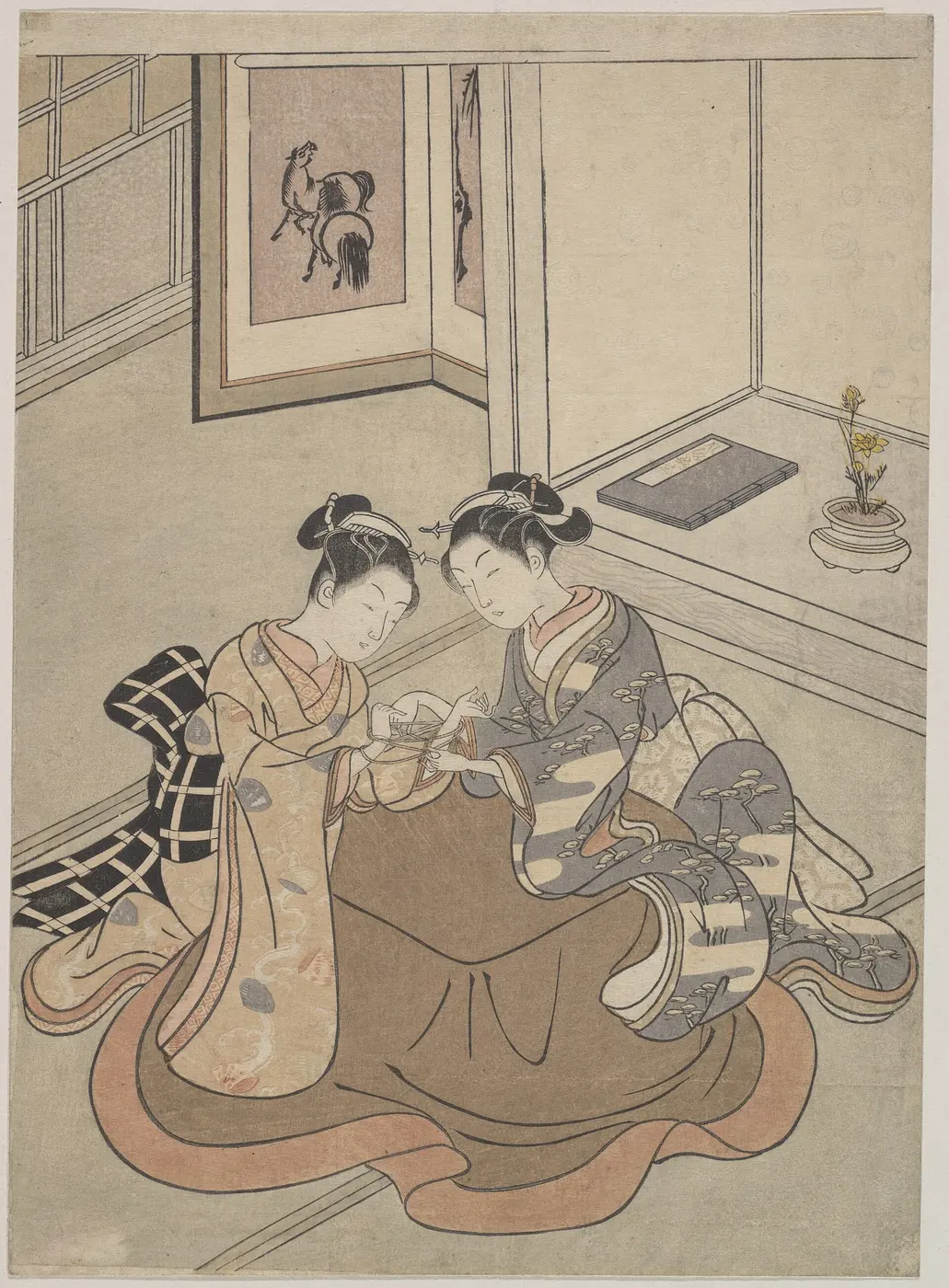
Nobody knows exactly where the kotatsu began, but it is generally traced to the Muromachi period, when people started placing a wooden frame, called a yagura, over the irori, the sunken hearth in the floor of a traditional house. According to Heibonsha’s World Encyclopedia, people at first seem to have set the frame over the hearth once the fire had burned down to glowing embers, covered it with things like paper garments, and rested their feet on the frame to warm them. The early frames were low, with slatted tops rather than a lattice.
This arrangement, a fire pit cut into the floor with a frame on top, was the forerunner of the horigotatsu, or sunken kotatsu. The word kotatsu itself is said to come from the Japanese reading of a Chinese term for a heated platform, as pronounced in the Song dynasty.
A portable version in the Edo period
By the early Edo period (1603–1868), sunken kotatsu had been installed even inside the imperial palace. Around the Genroku era (1688–1704) they were in fairly wide use among ordinary people, and in Osaka ready-made kotatsu frames were already on sale.
This was also when the okigotatsu, or portable kotatsu, appeared. Cheap clay braziers were often kept in wooden boxes so they would not break, and according to the encyclopedia, it seems that someone swapped the box for a frame and draped a quilt over it. There was no need to dig into the floor, and it could be moved wherever you liked.
The biggest reasons the kotatsu spread were the growing availability of cotton quilts and the rising production of fuels such as charcoal and charcoal briquettes. In Edo there was even a custom of bringing out the kotatsu on the first Day of the Boar in the tenth month of the old lunar calendar. The boar was thought to protect against fire, so starting the heating that day was believed to keep the house safe from blazes all winter.

The heat moves from the floor to the frame
The kotatsu remained an essential source of warmth for ordinary families through the Meiji era and beyond, but in the 20th century it changed shape.
One change was in the sunken kotatsu. The style common today, with the floor of the pit about 40 centimeters (16 inches) down so that you sit on the edge and let your legs hang, became widespread only in the Showa era (1926–1989).
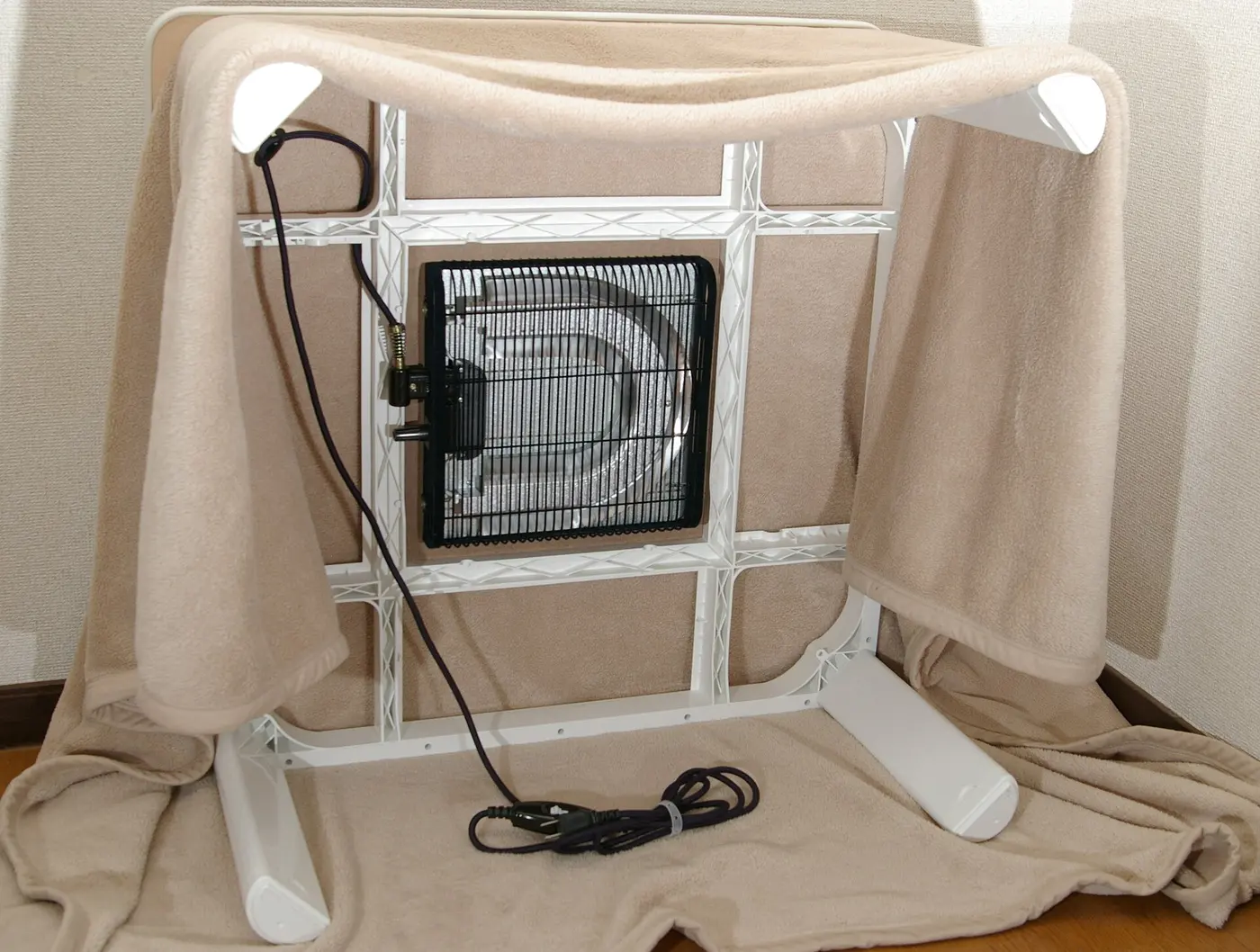
The other change was electricity. From around 1955, electric kotatsu began to replace charcoal. In 1957 an electric model with the heater attached to the frame itself was developed, and it went on to reach almost every home in Japan. With nothing burning at your feet and the heat coming from above, this is the basic design of the kotatsu we know today.

Why the red glow?
Many people in Japan remember lifting the quilt to find the inside of the kotatsu glowing bright red.
According to an explainer on HugKum, a parenting site run by the publisher Shogakukan, the electric kotatsu sold in 1957 simply had a nichrome heating wire behind a wire mesh. In 1960 a kotatsu with an infrared lamp appeared and caught on, promoted with its “warm-looking red light” and claims that infrared rays improved circulation.
Infrared itself is invisible, though, and has no color. The red glow is extra visible light, there because people feel warmer when they see it. Many heaters today no longer glow red, but the heater maker Metro Electric says it still hears from many customers who miss “that red color” of the kotatsu.
In 1975, high-end kotatsu that looked more like furniture than appliances were developed, a step toward today’s models that, with the quilt removed, serve as ordinary living-room tables all summer.