Is the saxophone named after a person?
Yes. It was devised by the Belgian-born instrument maker Adolphe Sax, who patented it in 1846, and it bears his surname.
1846
A jazz solo that brings the house down, a soaring line in a concert band: the gleaming brass saxophone is loved all over the world. And the “sax” in its name is a surname, belonging to the man who invented it.
His name was Adolphe Sax, an instrument maker born in what is now Belgium in the 19th century. And the saxophone was not the only instrument he named after himself.
The sound of Sax
The first detailed account of the saxophone is generally traced to an article by the French composer Hector Berlioz in the Paris newspaper Journal des Débats on June 12, 1842. According to Adolphe Sax and His Saxophone, a 1949 biography by Leon Kochnitzky published by the Belgian Government Information Center, Berlioz introduced “the Saxophone, named after its inventor,” as a brass instrument with nineteen keys and a mouthpiece like that of a bass clarinet. The “-phone” comes from the Greek word for sound or voice, as in “telephone.”
It was a new kind of instrument: a metal tube played with a reed, like a woodwind. To this day the saxophone is classed as a woodwind, even though its body is made of metal, because it makes its sound with a single reed, just like a clarinet.
Berlioz praised its tone as “full, soft, vibrating, extremely powerful.” But since the instrument he described was a bass one, he also predicted that it would never be suited to rapid passages or complicated arpeggios. Considering what jazz players would later do with it, that is quite an ironic forecast.
Born into an instrument-making family
Adolphe Sax was born on November 6, 1814, in Dinant, a town in what is now southern Belgium. His given name was Antoine-Joseph. His father, Charles-Joseph Sax, was an instrument maker who moved the family to Brussels the following year and was appointed instrument maker to the king. At the time, Belgium and the Netherlands formed a single kingdom.
Adolphe grew up in his father’s workshop, studied the flute at the Brussels Conservatory and also took clarinet lessons. At fifteen, he showed two ivory flutes and an ivory clarinet of his own making at the Brussels Industrial Exhibition.
After moving to Paris in 1842, he introduced one improved instrument after another. His greatest success was the saxhorn, a family of brass instruments built in a range of sizes. Then came the saxotromba and the saxtuba, more instruments bearing his name. According to Kochnitzky, Sax was granted no fewer than 35 patents.
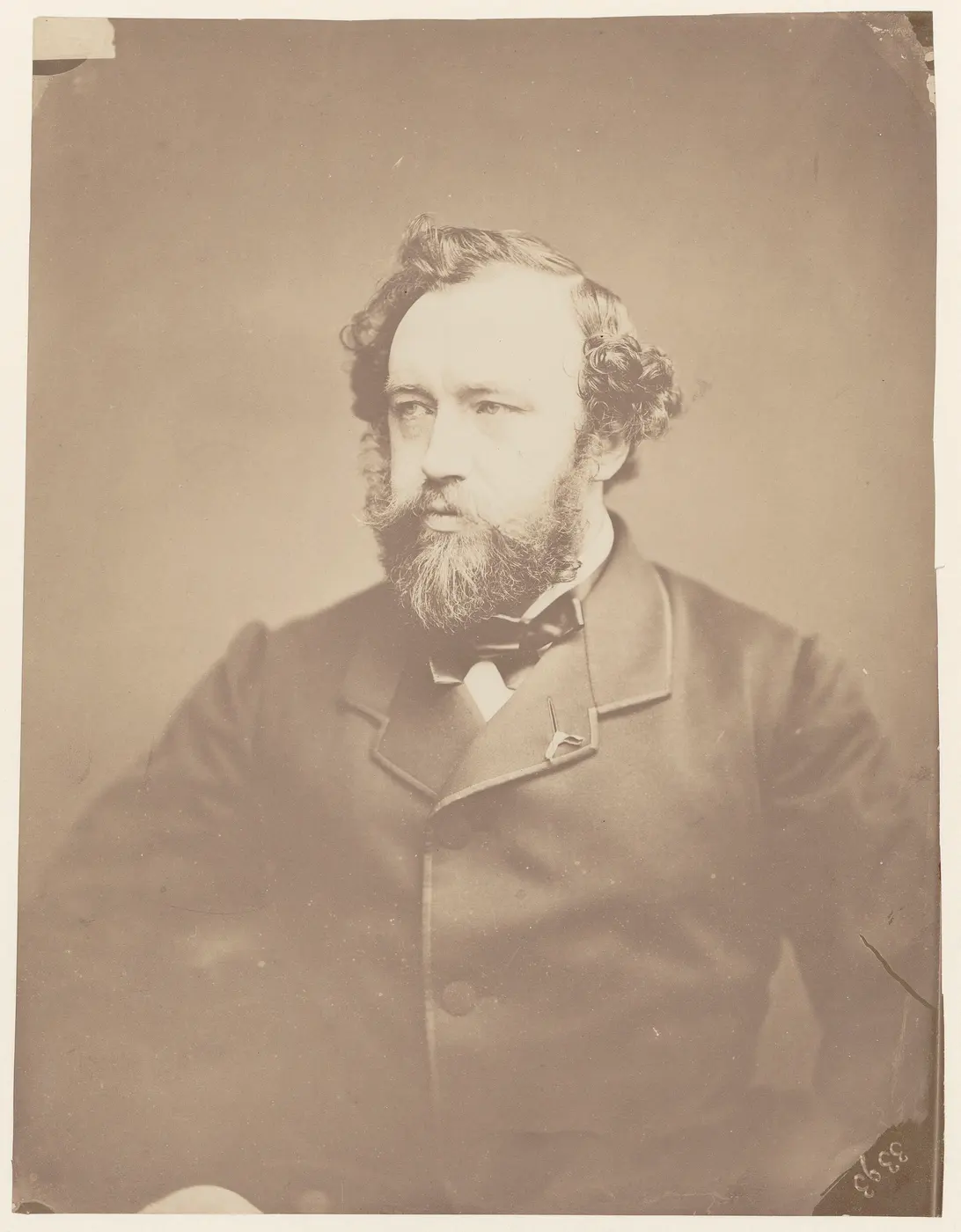

The ghost-child of Dinant
Some astonishing stories are told about Sax’s childhood. He fell down a flight of stairs and hit his head on a stone floor. He swallowed a needle. He fell onto a hot stove. He drank vitriol, mistaking it for milk. A falling brick struck him on the forehead. He was also said to have been burned in a gunpowder explosion and to have nearly died after falling asleep in a room full of freshly varnished furniture. Having survived it all, the story goes, he became known as “the ghost-child of Dinant.”
These tales trace back to a biography written in 1860, while Sax was still alive, by the music critic Oscar Comettant. It was a glowing tribute, and later scholars have regarded it as heavily romanticized and not entirely reliable. How much is true is anyone’s guess, but the stories live on as a fitting legend for a turbulent life.
A musical duel before 20,000 people
Sax’s success in Paris also made him enemies. Rival instrument makers went to court to have his patents thrown out, and in 1845 one of their lawyers declared that the saxophone had never existed, could not possibly exist, and was nothing but a charlatan’s trick.
That same year, as France set out to reform its military bands, a band equipped with Sax’s instruments and one using traditional instruments were set to compete in public on the Champ-de-Mars in Paris. According to Kochnitzky, more than 20,000 Parisians gathered at noon on April 22. Seven of Sax’s players failed to turn up, and Sax himself arrived late, carrying two instruments to play in turn and fill the gaps. His band won anyway, decisively, and the reform of the military bands was decreed later that year.
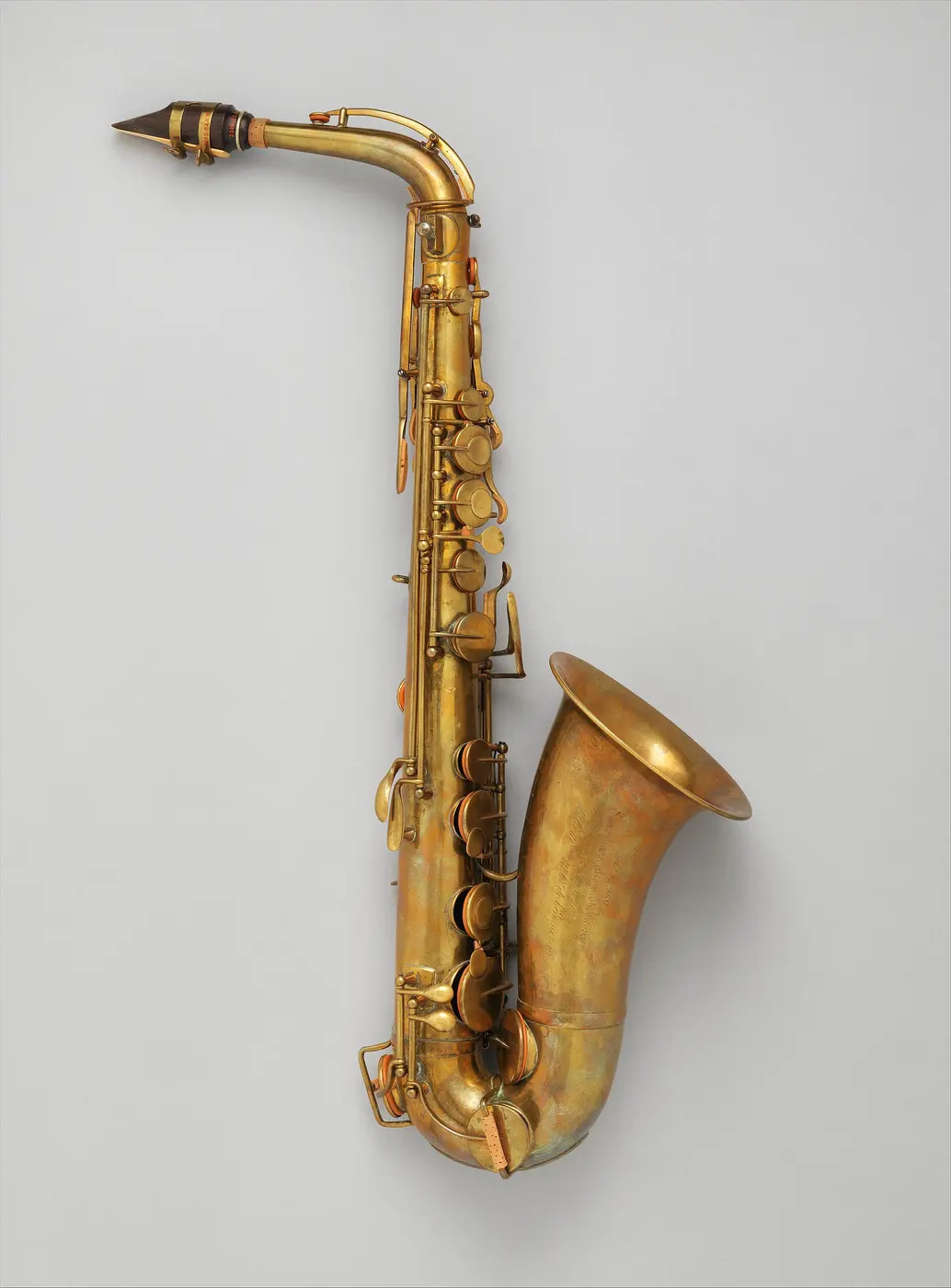

In 1846 the saxophone patent was granted. But the legal battles dragged on for more than twenty years, and Sax is said to have been driven into bankruptcy three times. When he died in Paris in 1894, he was reportedly living in poverty. The saxophone never became a regular member of the orchestra, but it spread around the world through military bands, and in the 20th century it became the star of jazz, keeping its inventor’s name ringing out.