Why does Ravel’s Boléro repeat the same rhythm?
Because Ravel designed it as an experiment. He limited all change to instrumental color and volume, turning the whole piece into one long crescendo.
A quiet snare drum rhythm drifts in, as if from far away. Over it, a flute begins a tune with a faintly exotic air. That is how Boléro by the French composer Maurice Ravel begins.
For roughly the next 15 minutes the snare drum never stops tapping out the same rhythm, and only two melodies ever appear. Even so, the music keeps swelling and thickening until it ends in a deafening collapse. Why would Ravel write a piece that does almost nothing but repeat itself?
A rush job
It began with a commission from the Russian-born dancer Ida Rubinstein, who asked Ravel for music for a Spanish-style ballet to be staged at the Paris Opéra.
Ravel first planned to orchestrate pieces from Iberia, a piano suite by the Spanish composer Isaac Albéniz. But in June 1928 he learned that the rights to orchestrate it already belonged to the conductor Enrique Fernández Arbós. With the premiere approaching, Ravel decided to write an entirely new piece based on the bolero, a Spanish dance.
He composed it between mid-July and mid-October 1928, and it was first performed as a ballet at the Paris Opéra on November 22 that same year.
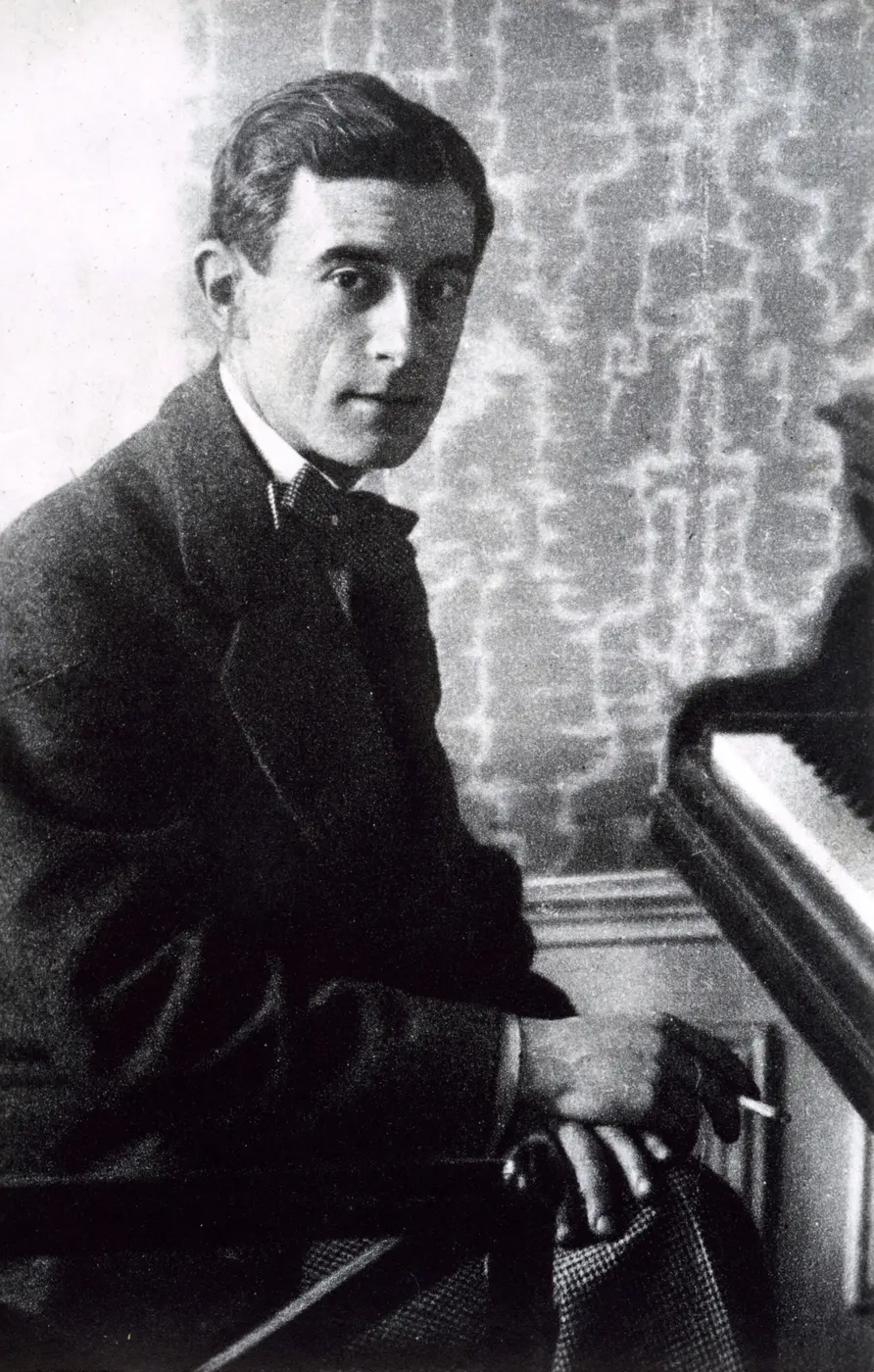

Only the instruments and the volume change
The design of Boléro is startlingly simple. The snare drum repeats a two-bar rhythm 169 times across some 340 bars. On top of it, two melodies take turns, each played twice before the other returns. The key stays in C major until just before the end.
So what changes? The instruments. The tune passes from flute to clarinet to bassoon, and on to saxophones and the oboe d’amore, an instrument rarely heard in an orchestra. As more instruments pile in, the sound grows richer and the volume creeps upward. Then, near the end, the music lurches once into E major before snapping back to C major for the close.
Ravel explained the piece himself in a 1931 interview with a British newspaper, the Daily Telegraph. It was, he said, an experiment in a very special and limited direction: a piece lasting seventeen minutes and consisting wholly of “orchestral tissue without music,” one very long, gradual crescendo. There were no contrasts, he added, and practically no invention except the plan and the manner of execution. In other words, Boléro deliberately throws away melodic and harmonic development and tries to build a whole piece out of changing orchestral color alone.
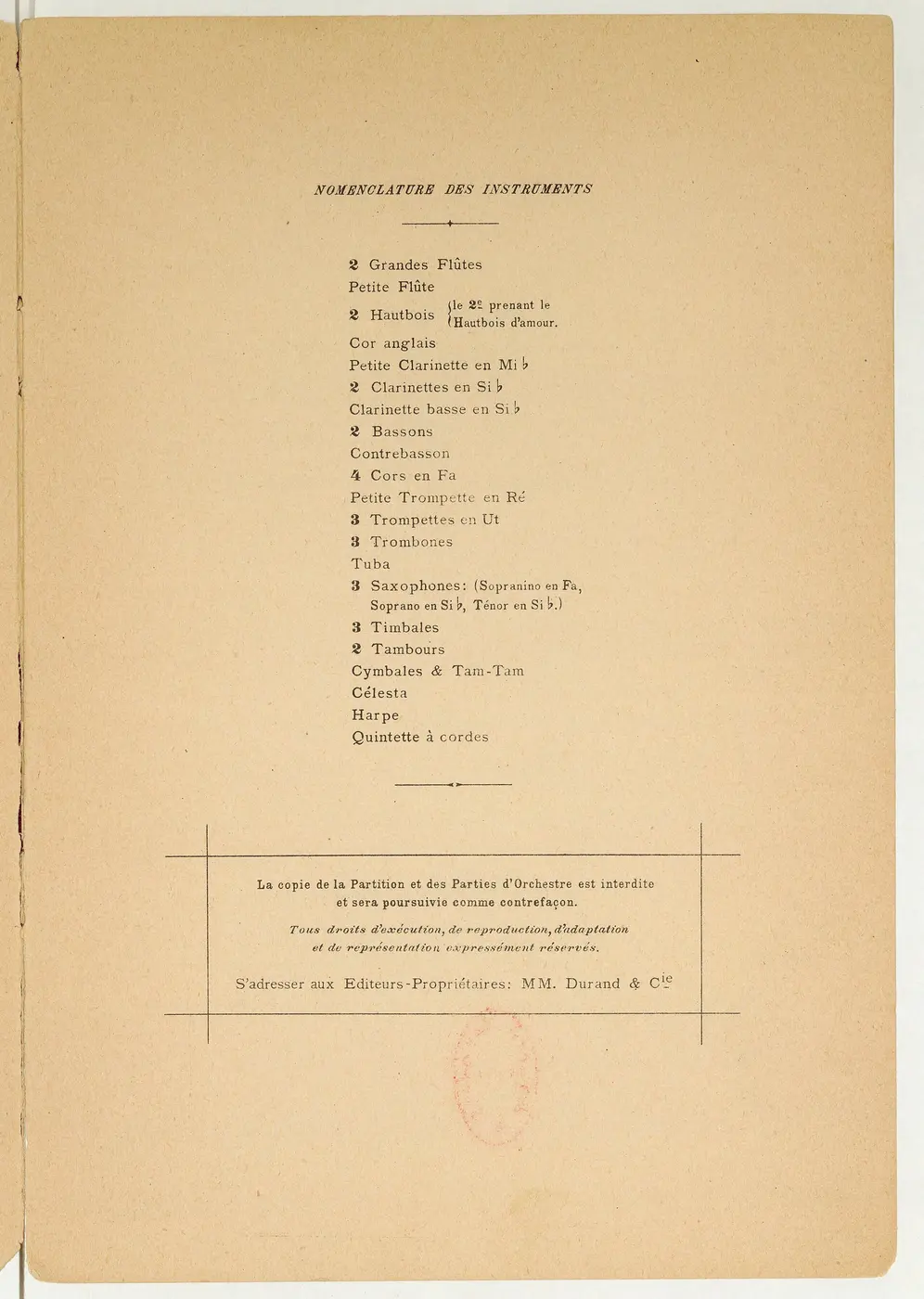

Inspired by factory machines
Ravel loved machines. According to his brother Édouard, he adored anything mechanical, from simple tin toys to the most intricate machine tools, and happily went along to factories and exhibitions of machinery. Ravel himself told a newspaper in 1932 that Boléro owed its inception to a factory, and Édouard later revealed that it was a particular one at Le Vésinet, on the northwestern outskirts of Paris.
Ravel wanted the ballet’s set to include something like a factory production line. But Rubinstein, who had commissioned the work, and the choreographer Bronislava Nijinska set it in a Spanish tavern instead. The factory staging Ravel had wanted reached the Paris Opéra only in 1941, after his death.
Late in life, Ravel developed a brain disease that impaired his speech and movement and left him unable to compose, and he died in 1937. In 2002, neurologists suggested that the influence of the disease might already be audible in the repetitions of Boléro. That remains a hypothesis, however, and it has been disputed. Ravel himself had explained his aims clearly.