Does salt make water boil faster?
No. Dissolving salt actually raises water’s boiling point, but by less than 0.2°C at cooking strengths, so the time to a boil barely changes.
0.17°C
You’re about to cook pasta, the water is nearly boiling, and you throw in a handful of salt. Instantly the pot fizzes and foams. Perhaps that’s why so many people believe salt makes water boil faster.
Measure it with a thermometer, though, and the truth runs the other way. Salt water has to get hotter than plain water before it boils. So what were all those bubbles?
Salt water is harder to boil
Water molecules are always escaping from the surface of water, a few at a time. As the temperature rises, so does their tendency to escape, known as vapor pressure. When it matches the pressure of the air above, bubbles of steam start forming inside the water itself. That is boiling, and at sea level it happens at 100°C (212°F).
Dissolve salt, and sodium and chloride ions mingle with the water, making it harder for water molecules to break free. As Lesley-Ann Giddings, a chemist at Middlebury College in Vermont, explained to Live Science, salt makes it harder for water molecules to escape into the gas phase, which gives salt water a higher boiling point. This is called boiling point elevation.
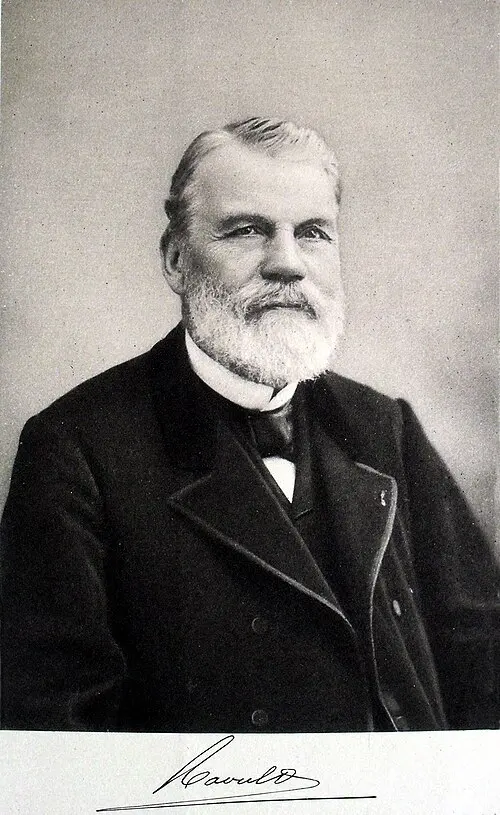

The French chemist François-Marie Raoult of the University of Grenoble studied this behavior of solutions in detail. In the 1880s he showed that how far a solution’s freezing point and vapor pressure drop depends not on what is dissolved but, to a good approximation, on how many dissolved particles there are. Table salt, sodium chloride, splits into two kinds of ions in water, so it has roughly twice the effect of the same number of sugar molecules.
Less than a fifth of a degree
So how big is the effect? Dissolve one mole of particles, about 6 × 10²³ of them, in a kilogram of water and the boiling point goes up by about 0.52°C (0.94°F). Add 10 grams of salt to a liter of water, about a 1 percent solution, and the calculation gives a rise of roughly 0.17°C (0.3°F). According to Giddings, with a teaspoon of salt (less than 3 grams) per liter, the difference in time to boil is a few seconds at most. Even water as salty as the sea, about 3.5 percent, boils only about 0.6°C (1°F) higher.
Salt water does have one thing going for it. Gram for gram, it takes slightly less heat to warm it by a degree. But Giddings points out that it still has a higher boiling point, and adding salt to the same volume of water makes it heavier, so it doesn’t boil faster. Mike Dammann of the Southwest Research Institute in Texas calculated that 20 percent salt water, 80 grams of water plus 20 grams of salt, would heat almost 25 percent faster than 100 grams of pure water. Nobody would want to cook in anything that salty.
Where the fizz comes from
Then what causes the burst of bubbles? The key is that boiling needs somewhere to start.
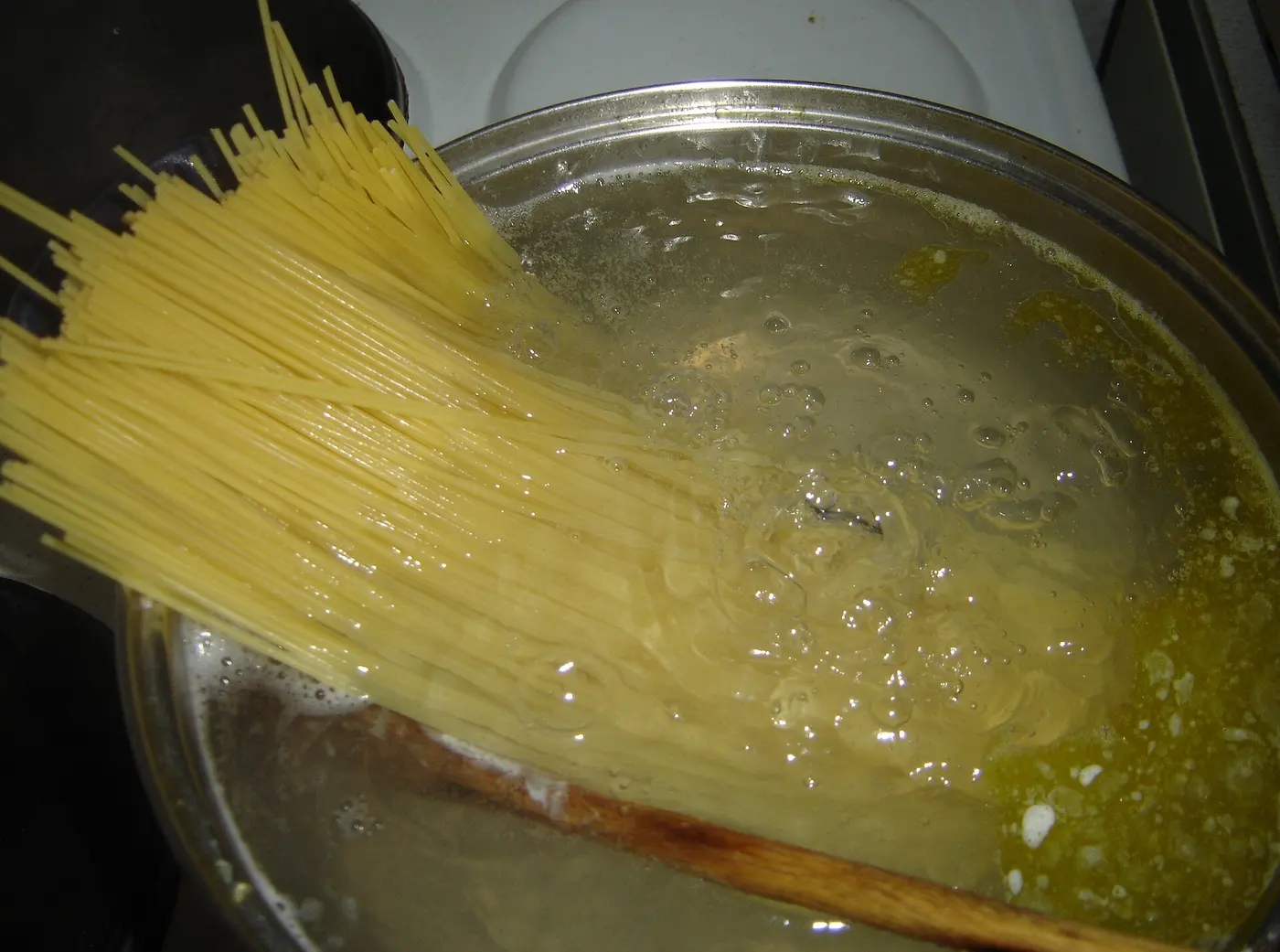
Even near 100°C, steam bubbles don’t easily form out of nothing. They grow from starting points, or nuclei, such as tiny scratches in the bottom of the pot or small pockets of air that were dissolved in the water. When you drop salt into water that is close to boiling, the rough surfaces of the grains, and the air they carry in with them, are thought to provide fresh nuclei, so vapor that was ready to form bubbles suddenly does. It’s the same reason chemists drop boiling chips into a flask before heating it. The water hasn’t gotten any hotter, and once the salt dissolves, the effect is over.

The opposite can happen too. A liquid that gets too hot with nothing to start bubbles can suddenly boil over all at once, which is why a cup of water heated in a microwave sometimes erupts. Japan’s National Institute of Technology and Evaluation (NITE) advises not overheating drinks in the microwave and stirring powders such as instant coffee into the water before heating.
In other words, salt goes into pasta water for flavor, not to speed up the boil.