Did Salieri poison Mozart?
There is no evidence that he did. The rumor spread some 30 years after Mozart’s death, and Pushkin’s play and the film Amadeus turned it into a story everyone knows.
36years
In the 1984 film Amadeus, Antonio Salieri is the court composer so eaten up with envy of the young Mozart’s genius that he drives him to his death. The film won eight Academy Awards, including Best Picture, and made a name that had long been familiar mainly to music specialists suddenly famous around the world.
Yet no evidence has ever been found that Salieri poisoned Mozart. So when did the rumor start, and how did it spread?
A pillar of musical Vienna
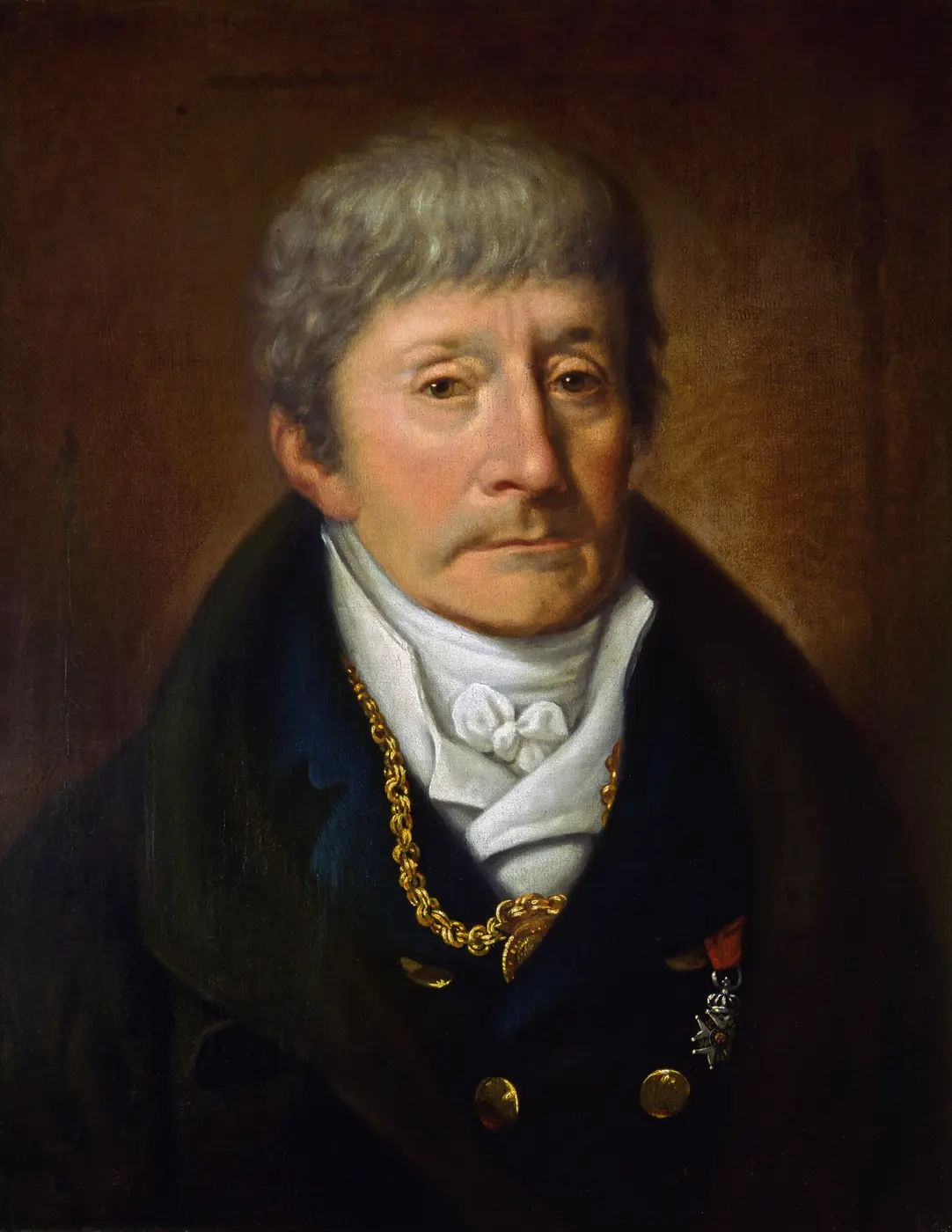
Salieri was born in 1750 in Legnago, in the Republic of Venice. According to the Allgemeine Deutsche Biographie, the standard German biographical dictionary, he had lost both parents and was studying in Venice when Florian Gassmann, a composer to the Viennese court, spotted his talent. In June 1766, at the age of 15, Salieri arrived in Vienna with him.
His career went smoothly from there. When Gassmann died in 1774, Salieri succeeded him, and he later scored hits at the Paris Opéra with works such as Les Danaïdes. In 1788 he was appointed Kapellmeister to the imperial court, a post he held for 36 years, until 1824.
He was also a busy teacher. Beethoven, Schubert and, as a boy, Liszt all studied with him.

Rivals and colleagues
The two men certainly were rivals. In 1786, before the premiere of The Marriage of Figaro, Mozart’s father, Leopold, wrote to his daughter that “Salieri and all his satellites will again move heaven and earth” to make the opera fail. At court, the two were competing for the same audiences.
But there is also evidence that they worked together. In 1785, to celebrate the return to the stage of the English soprano Nancy Storace, who had briefly lost her voice, Salieri, Mozart and a composer named Cornetti each wrote part of a short cantata. The text was by Lorenzo Da Ponte, who would soon write the libretto for Figaro. The music was long thought lost, until November 2015, when the German musicologist and composer Timo Jouko Herrmann came across it in the catalog of the Czech Museum of Music in Prague. Speaking to the Associated Press, Herrmann said the piece pointed to a fairly friendly relationship between the two.
There is also a letter Mozart wrote to his wife in October 1791, less than two months before he died. He had taken Salieri to see his new opera, The Magic Flute, and reported that Salieri watched and listened intently, and that from the overture to the final chorus there was not a single number that did not draw a “bravo!” or a “bello!” from him.
Where the rumor began
The first person to talk of poison was Mozart himself. According to Franz Xaver Niemetschek, whose biography of the composer appeared in 1798, Mozart fell ill in the autumn of his final year and told his wife, Constanze, that he was sure someone had given him poison. But Niemetschek names no one, and Salieri does not appear in the story.
The rumor became attached to Salieri some 30 years later. The Allgemeine Deutsche Biographie records that in October 1823, when he was in his seventies, Salieri was struck by paralysis, and his mind became confused and haunted by dark visions. Word soon went around Vienna that he had blurted out a confession to poisoning Mozart.
Around this time, his former pupil, the pianist Ignaz Moscheles, visited him on his sickbed. According to Moscheles’s own account, Salieri told him in broken sentences: “I can assure you as a man of honour that there is no truth in the absurd report; of course you know — Mozart — I am said to have poisoned him; but no — malice, sheer malice.” Moscheles, for his part, never believed the rumor either. Salieri died on May 7, 1825.
How a rumor became a story
It was the Russian poet Alexander Pushkin who turned the rumor into drama. In Mozart and Salieri, a short play written in 1830, Salieri, consumed by jealousy of Mozart’s genius, drops poison into his glass over dinner. In 1897 Nikolai Rimsky-Korsakov made the play into an opera.
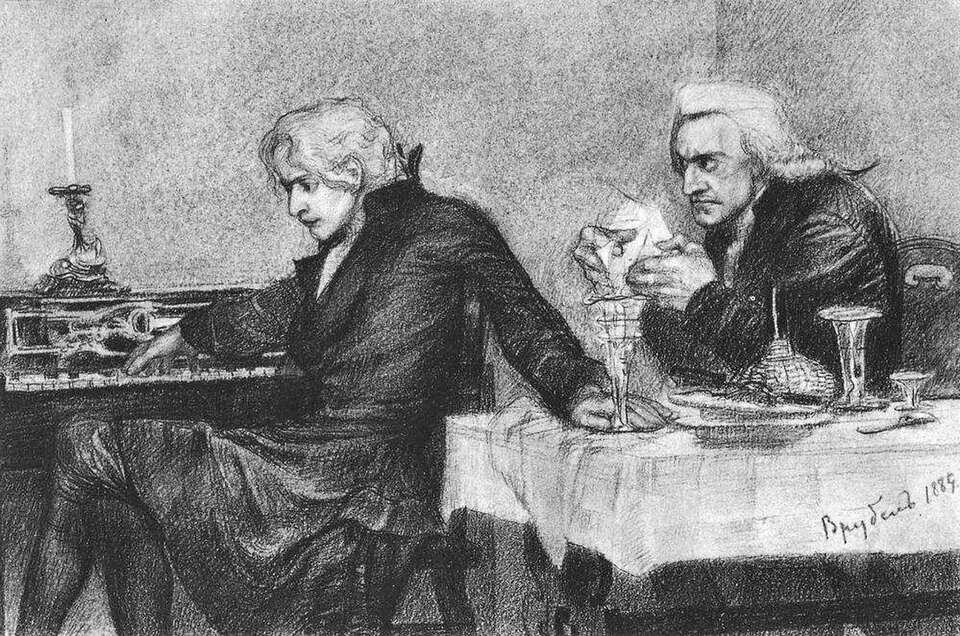

In the 20th century, the British playwright Peter Shaffer wrote Amadeus (1979), which Miloš Forman then adapted for the screen.
So what actually killed Mozart, who died at 35? Over the years, suggestions have ranged from kidney failure to trichinosis. A 2009 study in the Annals of Internal Medicine examined Vienna’s official death registers from the period and found that deaths from severe swelling, or edema, rose sharply among younger men in the weeks around Mozart’s death. Since eyewitnesses described severe swelling as the hallmark of his final illness, the researchers concluded that the most likely cause was a kidney disease that can follow a streptococcal infection.