Was Sakamoto Ryoma’s trip Japan’s first honeymoon?
In 1866 Ryoma traveled with his wife, Oryo, to the Kirishima area in southern Kyushu. But neither the word nor the custom of the honeymoon existed in Japan then; “Japan’s first honeymoon” is a later label.
18days
The city of Kirishima in Kagoshima Prefecture, at the southern tip of Kyushu, proudly calls itself the site of Japan’s first honeymoon. In 1866, near the end of the Edo period (1603–1868), Sakamoto Ryoma, one of the best-loved heroes of the era that toppled the shogunate, came here with his wife, Oryo, to soak in the hot springs and climb a mountain.
The trip is described, with drawings, in a long letter Ryoma wrote to his older sister Otome back home in Tosa (now Kochi Prefecture). The letter is held by the Kyoto National Museum and designated an Important Cultural Property, and Japan’s Agency for Cultural Affairs describes it as a “famous report of a honeymoon.” But was it really Japan’s first?
A trip to heal wounds
The trip began with an attack. On the night of the 23rd day of the first month of 1866 (by the old lunar calendar), officials surrounded the Teradaya, an inn in Fushimi on the edge of Kyoto, where Ryoma was staying. According to the Sakamoto Ryoma Memorial Museum in Kochi, it was Oryo, who was in the bath, who noticed first and ran to warn him. Ryoma fought back with a pistol and escaped, but his hands were badly cut.
Saigo Takamori and Komatsu Tatewaki, leaders of the powerful Satsuma domain, suggested he recuperate at Kirishima’s hot springs. The couple left Kyoto on the 29th day of the second month, boarded a Satsuma steamship at Osaka, and reached Kagoshima on the 10th day of the third month.
When did they marry? Oryo later recalled 1864, but according to the memorial museum, Ryoma first clearly calls her his wife in the very letter reporting this trip. The museum thinks he married her after the Teradaya attack, once she had saved his life.
Fishing, shooting and hot springs
On the 16th day of the third month, the couple crossed Kagoshima Bay by boat and stayed at Hinatayama hot spring. The next day they moved on to Shiohitashi, a spring said to be good for wounds, where they stayed 11 nights.
Ryoma wrote that they fished in the mountain streams and shot birds with a pistol, which was “truly great fun.” They also visited the nearby Inukai Falls and the hot springs, places so rare, he wrote, that they seemed to belong to another world.
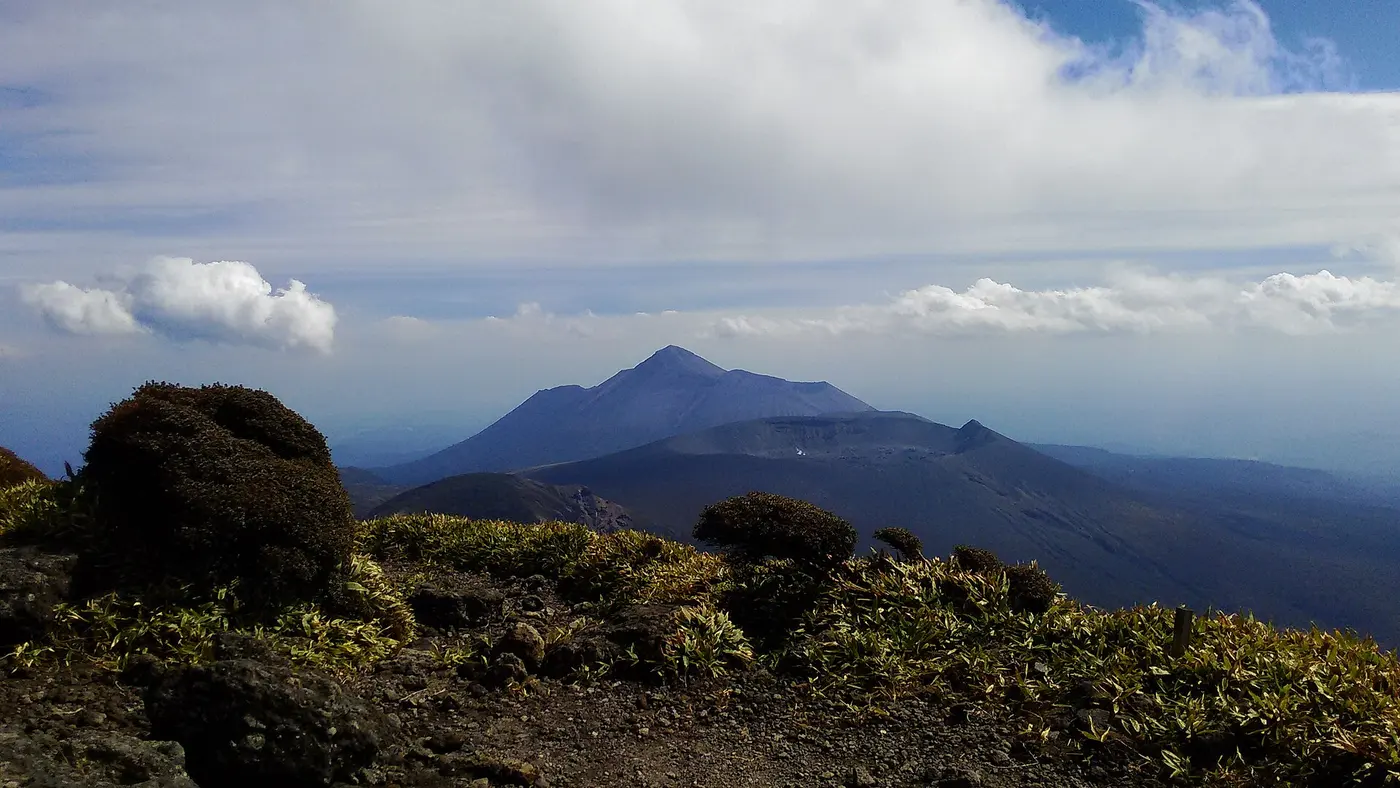

On the 29th day of the third month (May 13 by today’s calendar), the pair climbed Takachiho-no-mine, a peak of the Kirishima range where, in Japanese myth, the grandson of the sun goddess descended from heaven. The trail, covered in volcanic debris, was so hard that Ryoma wrote he nearly cried, and on the narrow path along the crater rim it looked so dangerous that he took Oryo by the hand.
Pulling out the heavenly spear
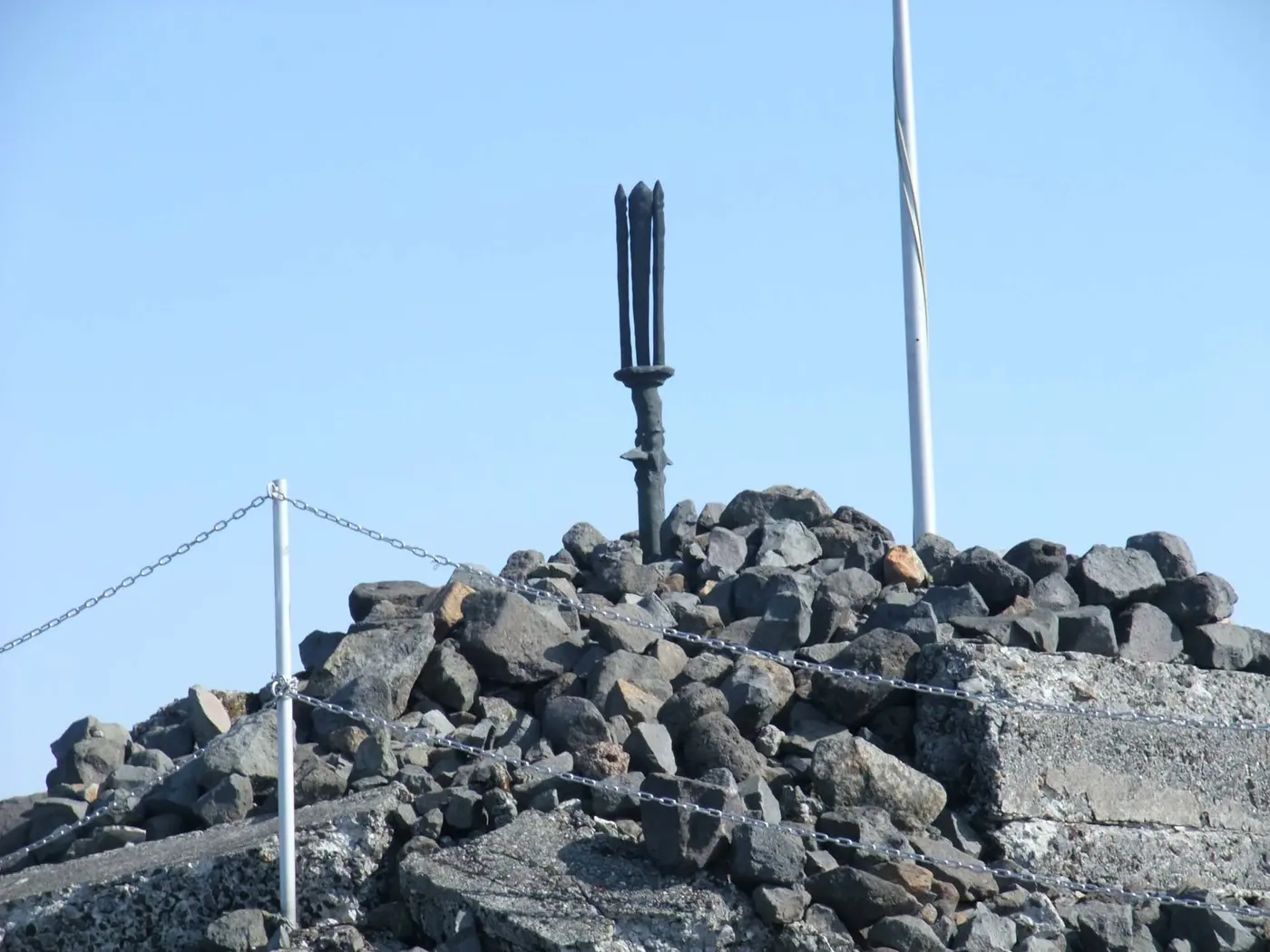
On the summit stands the Ama-no-Sakahoko, the “heavenly upside-down spear,” linked to the same myth. According to Kirishima City, Ryoma wrote that its top looked exactly like the face of a tengu, a long-nosed goblin, and the two of them laughed out loud. It wobbled, too, so they grabbed the tengu by the nose and, with a heave, pulled the whole thing out. It turned out to be only about 4 or 5 shaku long (1.2 to 1.5 m, or 4 to 5 feet), and they promptly put it back.
The letter includes sketches of the mountain and the spear. Teiichi Miyagawa of the Kyoto National Museum notes that the spear, drawn in detail from the front and the side, could hardly have been sketched from memory, and suspects Ryoma copied it from a work by the Nagasaki painter Kinoshita Itsuun. The letter, more than 1.6 m (5 feet) long, was written in Nagasaki on the 4th day of the 12th month, some eight months after the climb.

A label added later
According to the Nihon Kokugo Daijiten, Japan’s largest dictionary, the Japanese word for honeymoon, shinkon ryoko, was coined as a translation of the English term. Its earliest cited use is in a book on Tokyo customs written around 1900, which notes that some fashionable young gentlemen, following Western ways, set off on a “honeymoon” right after the wedding. In Ryoma’s day, neither the word nor the custom existed yet.
The trip was also partly a medical one. The Kyoto National Museum keeps its distance, calling it the trip “regarded as the so-called honeymoon,” and Kirishima City itself says only that it “is said to be” Japan’s first.
What’s more, according to Kirishima City’s timeline, Komatsu Tatewaki was taking the waters at nearby Einoo hot spring with his own wife at the same time. They arrived on the 14th day of the third month, two days before Ryoma and Oryo set out, and on the 28th Ryoma and Oryo paid them a visit. As a couple heading for the Kirishima springs, the Komatsus beat Ryoma by two days.