Do roses really have thorns?
Not in the botanical sense. A rose’s “thorns” are prickles: outgrowths of the stem’s surface rather than modified branches or leaves, which is why they snap off so easily.
Every rose has its thorn, as the saying goes, and anyone who has grabbed a rose stem carelessly knows the sting at the fingertip.
Botanists, however, file roses separately from cacti or citrus trees. In everyday English we call all of these sharp points “thorns,” but plant scientists use three different words, because sharp points on plants come from three different origins.
Three ways to make a point
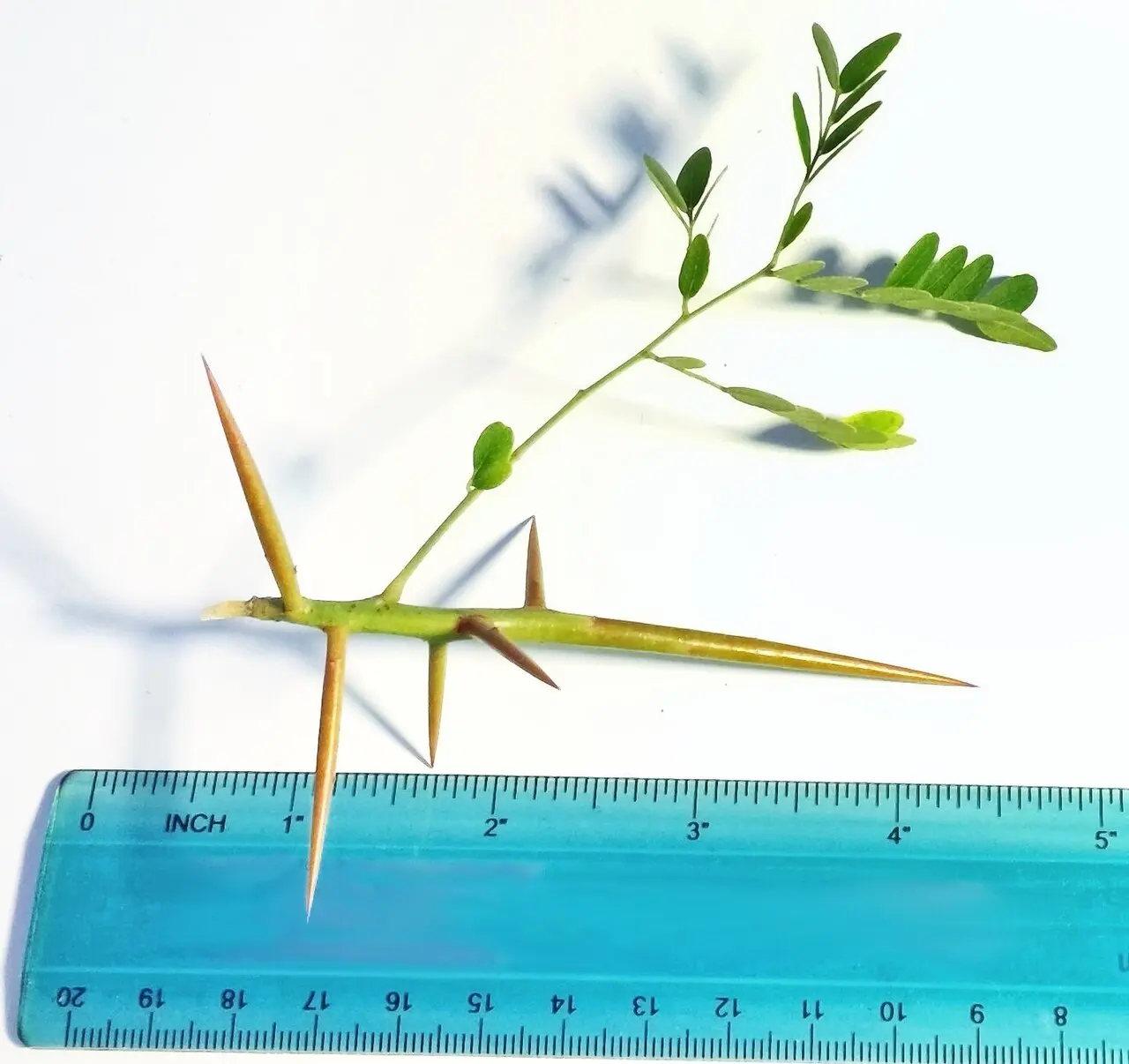
The Japanese encyclopedia Nipponica explains that some of these points are modified stems and others are modified leaves. A true thorn is a stem, or shoot, that has been reshaped into a spike. It grows from the base of a leaf, right where a side branch would normally sprout, and it can be found on hawthorns, flowering quinces and honey locusts, among others. A spine is a modified leaf, and the textbook example is the cactus. In some plants, like the black locust, the little leaflike flaps at the base of a leaf, called stipules, have turned into spines.

The points on roses and raspberries are neither. According to Nipponica, they are outgrowths of the skin of the stem, built from the epidermis together with the cortex just beneath it. Nothing was transformed; the surface of the stem simply rose into a point. Botanists call these prickles.
Location gives the game away. Thorns grow at the bases of leaves, and spines sit wherever a leaf or stipule would be, but rose prickles are usually scattered irregularly along the stem. Oddly enough, some of the rose’s own relatives in the rose family, such as hawthorns and flowering quinces, carry true thorns.
They snap right off
You can feel the difference with your fingers. A 2021 paper in the journal Horticulture Research by a team including scientists at INRAE, France’s national agricultural research institute, explains that thorns and spines contain vascular bundles, the plumbing that carries water and nutrients, and cannot easily be separated from the plant. Prickles have no such plumbing and are generally easy to remove. That is why a rose prickle pops off cleanly when you push it sideways, while a true thorn, being part of a branch, stays firmly attached.
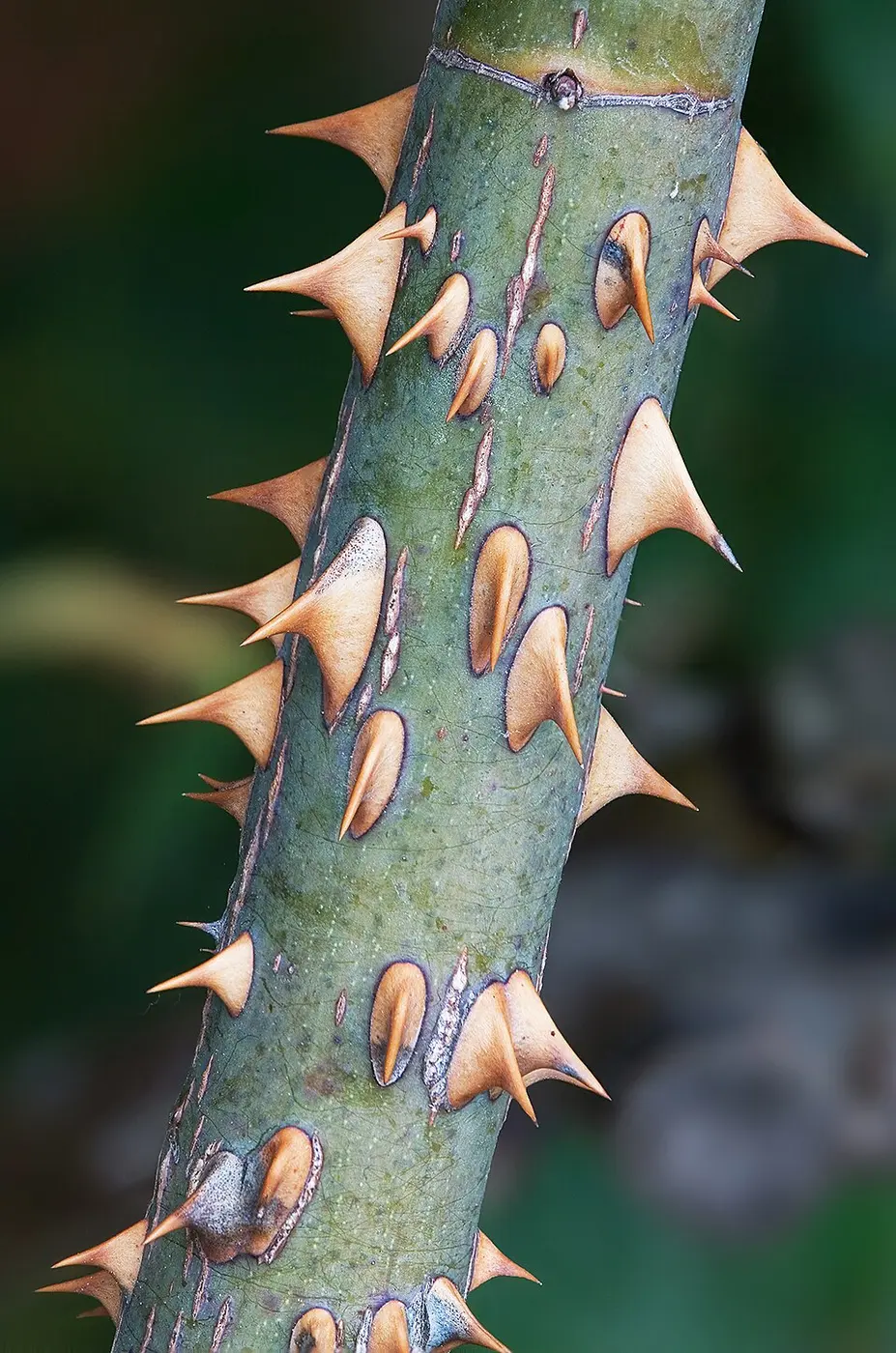

Exactly which cells a rose prickle grows from is still debated. Nipponica describes prickles as a kind of plant hair, and a 2011 study in the Canadian journal Botany concluded that raspberry and rose prickles are modified glandular hairs. The INRAE-led team disagreed. After examining 110 kinds of roses, it reported that prickles arise from cells just beneath the layer that becomes the epidermis, and are not modified hairs at all.
Invented again and again
According to a study published in Science in 2024, prickles have evolved independently at least 28 times in the history of plants. They help deter animals that would eat the plant, and they also help plants climb by hooking onto other vegetation, compete with their neighbors, and hold on to water.
The researchers, led by a group at Cold Spring Harbor Laboratory in New York, looked at eggplants and their wild relatives, some of which have lost their prickles. They traced at least 16 separate losses to a gene called LOG, which activates a plant hormone known as cytokinin. Using that knowledge, they used gene editing to create prickle-free plants of the desert raisin, a wild relative whose sweet berries First Nations people in central Australia have gathered for thousands of years. Related genes turned out to help build prickles in plants as distant as rice and roses. When the team turned down the LOG gene in roses, prickle growth was suppressed in some of the plants. For cut-flower growers, whose blooms get scratched and whose workers get stabbed, that could be good news.