Where did Japan’s radio exercises come from?
Inspired by radio exercise broadcasts sponsored by an American life insurance company, Japan’s government postal insurance bureau launched them in 1928 to mark the enthronement of Emperor Hirohito.
25.93 million
At 6:30 on a summer morning, children and grandparents gather in a neighborhood park in Japan. A piano starts up on the radio, a calm voice calls out the moves, and everyone swings their arms and twists in time. Afterward, the kids get a stamp on the attendance card hanging around their necks. Rajio taisō, or radio exercises, is part of almost every Japanese childhood summer vacation.
It seems like a thoroughly Japanese scene, but the idea of exercising to the radio came from abroad. And the people who brought it to Japan were not teachers or broadcasters. They worked for an insurance bureau.
Borrowed from an American insurer
In 1916, Japan’s Ministry of Communications, which ran the postal service, started a government life insurance program for ordinary people. The program’s modern successor, Japan Post Insurance, has published a detailed timeline of what came next. In 1923, an official of the insurance bureau named Inokuma was sent abroad to study insurance businesses overseas. In 1925, an American life insurance company began broadcasting health exercises on the radio, and in July that year Inokuma wrote an essay in a ministry-affiliated journal introducing the idea to Japan.
The company is generally said to have been the Metropolitan Life Insurance Company of New York, which sponsored morning exercise broadcasts from 1925. For an insurer, healthy policyholders who live longer are good for business, too. The Japanese bureau’s own stated aim was for radio exercises to make people healthier, extend their lives and let them live happily.
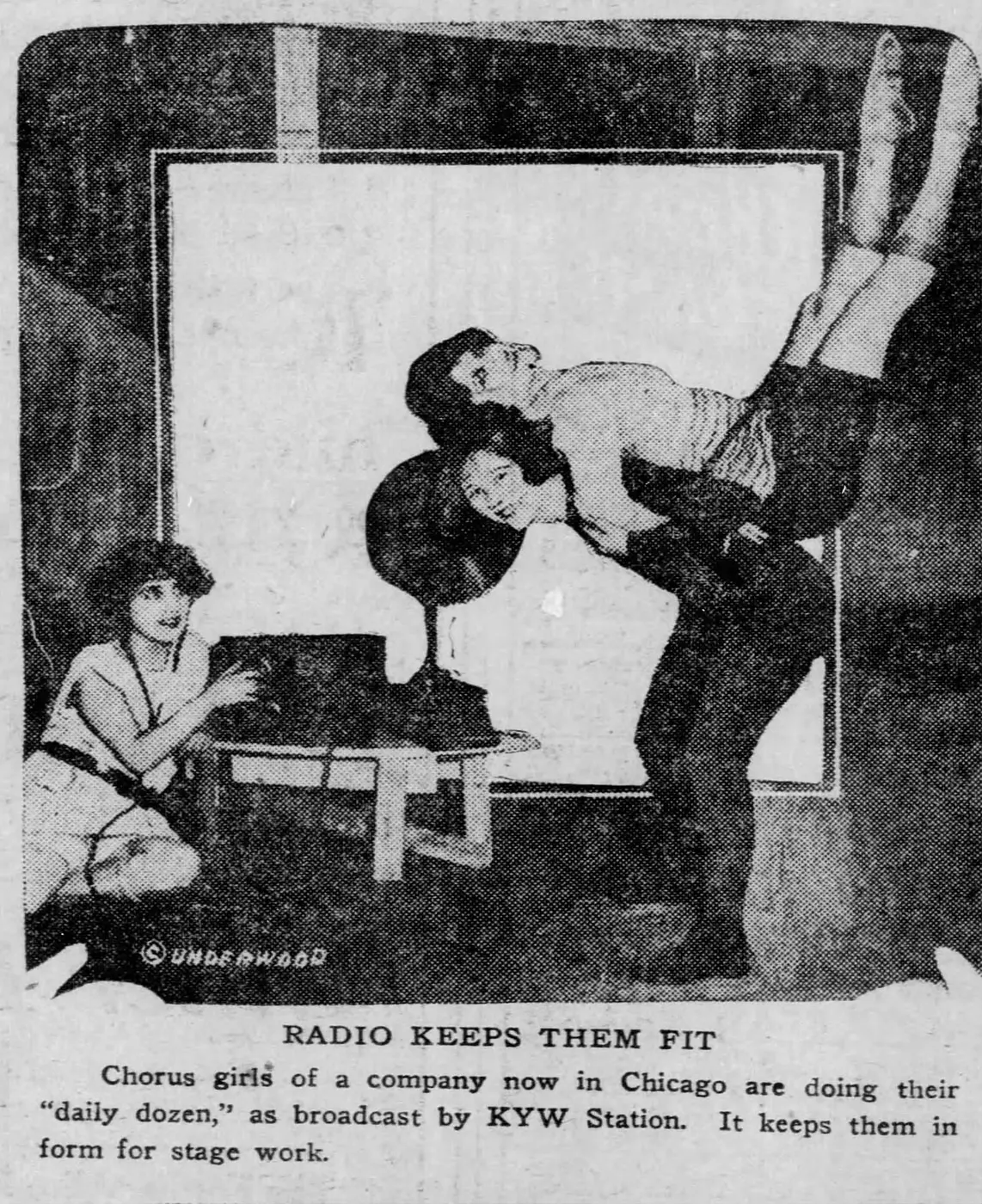

In 1927, another official who had toured abroad, Shindō, published an article calling for an exercise broadcast that people of any age could follow easily, anywhere, indoors or out. America was not the only model, though. The head of the bureau was also interested in the Sokol movement in Czechoslovakia, in which huge numbers of people exercised together. A 2024 paper by Yoshihiro Sakita of Hokkaido University and colleagues untangles the two strands: the idea of using radio came from the United States, while the movements themselves drew on the gymnastics popular in 1920s Europe.
A gift for an enthronement
The decision to launch radio exercises was taken during discussions about national projects to commemorate the enthronement of Emperor Hirohito (known in Japan as Emperor Shōwa). The routine itself was designed by experts recruited through the Ministry of Education, and in the fall of 1928 it was officially adopted as “National Health Exercises,” with the help of the national broadcaster and the ministry. At 7 a.m. on November 1, the Tokyo station began broadcasting it, with announcer Riichi Egi calling out the moves. By the following February it was being broadcast nationwide.
The habit of gathering outdoors to exercise together on summer mornings took root early, too. In July 1930, a police officer named Omodaka in the Kanda district of Tokyo started a radio exercise club with local residents. It began as an early-rising club for children and spread across the country. In the summer of 1932, total attendance at radio exercise gatherings nationwide reached 25.93 million. Sakuma Park in Kanda is still known as the birthplace of the radio exercise gatherings.
Interrupted, then reborn
After World War II, radio exercises briefly disappeared. According to Japan Post Insurance, prompted in part by suggestions from the Allied occupation authorities, the national broadcaster NHK stopped airing the prewar routine in April 1946. It was replaced by three new routines that could be done without spoken commands, but they were complicated, the broadcast times were erratic in the postwar chaos, and they never caught on. The broadcasts ended in August 1947. The third of those routines is still remembered as the “phantom Radio Exercise No. 3.”
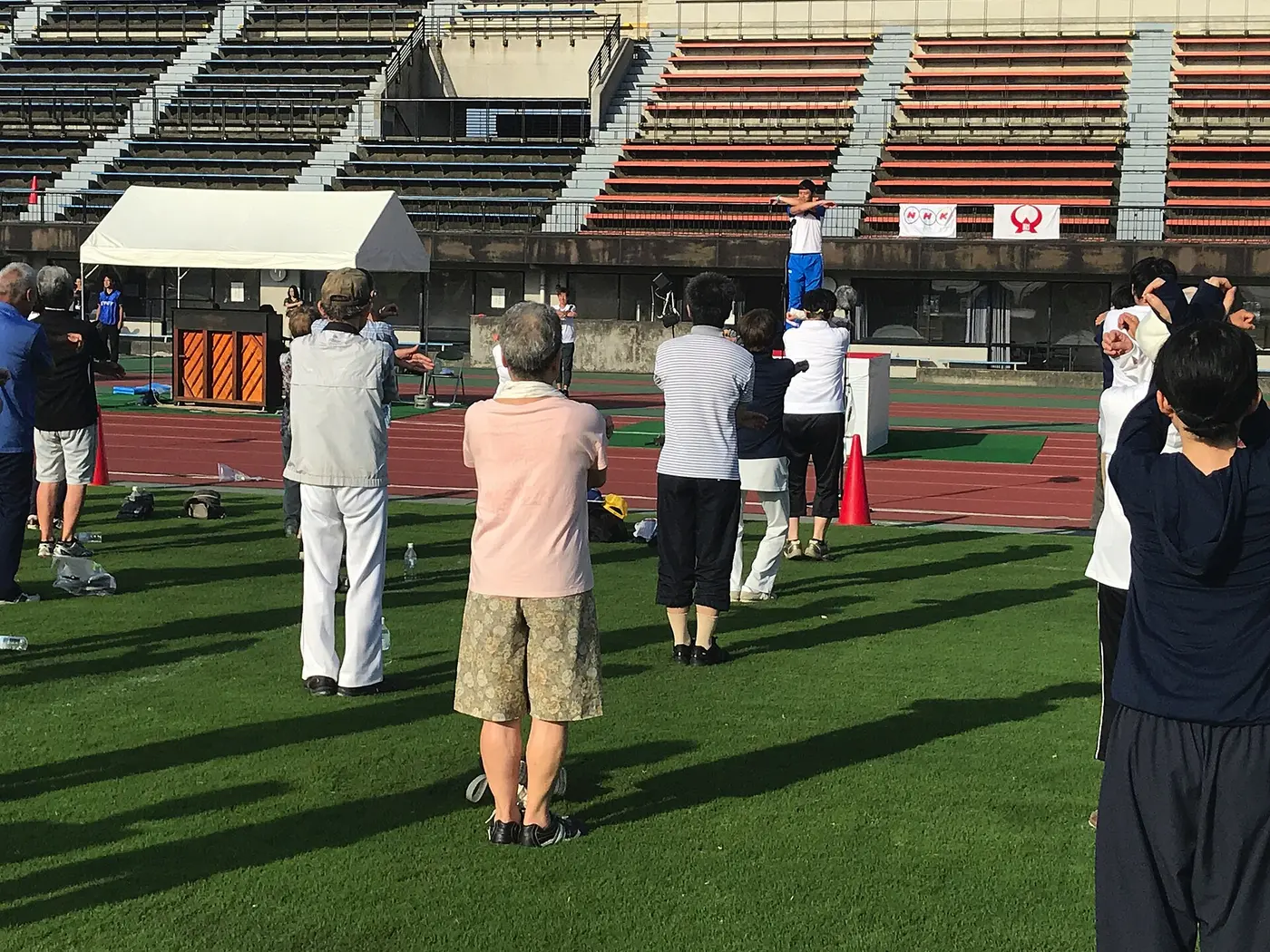

Today’s Radio Exercise No. 1 was introduced and first broadcast in May 1951, followed in 1952 by Radio Exercise No. 2, designed for workplaces. Since 1953, a touring event has visited a different part of the country each summer. Strictly speaking, today’s No. 1 is the third version of the routine, and counting from that first broadcast in 1928, radio exercises will turn 100 in 2028.