Why is table tennis called “ping-pong”?
The name imitates the sound of the ball. For a time it was even a British equipment maker’s trademark.
In Japan, when people knock a ball back and forth in their cotton robes in the game room of a hot-spring inn, they call it “pinpon.” When the same sport is on Olympic television, it is “takkyū” (卓球). One game, two names. English is no different: officially it is “table tennis,” but in casual conversation it is “ping-pong.”
“Ping-pong” sounds exactly like a bouncing ball. So why didn’t it become the official name? The answer is a small trademark story from late-19th-century Britain.
Tennis on the dinner table
Table tennis was born in Victorian England. In the second half of the 19th century, upper-class households took to playing a kind of mock tennis on the dining table after dinner. Some accounts say it began as an indoor substitute on rainy days, when tennis outdoors was impossible.
At first the equipment was improvised. One story has players standing a row of books along the middle of the table as a net and using other books as rackets. The game had no fixed name, either; it went by various names, such as “whiff-whaff.”
In the 1890s, Jaques, a long-established London maker of games, began selling a boxed set of equipment for it. The product name was “Gossima.” Hardly anyone remembers it now, but it was one of the earliest commercial forms of table tennis.
The sound of a celluloid ball
The turning point was the ball itself. Around 1900, an Englishman named James Gibb came across celluloid balls in the United States and brought them to the game. Light and bouncy, the celluloid ball made a crisp sound quite unlike the rubber or cork balls used before.
Hit it with a racket and it went “ping”; bounce it on the table and it went “pong.” From that sound, the game came to be called “ping-pong.” Jaques seized on the name and registered “Ping-Pong” as a trademark in 1901. The American rights to the name were sold to Parker Brothers, the board-game company.
At that very moment, ping-pong was a craze in Britain. Books were written, tournaments were held, and in 1902 there was even an unofficial world championship, according to accounts.
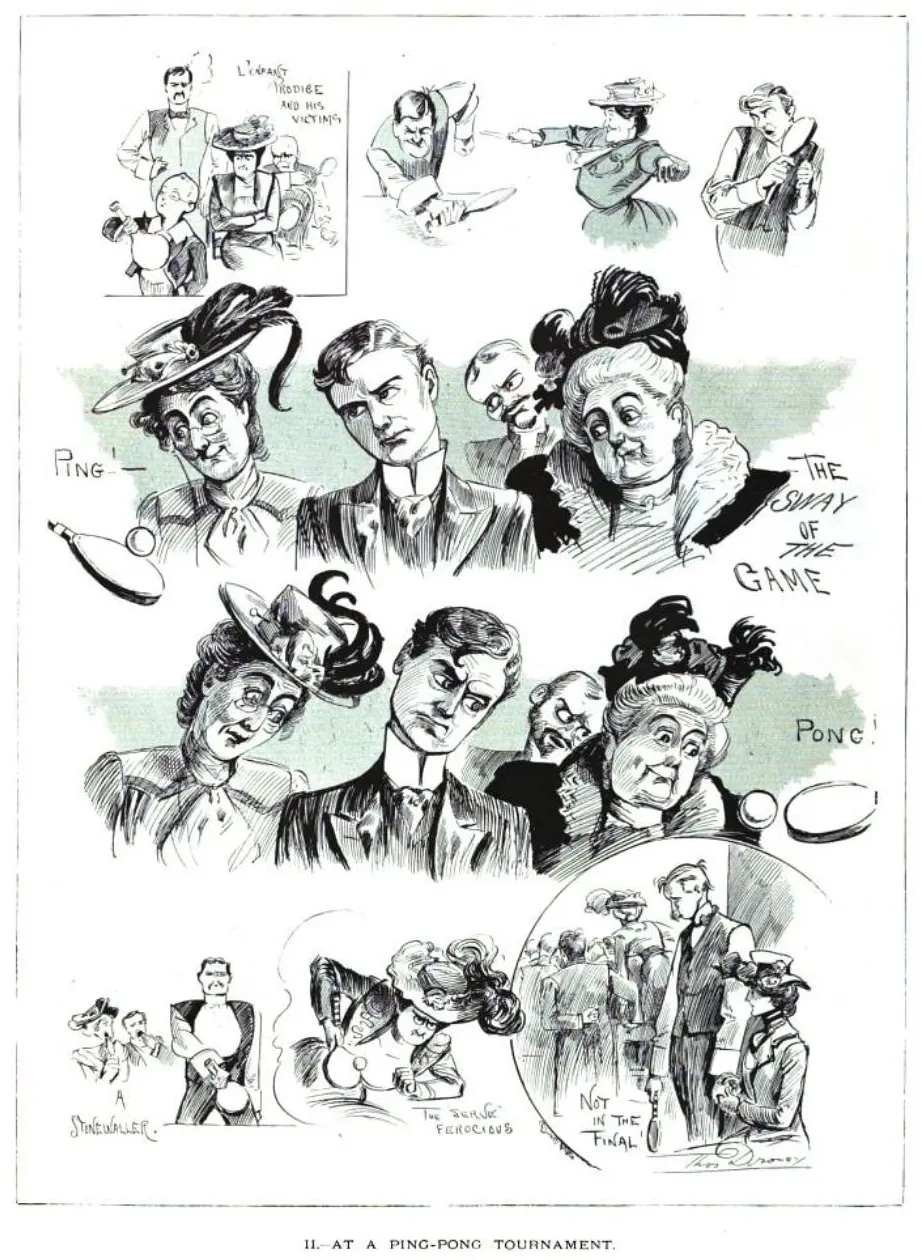

When a name becomes a brand
But this created a problem. Because “Ping-Pong” now belonged to one company’s product, other manufacturers could not sell their equipment under that name. So they called the same game “table tennis.”
The problem grew as the sport organized. An association for the game was founded in England in 1921, the International Table Tennis Federation was established in 1926, and the first World Championships were held in London that same year. For the sport’s official name, they chose table tennis, a name anyone was free to use.
In the United States, Parker Brothers is said to have asserted its trademark rights forcefully in the 1920s, so organizations there also took the name “table tennis.” That is why “ping-pong” survived in the English-speaking world as a casual name but never became the official one. Even today, “Ping-Pong” remains a registered trademark in the United States.
In Japan, from “pinpon” to “takkyū”
The game reached Japan in 1902, in the 35th year of the Meiji era. Tsuboi Gendō, an educator returning from study in Europe, is said to have brought back nets, rackets and balls and introduced the game. Naturally, it was called “pinpon” at the time.
Later, following Britain’s adoption of “table tennis” as the official name, Japan began using a translation of it: takkyū. “Taku” (卓) means table and “kyū” (球) means ball, a neat two-character rendering of the English name.
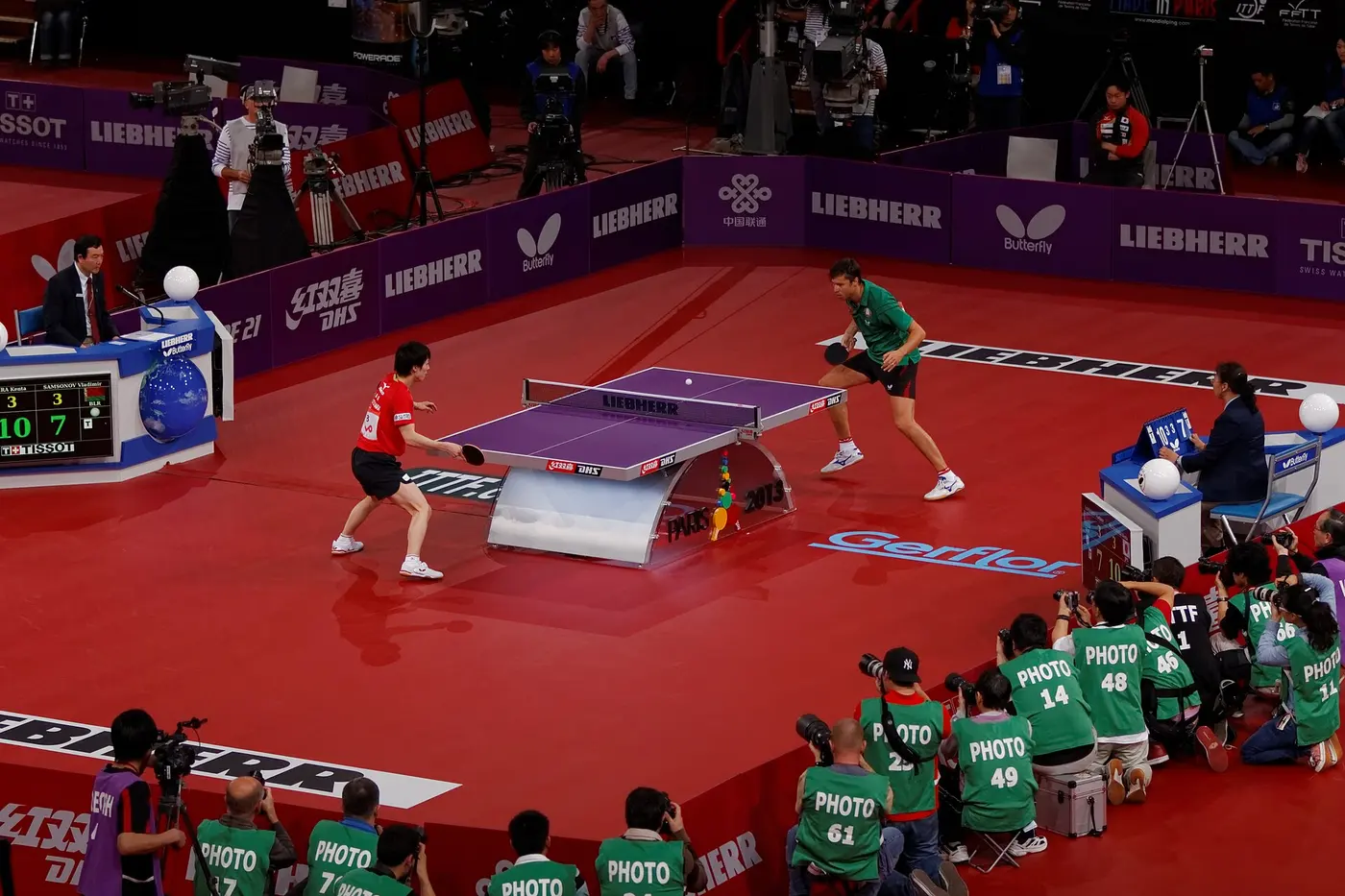

Table tennis became an official Olympic sport at the 1988 Seoul Games. Played all over the world today, it can be traced back to the light “ping” and “pong” that echoed over after-dinner tables. Whenever someone in Japan says “pinpon,” they may be unknowingly invoking a British brand name from more than 120 years ago.