Why is tennis scored 15, 30, 40?
It comes from a medieval French ball game, but theories like the clock face are unproven. Accounts differ.
Watch a tennis match and the umpire’s calls can leave you scratching your head. Win one point and it is “fifteen”; the second is “thirty”; the third, “forty.” Zero is called “love,” and when the score reaches 40–40, it becomes “deuce.”
Why use such a roundabout system when you could just count 1, 2, 3? And if the score goes 15, then 30, surely 45 ought to come next. This odd sequence of numbers turns out to be a genuinely tough puzzle, one that reaches deep into the history of the game.
Keeping score this way for nearly 600 years
Tennis descends from jeu de paume, a ball game that flourished in medieval France. Paume means “palm,” and at first players struck the ball with their bare hands or gloves. Rackets came later, and the game spread from monasteries and aristocratic houses.
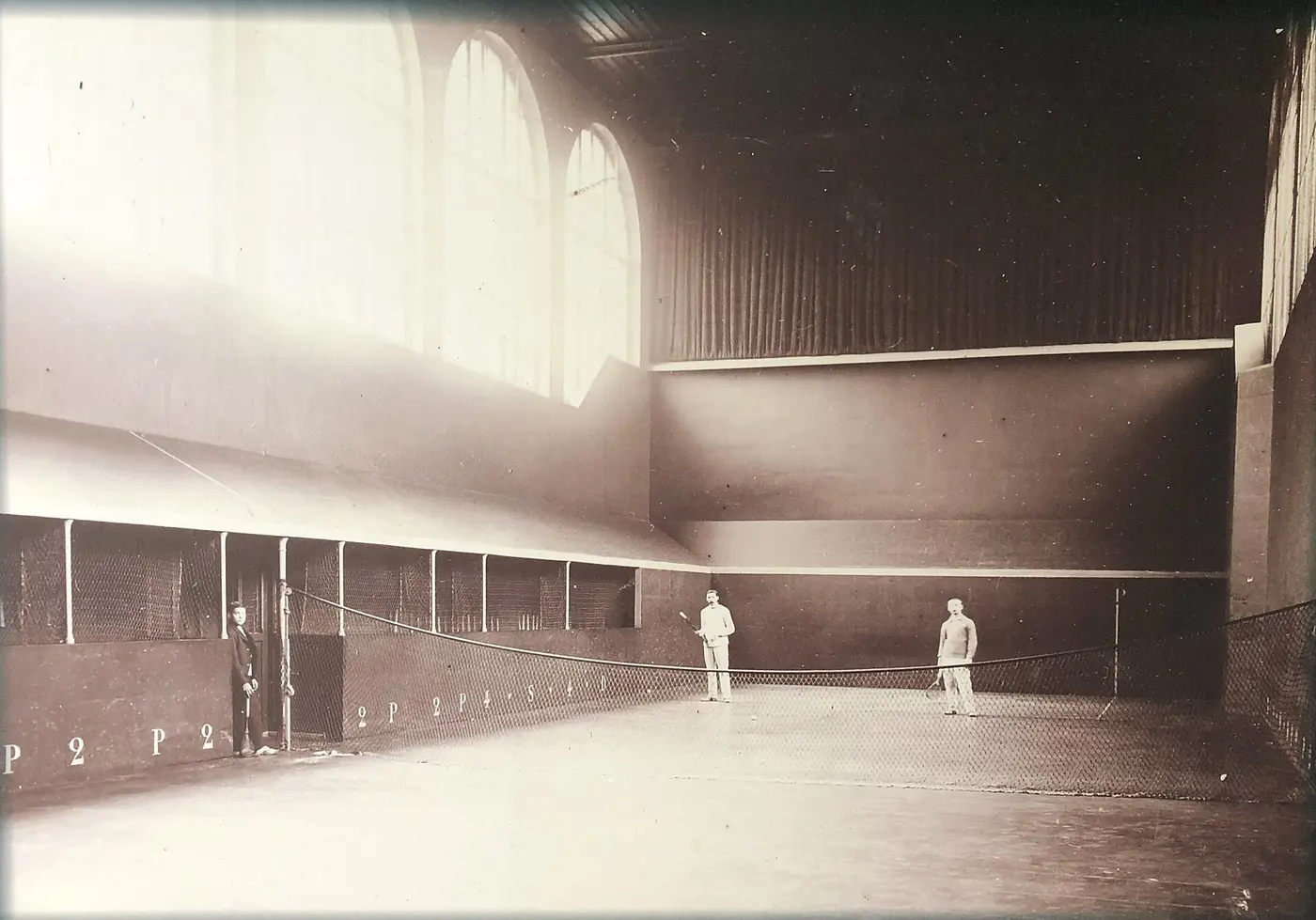

Counting in fifteens was already in use back then. A ballad from around 1435 by Charles d’Orléans, a nobleman who was also a poet, includes the words quarante cinq, “forty-five.” A Latin text from 1522 also contains a passage along the lines of “ahead at 30, ahead at 45.” In other words, the 15–30–45 count had existed for nearly 600 years at the very least.
Yet nobody wrote down why. Explanations of its origin appear in books only from the mid-16th century onward, and by then, it seems, people had already forgotten why it was 15.
The clock-face theory
The best-known explanation is that scores were kept on a clock face. Each point moved the hand a quarter of the way around, or 15 minutes, giving 15, 30 and 45, and reaching 60 ended the game. Then, to fit the “deuce” system described below onto the dial, 45 was shortened to 40.
It is an easy theory to grasp, but it has a weakness. Minute hands did not become widespread on clocks until around the end of the 17th century, so it is hard to imagine 15th-century people counting points on a clock face they saw every day. Some argue, however, that because large church clocks that struck every quarter hour were already being built in the 14th century, the possibility cannot be entirely ruled out.
The distance theory and the base-60 theory
Another theory traces the scoring to distances on the court. In jeu de paume, according to this idea, the server moved forward each time they won a point: 15 pieds (French feet), then another 15, and finally 10, for 40 in all. But the size of medieval courts is thought to have varied from place to place, with no fixed dimensions, so this cannot be called a conclusive explanation.
Some find a more persuasive answer in counting systems built around 60. Base 60 has long been used for time and angles, and in medieval Europe it was also tied to units of currency. Since people often bet money on matches, the idea goes, a system in which four points add up to 60 may have been a natural choice.
So why did 45 become 40? The usual explanation is that saying quarante-cinq (45) was long and tiresome, so people shortened it to quarante (40).
Love and deuce
There are several theories, too, about “love” for zero. One says that because the numeral 0 resembles an egg, it is a corruption of l’œuf, French for “the egg.” Another says it meant playing “for love,” with nothing at stake, in other words, “nothing.” None of them is decisive.
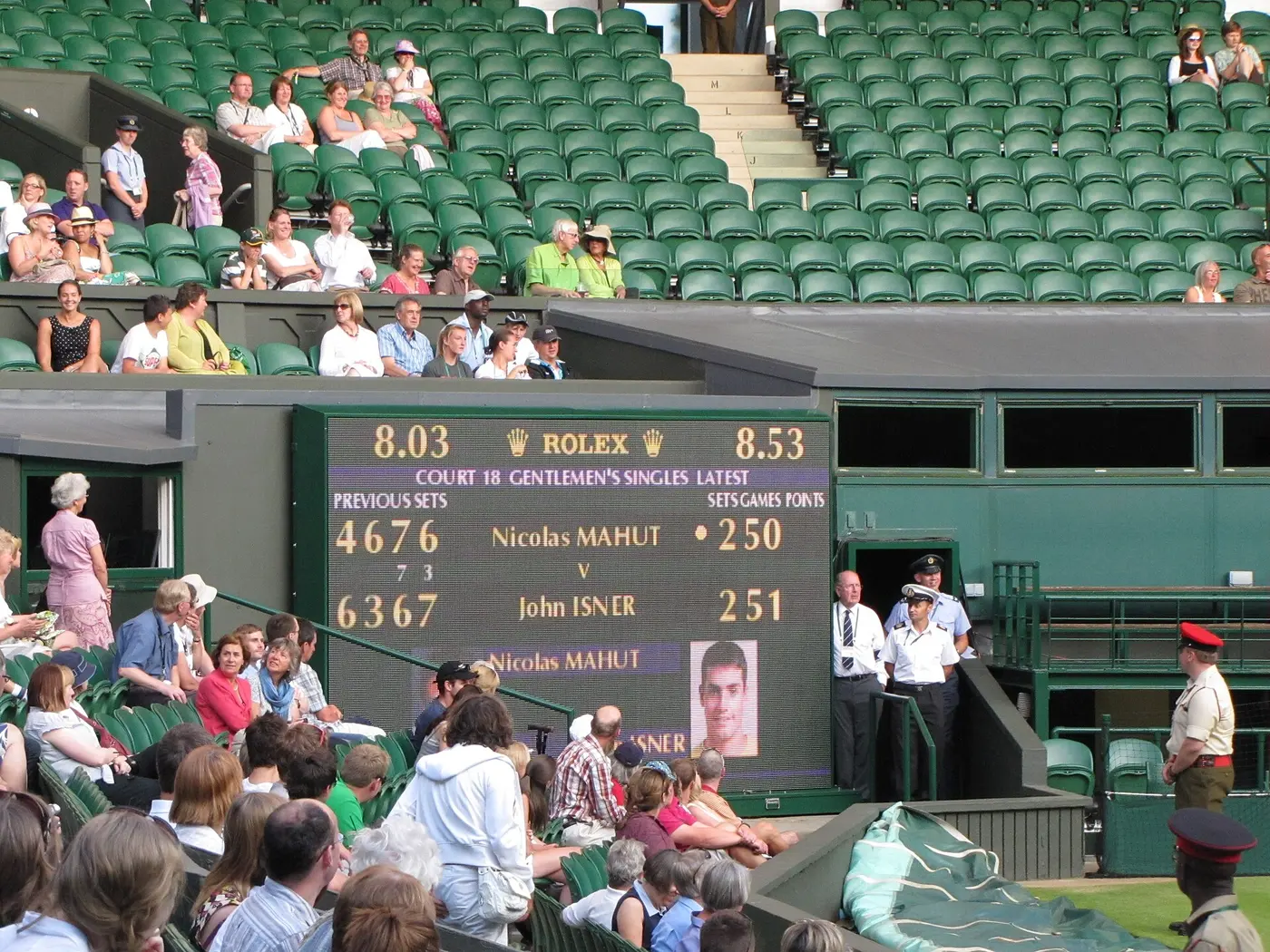

“Deuce” describes the situation after 40–40, when a player must win two points in a row to take the game. Because a two-point lead is needed, the word is thought to be related to the French deux, “two.” This idea of not finishing until someone is two ahead was applied to sets as well. At Wimbledon in 2010, the final set of the match between John Isner and Nicolas Mahut stretched to 70–68, an epic battle lasting more than 11 hours over three days.
A way of counting from 600 years ago still rings out on courts all over the world.
Today, tiebreaks that prevent such never-ending matches are widely used. Even so, the calls of 15, 30 and 40 have been handed down unchanged since the Middle Ages.