Why is a square boxing ring called a ring?
Early fights took place in a rough circle formed by onlookers. The ring became square in 1838, but the name stayed.
Boxing and pro wrestling take place in a “ring”: a square platform fenced in by ropes. Yet the word ring, as in the one you wear on your finger, means a circle. Calling a square a circle is a strange choice when you stop to think about it.
English speakers noticed the contradiction long ago, which is why the boxing ring has a playful nickname: “the squared circle.” So how did a square end up being called a ring?
A ring made of people
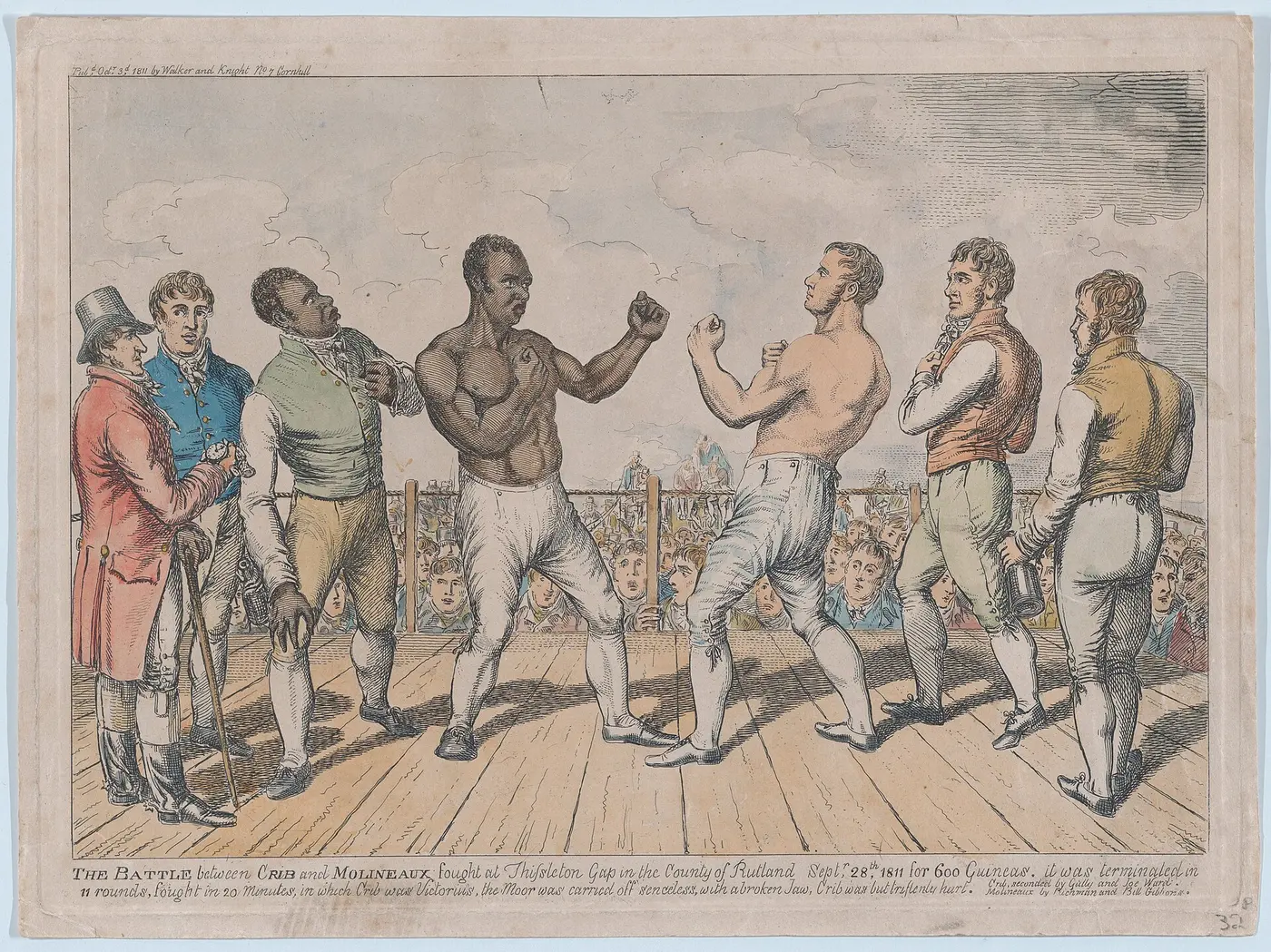
Modern boxing took shape in 18th-century Britain. Prizefighting back then was a rough spectacle in which fighters could throw each other as well as punch with bare fists, and bouts were often held outdoors.
The earliest fighting grounds were no more than a rough circle drawn on the ground. Spectators crowded around it, and are said to have sometimes held a rope or joined hands to keep the fighters from escaping. The circular space inside that wall of people, a ring, is where the name comes from.
A report in The Times of London from 1804 describes a fighter who “threw his hat into the ring over the heads of the spectators, as an act of defiance to his antagonist.” The space inside the circle of onlookers was quite literally the place of combat.

A mark in the middle
In 1743, the champion Jack Broughton, who ran his own boxing amphitheater in London, drew up a set of rules for prizefighting and posted them at his venue. Known as Broughton’s Rules, they are considered the first written rules of boxing.
They required a square one yard (about 91 centimeters) across to be drawn in the middle of the fighting area. When a fighter was knocked down, his second had 30 seconds to bring him back to that square, or he was considered beaten. The rules also banned hitting a man while he was down.
Under later rules, that mark became a line scratched on the ground, the “scratch,” and a fallen fighter who could not make it back there on his own feet lost the fight. The English idiom “up to scratch,” meaning good enough, is said to come from this.
1838: the ring turns square
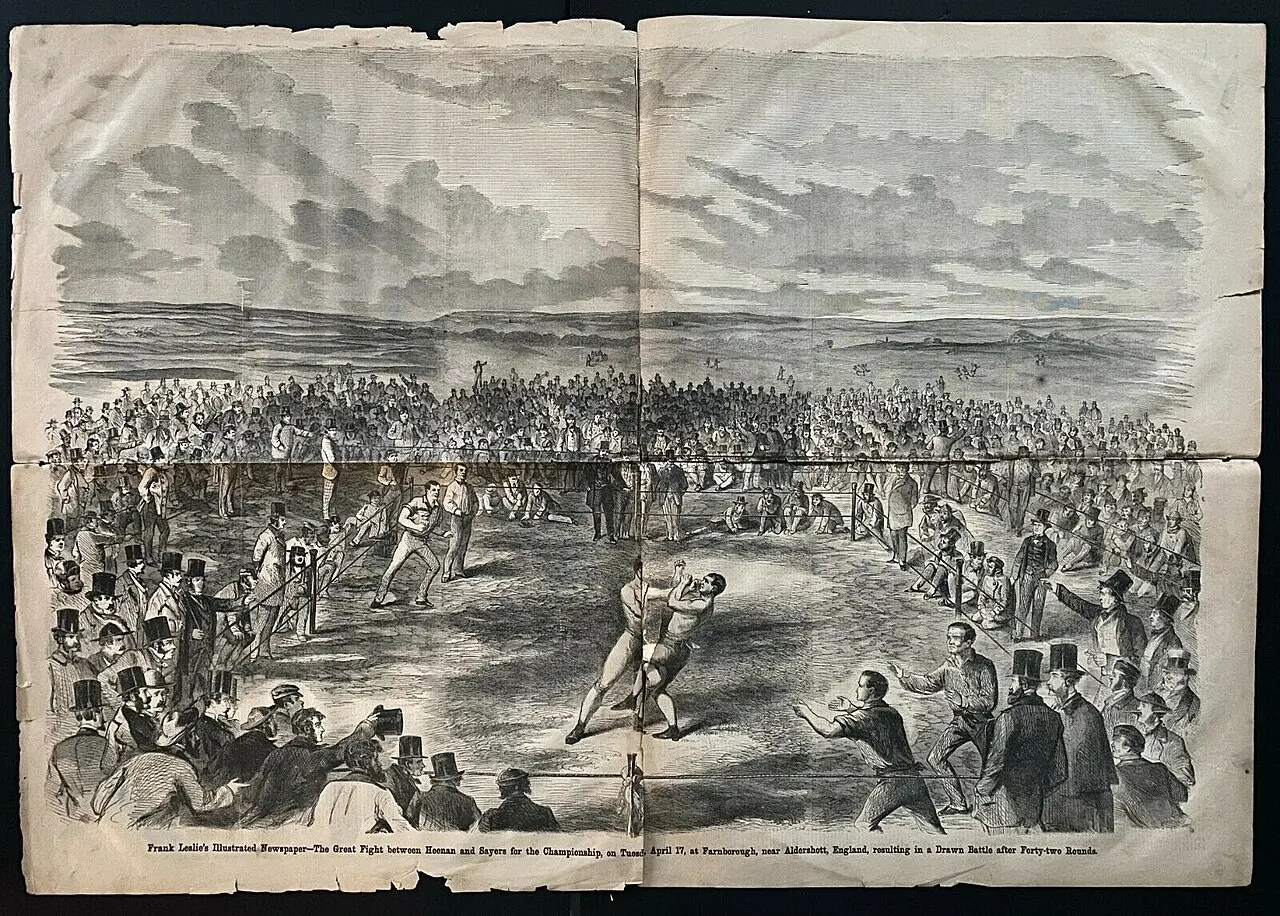
The ring itself became square with the London Prize Ring Rules of 1838. These called for a ring 24 feet (about 7.3 meters) square to be laid out on turf, marked by stakes with ropes strung between them.
No clear record explains why a square was chosen over a circle. But if you are driving stakes and stringing ropes, straight lines are far easier than a curve. The shape changed to a practical square, while the name “ring” carried on as before.
In 1867, the Marquess of Queensberry Rules were published, requiring gloves and setting three-minute rounds, and they became the foundation of boxing as we know it. In time, fights moved off the ground and onto raised platforms.

How big is a ring today?
Under the rules of the Japan Boxing Commission, which governs professional boxing in Japan, a ring must measure between 18 feet (about 5.47 meters) and 24 feet (about 7.31 meters) square inside the ropes. The 24-foot side of the 1838 ring lives on as the upper limit.
Four ropes, each at least an inch thick, are strung at heights of about 46, 74, 104 and 132 centimeters (18, 29, 41 and 52 inches) above the floor, and the platform must stand no more than 4 feet (about 1.22 meters) high.
The ring for sumo, the traditional Japanese wrestling, is still round to this day. The boxing ring changed its shape, but its name preserves the memory of the circle it once was.