How does a pineapple grow?
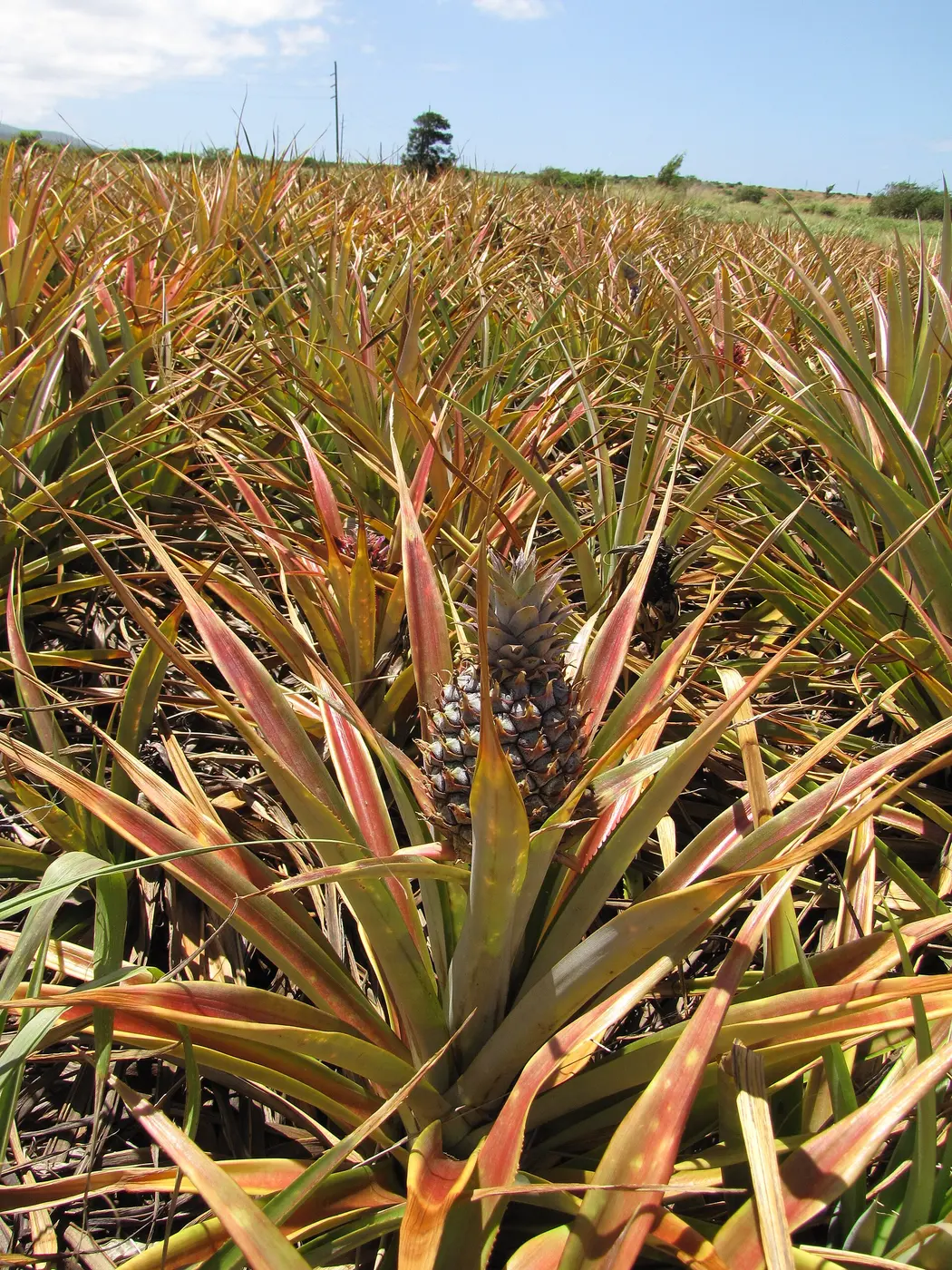
A single fruit sits in the middle of a low, leafy plant growing out of the ground. It takes about 18 months to two years from planting to harvest.
18–24months
In the fruit aisle, the pineapple stands out: a spiky, scaly body topped with a crown of stiff green leaves. Everyone knows what one looks like. Far fewer people could say how it grows. Some picture it hanging from a tall, palm-like tree.
In fact, pineapples don’t grow on trees at all. Each one sits in the middle of a low plant that rises straight out of the ground, a single fruit perched in the center of a rosette of leaves. And it is a slow business: from planting to eating takes around a year and a half to two years.
One stalk from the heart of the plant
The pineapple is a perennial herb in the bromeliad family. According to the Japanese encyclopedia Nipponica, the plant stands about 0.5 to 1.2 meters (1.5 to 4 feet) tall. Long, stiff leaves are packed in a spiral around a very short stem, so that seen from above the plant is a big, spreading rosette.
According to a guide from the University of Florida’s extension service, once a plant has grown 70 to 80 leaves, it is ready to flower. The growing tip of the stem switches over to making a flower head, which pushes up from the center of the plant. The bracts at its base turn red, so growers call this the “red heart” stage.

The flower head is covered in small flowers arranged in a spiral, anywhere from 50 to more than 200 of them. Their petals are white at the base and violet-blue at the tip. The University of Florida guide says they open from the bottom of the head upward, one to ten a day, and the whole show lasts 20 to 40 days. Each flower then becomes a small fruit, and the fruits fuse together into the familiar pineapple.
One fruit, after a long wait
The University of Florida puts the time from planting to harvest at 18 to 24 months, and Nipponica says harvesting begins 15 to 18 months after planting. Even after the plant starts making a flower head, it takes another five to seven months to get a ripe fruit.
And each plant makes just one fruit at a time. After harvest, a side shoot from the base of a leaf grows up and bears a second fruit. The Florida guide says a plant can yield up to two fruits this way: the first crop and a “ratoon” crop from the shoot. In Okinawa, Japan’s pineapple-growing region, this second round is known as kabudashi.
A plant from the top
Farmers don’t grow pineapples from seed. Commercial varieties can’t make seeds with pollen from the same variety, so the fruit is normally seedless. Instead, growers plant the shoots a pineapple produces. Nipponica lists three main kinds: the crown on top of the fruit, slips that grow from the stalk just below it, and suckers that sprout where leaves join the stem.
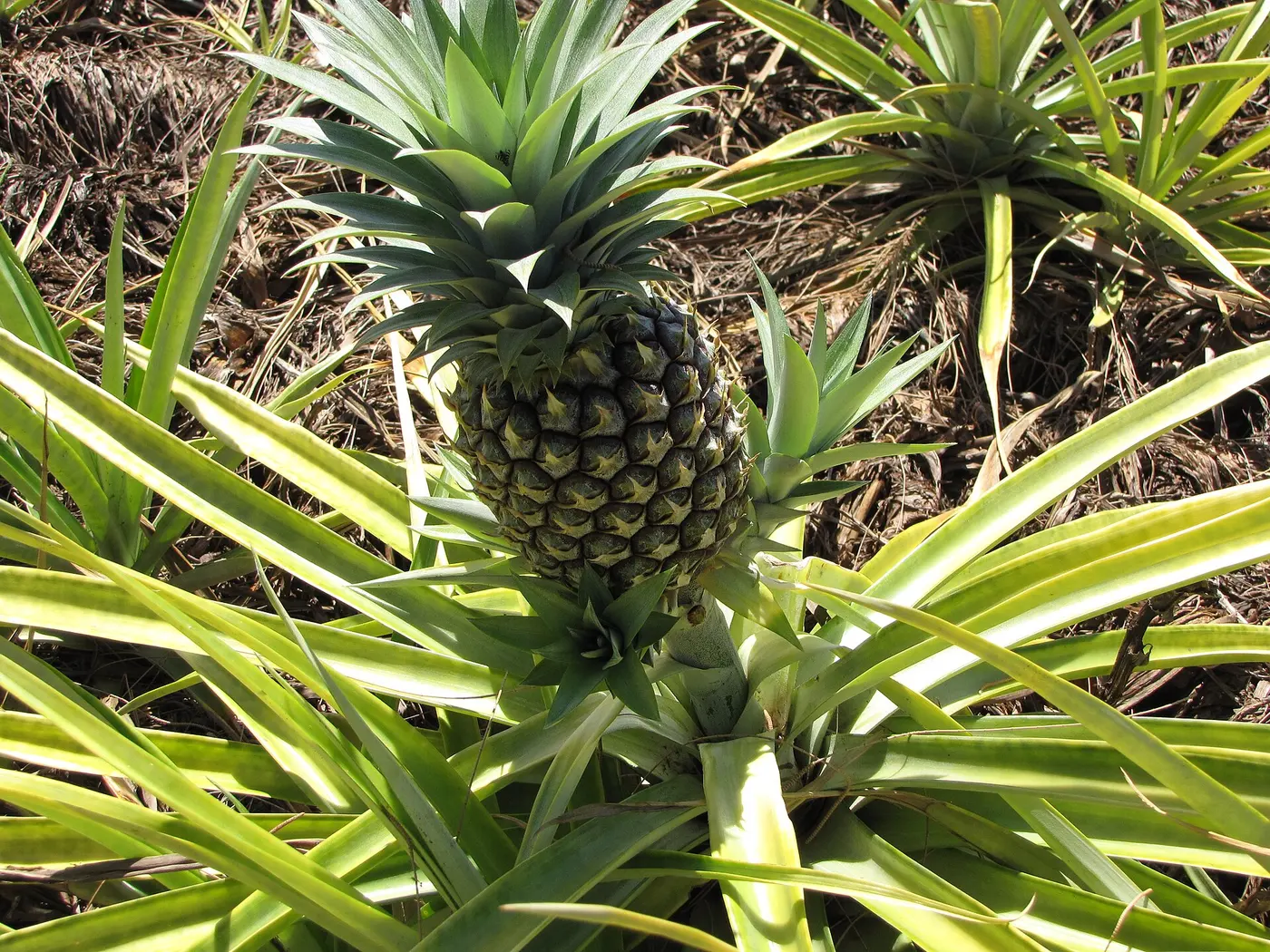

That means the leafy top of a store-bought pineapple can grow, too. The University of Florida recommends removing the crown, letting it dry in the shade for a day or two, and then planting it. Pineapples don’t like the cold, though. Growth slows below about 15°C (60°F), and the plants can’t survive temperatures below −2°C (28°F). Even with good care, expect to wait at least a year and a half for a fruit.
Smoke that makes flowers
If every plant flowered whenever it felt like it, growers could never plan a harvest. So modern pineapple farms use chemicals to make whole fields bloom at once. The practice began with an accident.
According to a 2014 review by the pineapple researcher D. P. Bartholomew, growers in the Azores, in the Atlantic, were raising pineapples in greenhouses in the 1870s. In 1874 they discovered by chance that smoke made the plants flower, and they began using it to time their fruit for when prices were high. By the 1920s, farmers in Puerto Rico had taken the trick into the field, covering blocks of plants with muslin and lighting smoldering fires underneath.
In 1932 it was shown that ethylene gas worked as well as smoke. Ethylene is a plant hormone best known for ripening fruit. Large plantations still rely on ethylene or chemicals that release it. In trials at the Okinawa Prefectural Agricultural Research Center, fruit was ready about seven to eight months after treatment. For home gardeners, the University of Florida suggests placing slices of ripe apple in the center of the plant. As the apple ripens, it gives off ethylene, nudging the pineapple to bloom.