Do pigeons feed their chicks milk?
Yes. Both males and females make “pigeon milk,” a cheesy food formed from cells shed by the lining of the crop, a pouch in the throat, and feed it to their chicks.
Baby birds grow up on the insects and seeds their parents bring them. That is true of most birds. But the pigeons that strut around train stations and city parks feed their newly hatched chicks on “milk.”
Pigeons, of course, have no breasts or udders. Still, this rich food is known as pigeon milk, or crop milk. And it isn’t only the mother who makes it. The father does, too.
A surgeon noticed 240 years ago
One of the first to describe this in detail was John Hunter, the Scottish-born surgeon and anatomist who worked in 18th-century London. In a book published in 1786, Hunter wrote that feeding the young on something produced by the parent’s own body had been thought to belong only to the animals Linnaeus called Mammalia. Yet he had found, he wrote, that “all of the dove kind are endowed with a similar power.” And unlike in mammals, the male makes it as well as the female.
According to Hunter, while a pigeon is sitting on its eggs, the walls of its crop grow steadily thicker. The crop is a pouch partway down the esophagus where food is normally stored for a while. Hunter likened the change to the swelling of a mammal’s udder during pregnancy. When he examined a parent bird just as its eggs were hatching, he found its crop holding pieces of white curd.
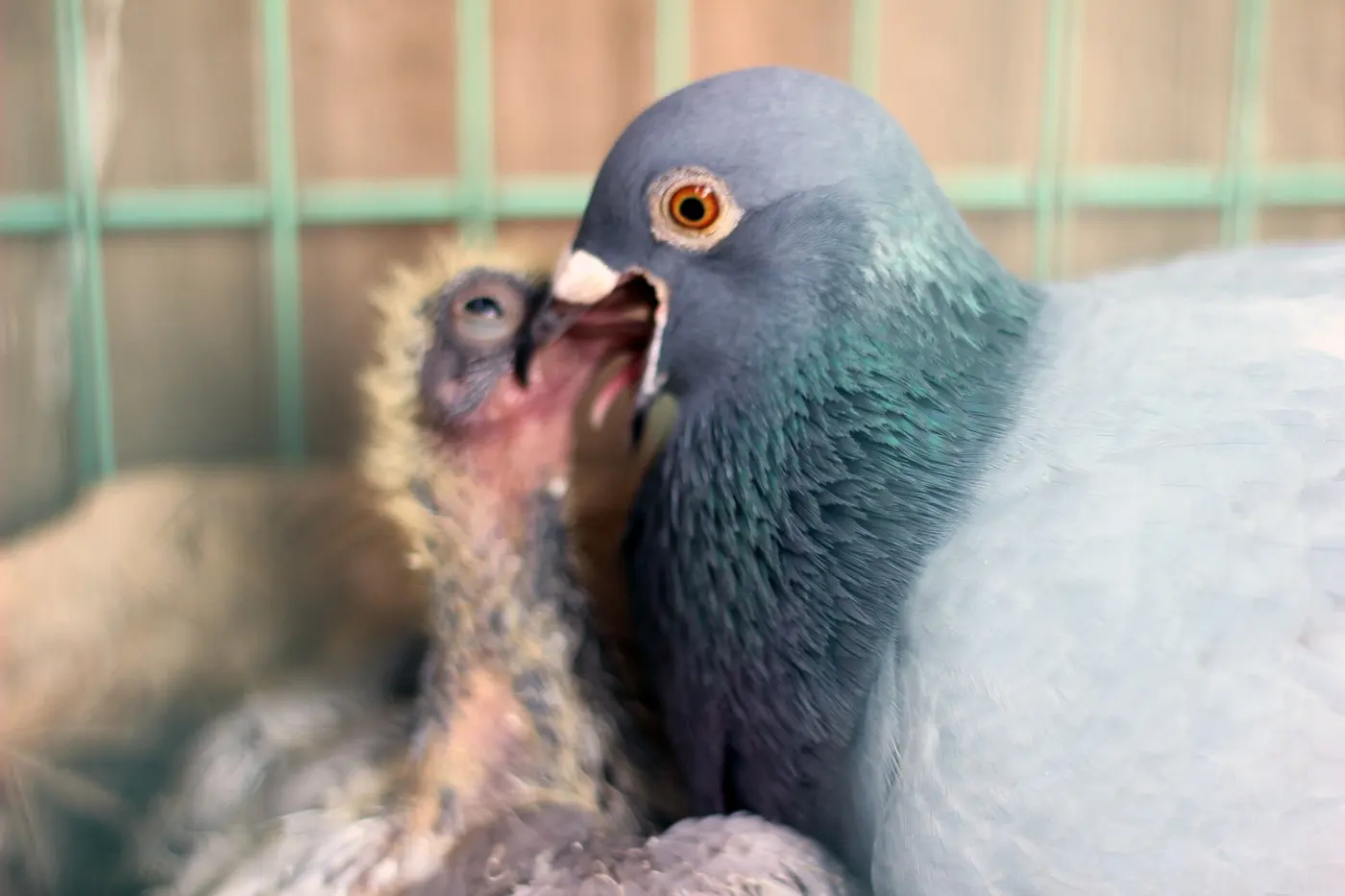

Hunter observed that the chicks are fed on this curd alone at first, that ordinary grain begins to be mixed in around the third day, and that by the time the young are seven, eight or nine days old, the parents stop producing it.
Milk made of shed cells
Mammals’ milk is a liquid secreted by glands. Pigeon milk is made quite differently. According to a 2011 paper by a team from Australia’s national science agency, CSIRO, and Deakin University, the cells lining the crop multiply rapidly during the breeding season, and layer after layer of cells packed with fat and protein peels away. That is pigeon milk. In effect, the parents feed their chicks the lining of their own crop.
The researchers note that pigeons usually lay two eggs a day apart, which hatch about 18 days later. Milk production begins around two days before the first egg hatches. Dried, the milk is about 60 percent protein and 32 to 36 percent fat, with only 1 to 3 percent carbohydrate. It also contains minerals such as calcium, along with antibodies that help protect against disease.
The same hormone as human milk
The signal to make pigeon milk comes from prolactin, a hormone released by the pituitary gland at the base of the brain. Prolactin is best known as the hormone that makes human mothers produce breast milk, but it was first pinned down in pigeons.
In 1933 the American biologist Oscar Riddle and his colleagues showed that a hormone extracted from the pituitary made a pigeon’s crop thicken and produce milk. Scientists had suspected for some years that the pituitary held a substance that triggered milk production in mammals, so Riddle’s team named it prolactin, meaning “for milk.” The response of the pigeon’s crop then became a standard way of measuring prolactin for decades.
Prolactin is also thought to shape pigeon parenting. Parent pigeons have high levels of it, and it seems to support their eating more, staying on the nest and bringing up food to feed their chicks.
More than just food
Pigeon milk seems to do more than nourish. In a 2012 experiment by the same Australian team, young chickens that had pigeon milk mixed into their feed were 12.5 percent heavier on average after seven days than chickens on ordinary feed. Immune-related genes were more active in their guts, and their gut bacteria were more diverse. A “replacement milk” matching its protein and fat content had no such effect.
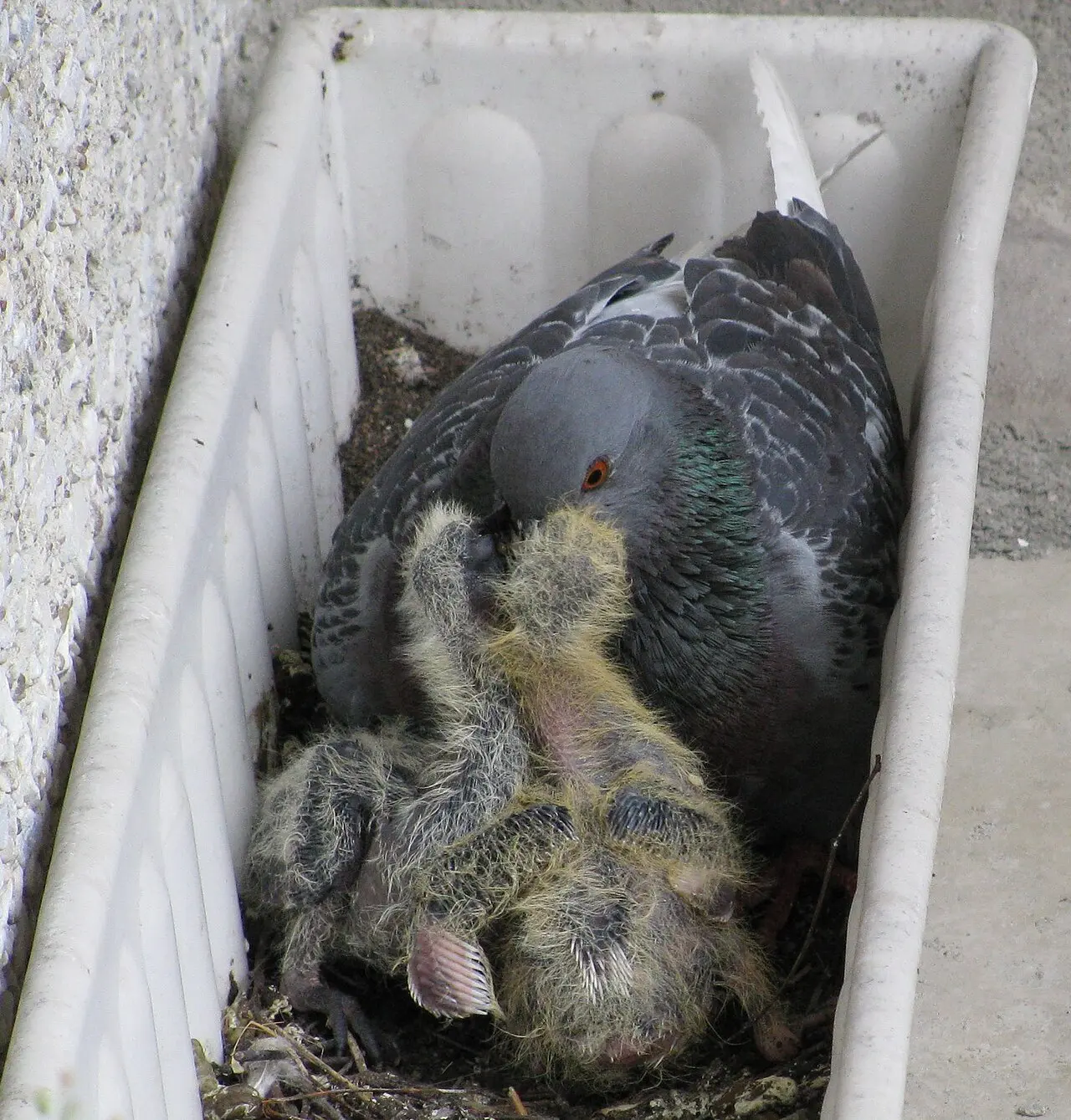

The researchers think pigeon “lactation” and mammalian lactation evolved independently but ended up working in similar ways. Among birds, flamingos and male emperor penguins are also known to produce something similar.