Why do pigeons bob their heads when they walk?
Their heads aren’t really bobbing back and forth. For much of each step, the head stays still in space so the bird’s view doesn’t jiggle as it walks.
Watch a pigeon pecking around a park and you’ll see its head jerk forward and back with every step. Maybe you’ve wondered whether it is keeping time as it walks, or whether all that bobbing tires out its neck.
In fact, a pigeon isn’t swinging its head back and forth at all. During the part of each step when the head seems to be moving backward, it is actually staying perfectly still.
A head that stands still
Play a video of a walking pigeon frame by frame and you’ll see two phases repeating.
First, the bird shoots its head rapidly forward. Then the head stays put relative to the ground while the body keeps walking forward underneath it. Measured against the body, the head seems to slide backward, so to us it looks like a bob. Researchers call these the “thrust” phase and the “hold” phase.
This was first reported in 1930 by a pair of American psychologists. When the Canadian researcher Barrie Frost made detailed measurements in 1978, he found that during the hold phase the head drifts forward at only about 3 millimeters per second, compared with 500 to 800 millimeters per second during the thrust. That is close enough to standing still. A pigeon goes through one thrust and one hold with each step, and its head movements are tightly synchronized with its legs.
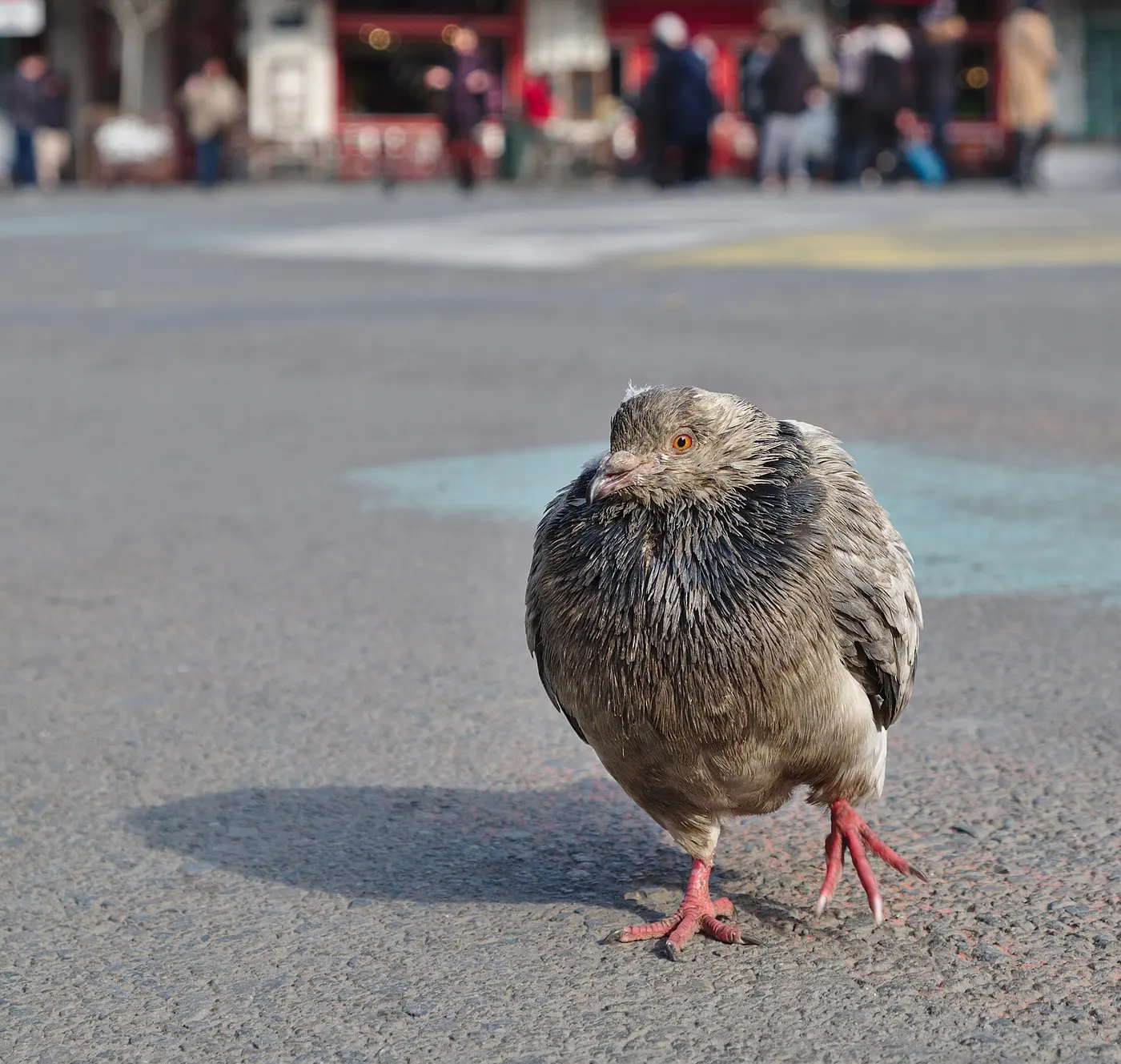

Pigeons on a treadmill
So why hold the head still? One idea was that it helped the bird keep its balance. Frost put this to the test with a treadmill.
He placed a pigeon treadmill inside a clear enclosure and set the birds walking. A pigeon walking on the moving belt uses its legs as usual, but it stays in the same place relative to its surroundings. And under those conditions, the pigeons stopped bobbing their heads entirely.
Turn the experiment around and the result is the same. A pigeon that isn’t walking but is carried forward by hand bobs its head. A blindfolded pigeon walks without bobbing at all. The trigger, it turns out, isn’t leg movement or balance but the movement of the scenery across the bird’s eyes.
Freezing the view
When we read a sign as we walk past, we unconsciously move our eyes to keep the words fixed on the same spot of the retina. Pigeons can move their eyes too, but with their long necks, they seem to stabilize their view by moving the whole head instead.
During the hold phase, the image on the retina stays steady, which makes it easier to identify objects and especially to notice moving ones. That may help the bird keep watch for predators.
The quick thrust probably has a purpose too. A pigeon’s eyes are on the sides of its head, so the area both eyes can see at once is small and its depth perception is limited. When the head moves, nearby objects appear to shift more than distant ones, an effect called motion parallax, and pigeons are thought to use it to judge distance. When pigeons run fast or come in to land, the hold phase disappears and only the thrusts remain.
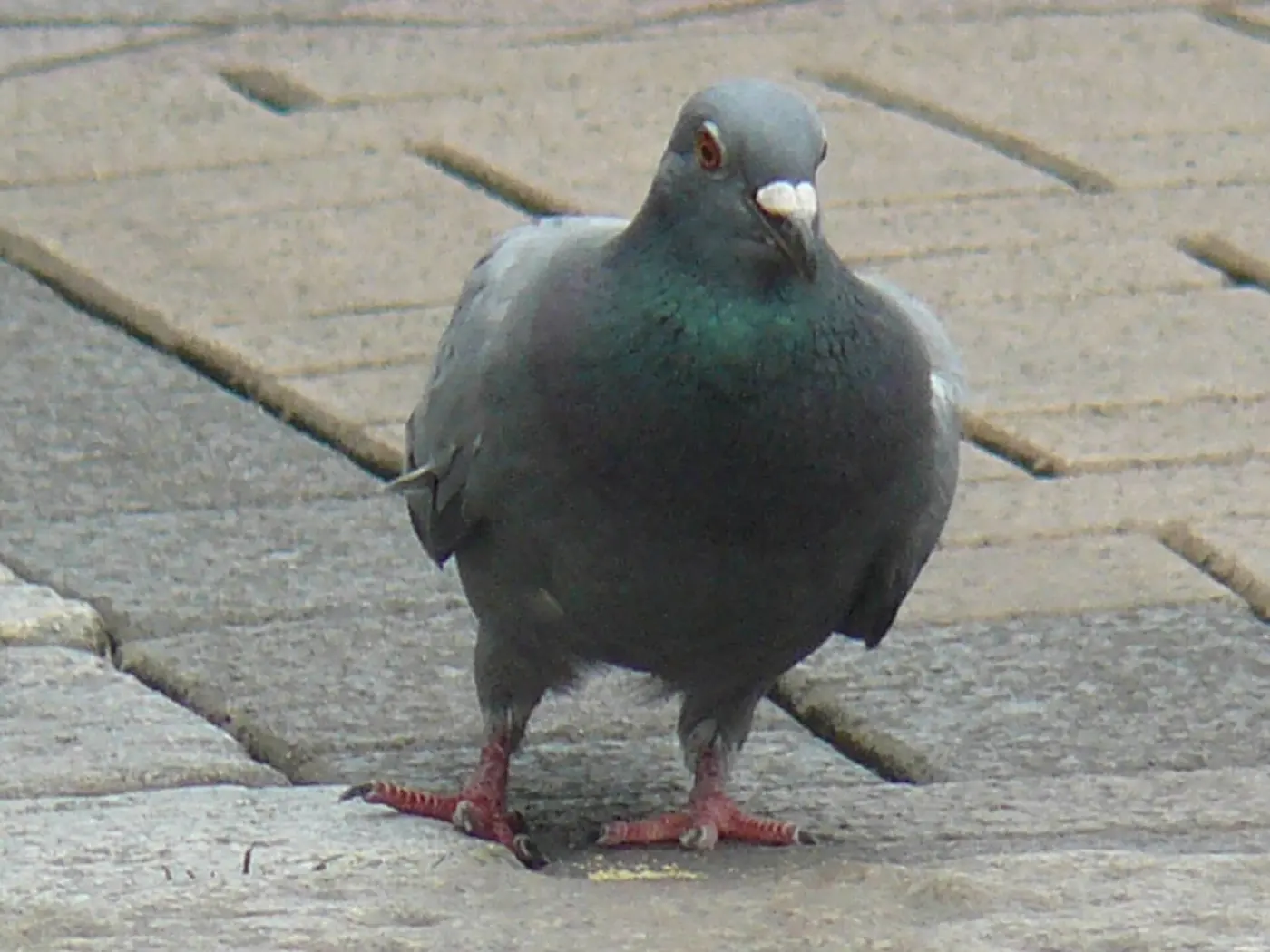

Not every bird bobs
Plenty of birds don’t bob their heads when they walk. Ducks, geese and swans are well-known examples. Their short legs are set wide apart, which is good for swimming but makes them waddle on land.
Stride length seems to matter too. Birds that take short steps relative to the height of their hips tend not to bob, and some, like the black-headed gull, don’t usually bob but start doing so when they lengthen their stride to forage across mud. Even so, nobody has fully worked out why some birds bob and others don’t.