Do hibernating bears ever go to the bathroom?
No. They go months without urinating or defecating, and the urea in their urine is recycled into material for rebuilding protein.
25%
In Japan’s traditional calendar of 72 microseasons, the one in mid-December is called kuma ana ni komoru: “bears retreat into their dens.” True to the name, Japan’s brown bears and Asiatic black bears go into hibernation between late November and early December each year, and they don’t wake up until sometime between mid-March and early May.
That can mean around five months in a den without food or water. So what about the bathroom? The answer: a bear never goes, not even once.
Months without a bathroom break
According to Toshio Tsubota, a wildlife biologist at Hokkaido University, hibernating bears spend months without eating, drinking, urinating or defecating. All the energy they need comes from the fat they put on in the fall. Breaking down fat also releases water, so a bear doesn’t dry out even though it never takes a sip.
As for feces, the remains of the bear’s last meals collect near the end of its digestive tract as what Japanese researchers call a tomefun, a “stopper dropping,” so nothing has to come out inside the den. There is also an old Japanese tale that bears eat pine resin before hibernating to plug themselves up, but that does not appear to have been confirmed by science.
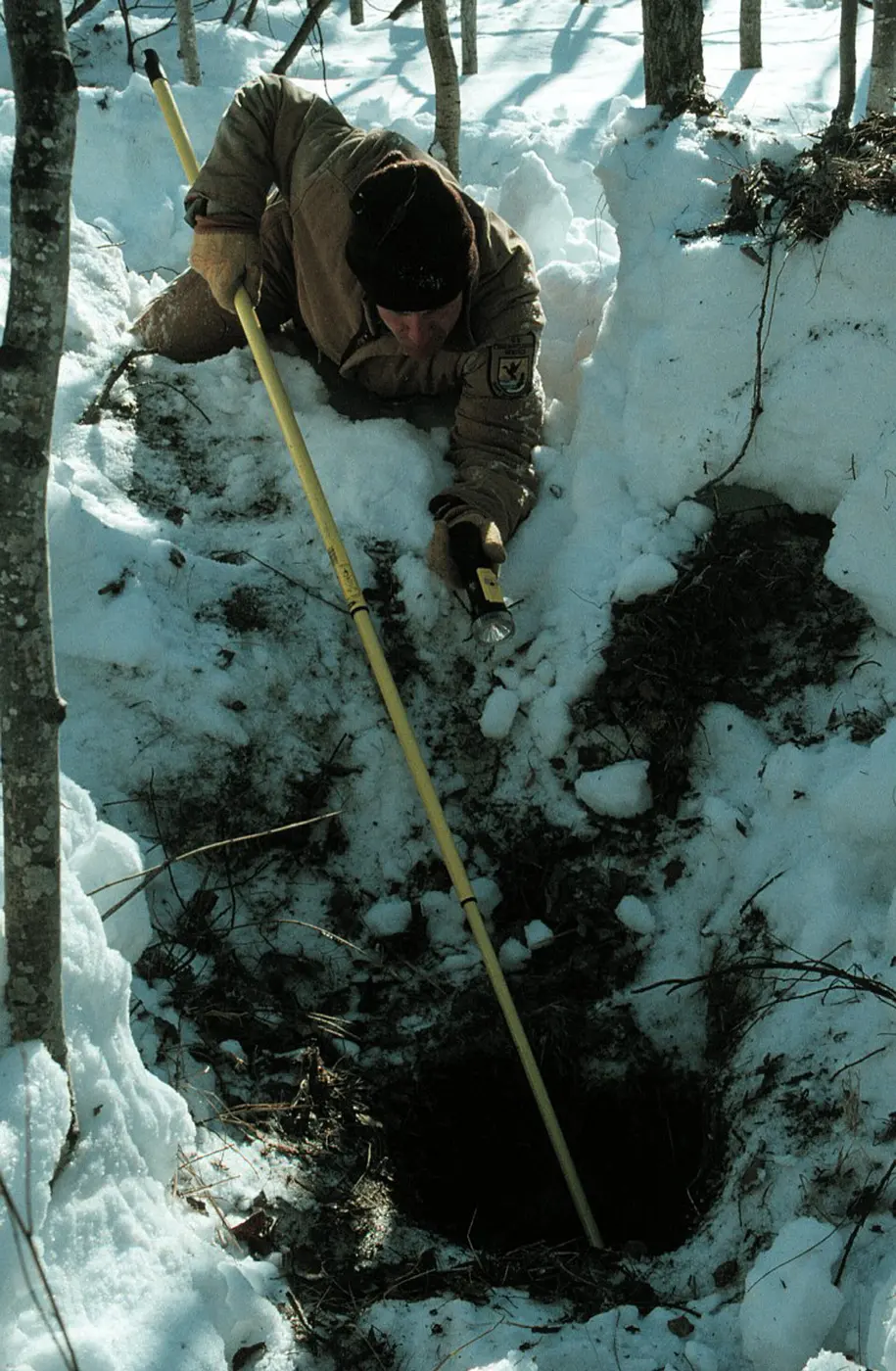

Urine is the trickier problem. When the body breaks down protein, it produces a waste product called urea. Most animals have to flush it out in their urine, or it builds up to toxic levels. A hibernating bear’s bladder does fill with urine, but the urine never leaves: it is reabsorbed through the bladder wall. The urea is then broken down and used to rebuild amino acids, the building blocks of protein. A team led by the American researcher Ralph Nelson injected a bear with specially labeled urea and found the label turning up in the bear’s proteins.
A body temperature drop of just a few degrees
Hibernation tends to conjure up an image of a cold, stiff body. Small hibernators such as chipmunks and hamsters do let their body temperature fall a long way, and they wake up every few days before going back to sleep.
Bears are different. Their body temperature falls only about 4 to 6 degrees Celsius (7 to 11 degrees Fahrenheit), and they sleep straight through for months without waking. Because bears stay so warm, their winter sleep was once not considered true hibernation at all.
Inside, though, a bear is saving plenty of energy. A 2011 study in the journal Science, led by researchers at the University of Alaska, found that hibernating American black bears kept their body temperature between 30 and 36 degrees Celsius (86 and 97 degrees Fahrenheit) while cutting their metabolism to about 25 percent of its normal basal rate. Their heart rate dropped from around 55 beats a minute to as few as 9. Even after the bears left their dens, it took up to three weeks for their metabolism to return to normal.
A bear’s large body and thick fat are thought to help it stay warm, and reheating such a big body after a deep chill would be costly. The exact reasons, however, are still not fully understood.
Bedridden, but not weakened
When people are confined to bed for months, their muscles waste away and their bones grow brittle. Bears, by contrast, need only a short warm-up after leaving the den before they are moving around normally again. Tsubota cites research showing that bears kept about 77 percent of their active-season muscle strength after some 130 days of near-total inactivity. Nor do their bones grow brittle. Recycling urea into protein is thought to be part of how they protect their muscles.
Giving birth in their sleep
Hibernating bears have one more big job to do: giving birth.
Bears mate between May and July, but the fertilized egg doesn’t implant in the womb right away. Instead it stops developing and waits, a trick called delayed implantation. Implantation finally happens in late November or early December, just as the mother goes into hibernation. The cubs then develop for about two months and are born in the den in late January or early February, in the middle of hibernation. A mother has one to three cubs, a little under two on average.
Newborn cubs are tiny: American black bear cubs weigh only about 230 grams (half a pound) on average. The mother stays in her hibernating state while the wide-awake cubs nurse. By the time the family leaves the den in spring, the cubs have grown to about ten times their birth weight and can follow their mother on foot.
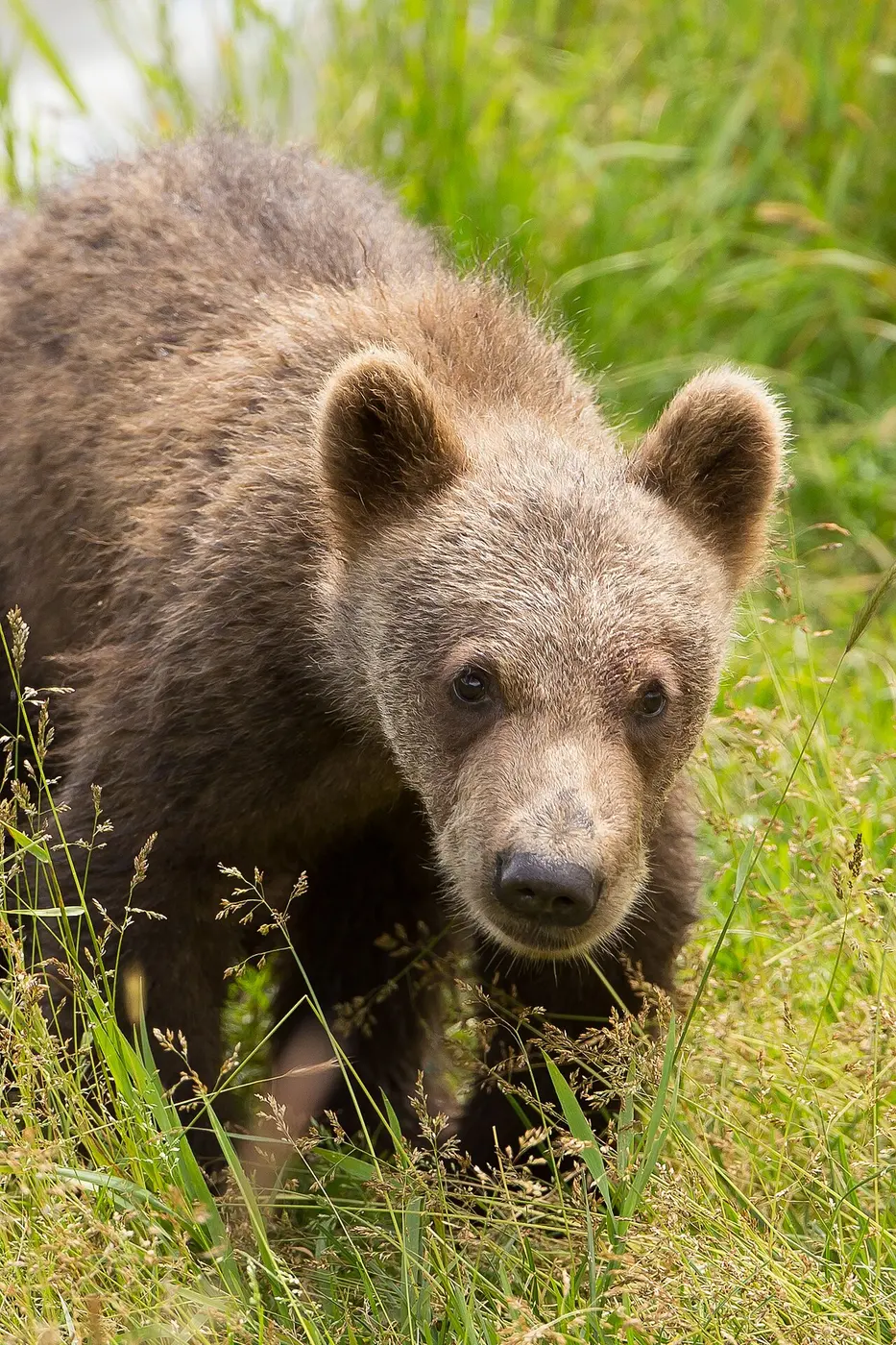

Whether the embryo implants is thought to depend on how much fat the mother stored in the fall. Brown bear females with less than about 20 percent body fat before hibernation emerge without cubs. For bears, a poor acorn crop can cost the next year’s family.