Do cuckoos really leave their chicks for other birds to raise?
Yes. The common cuckoo lays its eggs in other birds’ nests and leaves the rest to them. This is called brood parasitism, and the newly hatched chick even pushes its foster parents’ eggs out of the nest.
28
Every early summer, the familiar “cuck-oo, cuck-oo” rings out over Japan’s highlands and riverbanks. The common cuckoo spends the summer in Japan from Kyushu northward, arriving around May.
This bird builds no nest of its own. It slips its eggs into other birds’ nests and leaves the incubating, and the feeding of the chick, to the owners. The habit is known as brood parasitism, and the birds that end up raising the chick are called its hosts, or foster parents.
About 80 species do it
According to the Japanese encyclopedia Nipponica, about 80 bird species worldwide are brood parasites, only around 1 percent of all living birds. Besides cuckoos, they include honeyguides, cowbirds and even a duck. In Japan, four species have the habit: the common cuckoo, the lesser cuckoo, the oriental cuckoo and the northern hawk-cuckoo.
Brood parasites are choosy about their hosts. The lesser cuckoo, for instance, lays chocolate-brown eggs in the nests of the Japanese bush warbler, whose own eggs are the same color. For the common cuckoo, 28 host species had been recorded in Japan as of 1990. According to Japan’s Ministry of Land, Infrastructure, Transport and Tourism, the main hosts on Honshu, the main island, include the oriental reed warbler, the bull-headed shrike and the meadow bunting, while on Hokkaido they include the stonechat, the black-browed reed warbler and the black-faced bunting. Each female cuckoo is thought to specialize in a single host species and to lay eggs that resemble that host’s.
The female waits until the host is away, slips into the nest, lays her egg and carries off one of the eggs already there. The number of eggs in the nest stays the same.
A chick with a job to do
A cuckoo egg often hatches a little before the host’s eggs. The newborn chick then takes the host’s unhatched eggs onto its back one at a time and tips them out of the nest. If any host chicks have already hatched, out they go too. With the nest to itself, the cuckoo chick gets every scrap of food the foster parents bring.
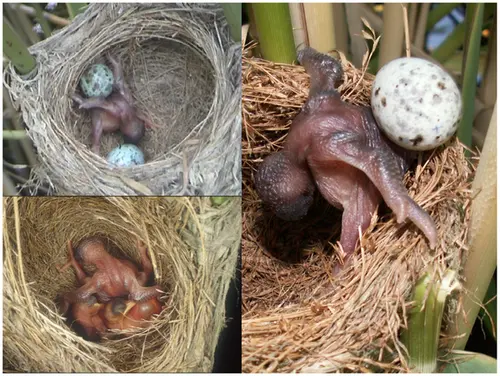

One of the first people to describe this in detail was the English physician Edward Jenner, later famous for pioneering vaccination against smallpox, who was also a keen observer of wildlife. As the Jenner Museum explains, people at the time believed the adult cuckoo threw out the host’s eggs and chicks. Jenner showed that it was the newly hatched cuckoo itself that did it, working its way backward up the side of the nest with an egg or a young bird on its back and heaving it over the edge. By dissecting cuckoo chicks, he also found a hollow in the back, between the wings, that cradles whatever the chick is pushing. The hollow disappears before the chick is 12 days old.
Jenner’s paper was read to the Royal Society in London in March 1788, and he was elected a Fellow of the Society in 1789 in recognition of it. Still, the idea that a newborn chick could do such a thing was hard for many to swallow, and the findings remained controversial until the 20th century, when naturalists managed to photograph the behavior.
Jenner had an explanation for brood parasitism, too. Cuckoos, he noted, stayed in Britain only from mid-April to about early July, some 11 weeks. Laying eggs, incubating them and raising chicks until they could fly strongly would take at least 15 weeks. Handing the job to other birds was the solution.
A new host in Japan
Hosts are not always fooled. Some learn to spot a strange egg and throw it out. Cuckoo eggs that mimic their hosts’ eggs are thought to have evolved in response to this kind of host defense.
In Japan, researchers have watched cuckoos take on a brand-new host. In a 1990 paper in the Japanese Journal of Ornithology, the ornithologist Hiroshi Nakamura reported that in central Honshu, including Nagano Prefecture, cuckoos had begun laying in the nests of the azure-winged magpie, a bird they had not used before, in the mid-1970s. Both species had been expanding their ranges, and the two had come to overlap. The parasitism rate climbed rapidly, reaching 79.6 percent in a survey in Nagano.
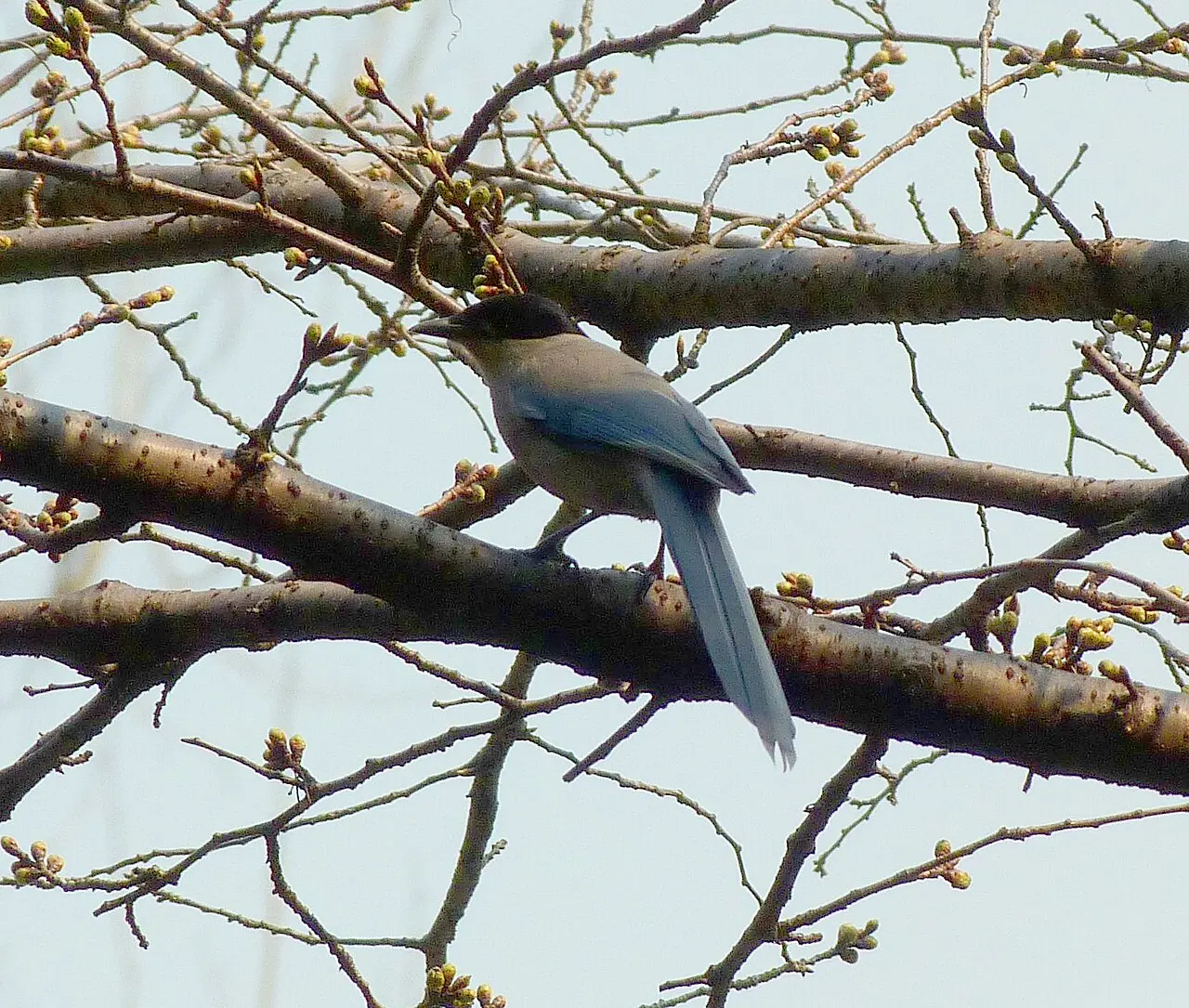

A separate study in the Azumino area of Nagano in 1984 and 1985 found cuckoo eggs in 31 of 41 magpie nests, some with two or even three cuckoo eggs. Meanwhile, the meadow bunting, a major host 60 years earlier, had become a rare one. A cuckoo’s choice of foster parents can change within a few decades.