How do emperor penguins survive the Antarctic winter?
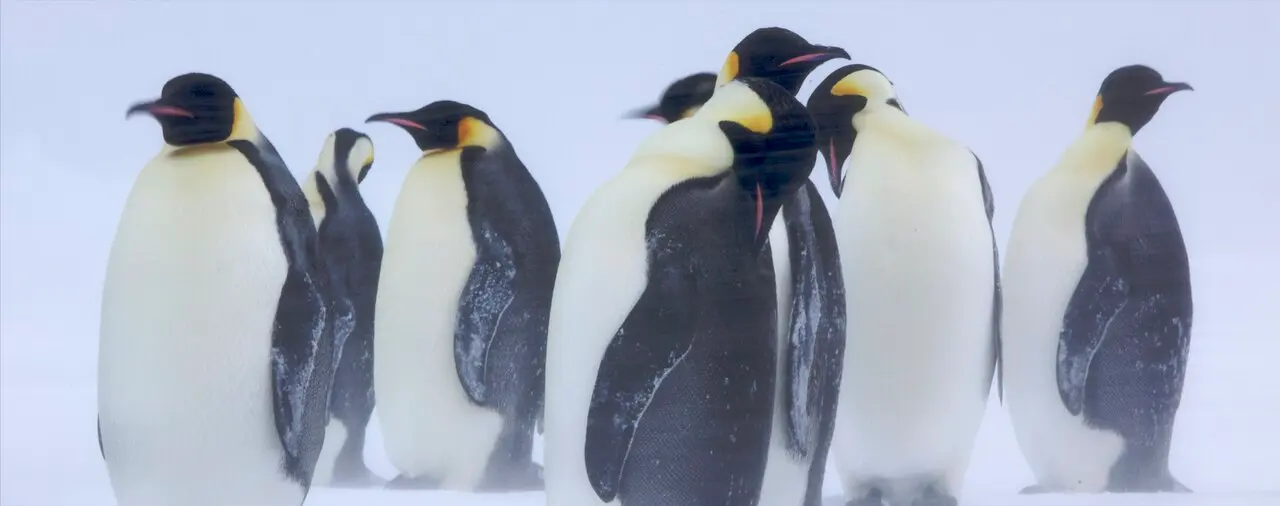
The males pack tightly together in huddles to shelter from the cold. Inside, the temperature can climb above 30 degrees Celsius.
37.5℃
The emperor penguin is the largest of all living penguins, and it has a habit no other penguin shares. It raises its young on the sea ice in winter, the coldest and darkest season in Antarctica.
According to Guinness World Records, winter temperatures there can drop to −40 degrees Celsius (−40 degrees Fahrenheit). On top of that, only the males incubate the eggs, and they eat nothing the whole time. To get through such a brutal winter, male emperor penguins rely on teamwork.
Two months with an egg on their feet
Around April, the Antarctic autumn, emperor penguins trek from the sea to their breeding grounds on the ice. After about six weeks of courtship, each female lays a single egg, hands it over to her mate and heads back to the ocean to feed.
The male balances the egg on top of his feet and covers it with a loose fold of belly skin, keeping it off the frozen ice. He stays on his feet incubating it for about 64 days on average until it hatches. The emperor is the only penguin in which the male alone incubates the egg.
All this time, the male eats nothing. Counting from his arrival at the colony, his fast is often said to last about four months, or 115 days (though a 2018 report found that some males slip away to the sea for a meal). In one study, males’ average weight fell from 38.2 kilograms to 22.75 kilograms (84 to 50 pounds), a loss of about 40 percent. To save energy, a male incubating an egg walks only about 30 meters (100 feet) a day on average.

Toasty inside the huddle
When blizzards blow, the males press against one another and form big, dense clusters known as huddles.
In a study published in 2006, a team of French, Japanese and other researchers attached data loggers to males and found that they spent about 40 percent of their time in huddles. Even when the outside temperature averaged about −17 degrees Celsius (1 degree Fahrenheit), the air around the huddling penguins stayed above freezing, and in the tightest huddles it reached as high as 37.5 degrees Celsius (99.5 degrees Fahrenheit). That is almost as warm as the birds’ own bodies.
Packing together means less of each bird’s body is exposed to the icy wind, so less heat escapes. The researchers concluded that it is this energy saving that lets the males endure their long fast and keep their eggs safe through the winter.
Small shuffles that keep everyone warm
Still, the middle of a huddle should be warm and the outside cold. Are the penguins on the edge simply stuck in the cold?
The 2006 study found that huddles don’t last indefinitely. They form and break up again in short, irregular bouts, and the warmth they offer turned out to be shared roughly equally among the males.
In a study published in 2011, a team led by German researchers photographed a huddle every 1.3 seconds at a colony near Germany’s Neumayer research station, at temperatures between −33 and −43 degrees Celsius (−27 and −45 degrees Fahrenheit). The penguins were packed in at about 21 birds per square meter. Even so, every 30 to 60 seconds the penguins took small steps of 5 to 10 centimeters (2 to 4 inches), and the movement passed from bird to bird, rippling through the whole huddle like a wave. These tiny steps keep the huddle from jamming up, and over time the whole group gradually rearranges itself.
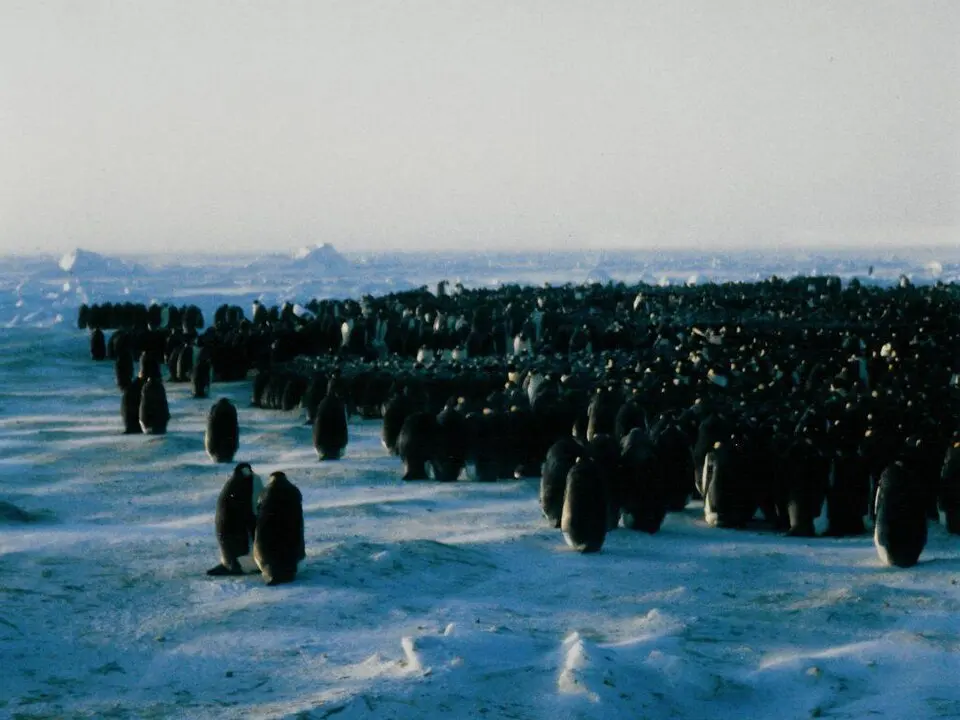

In 2012, American researchers published a mathematical model with one simple rule: a penguin on the windward edge, exposed to the wind, moves along the edge of the huddle to the sheltered downwind side. That alone was enough to make the huddle drift slowly downwind and give every penguin roughly equal access to the warmth. Each bird looking out for itself may end up protecting the whole group.