Do horses sleep standing up?
They can doze and even sleep lightly on their feet. But for REM sleep, the stage associated with dreaming, a horse has to lie down.
40min
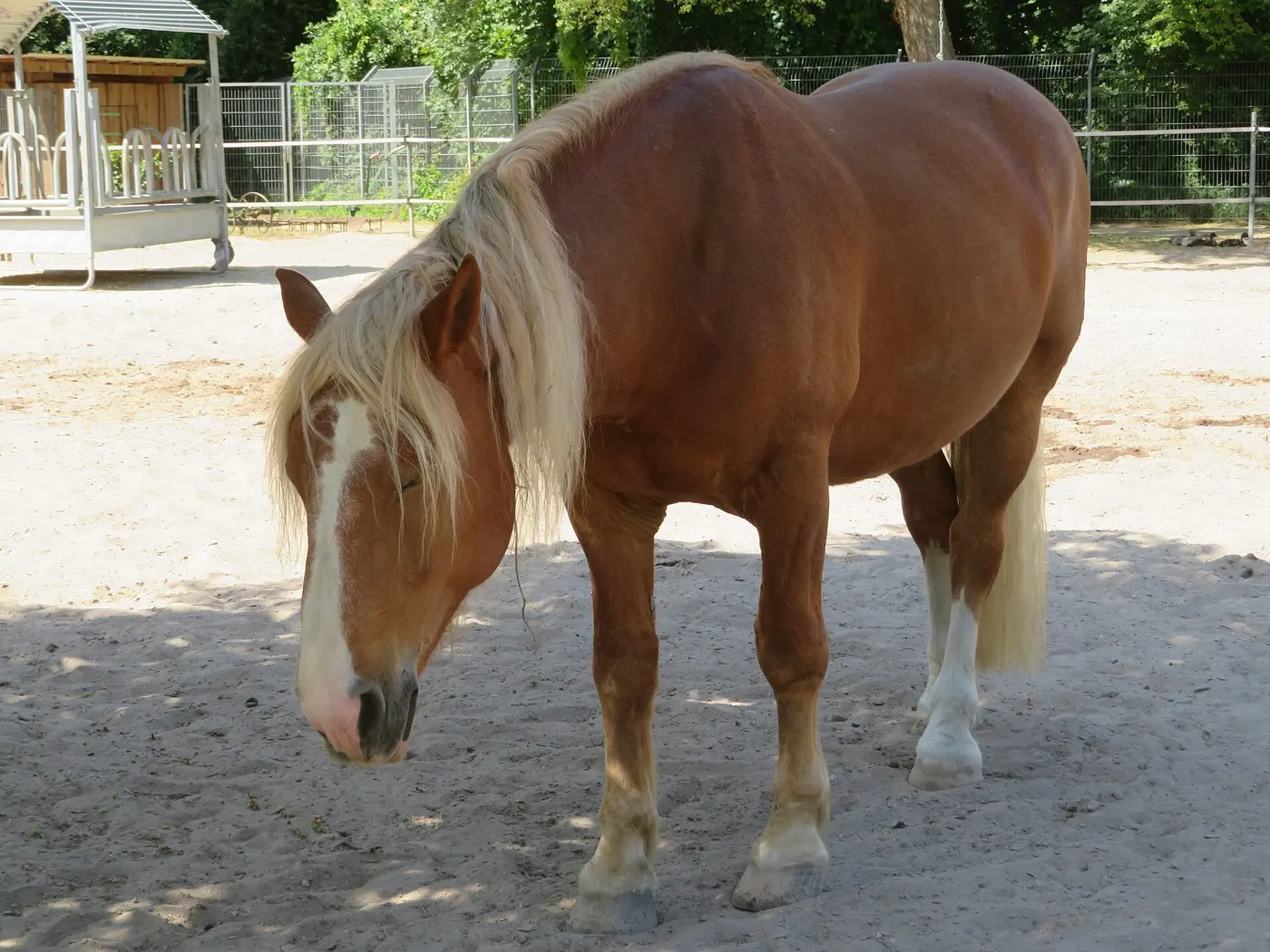
In a field or a stable, you may see a horse standing perfectly still, head drooping and eyelids closed. Often one hind leg is slightly bent, with only the tip of the hoof touching the ground. It certainly looks asleep.
The idea that horses sleep standing up is half true. A horse’s legs have a built-in mechanism that holds the body up with little help from the muscles, so it can rest on its feet. But that isn’t enough. Horses, too, need a kind of sleep they can only get lying down.
Legs that lock
According to Gerald Pijanowski of the University of Illinois College of Veterinary Medicine, horses, which evolved as prey animals ready to bolt at any moment, are equipped with a way to stay upright for long periods. It is called the stay apparatus.
In the front legs, tendons and ligaments act like props, bracing the joints so that the legs don’t buckle under the horse’s weight. The hind legs have a cleverer trick. The horse hooks its kneecap over a bony ridge at the lower end of the thighbone, locking the stifle, the joint that corresponds to our knee. That sets off a chain of locks: the hock, the joint that corresponds to our ankle, and the joints below it are held in place too, and the whole leg becomes a sturdy column.
With one hind leg locked, the horse can rest the weight of its hindquarters on that leg and let the other relax, with just the tip of the hoof on the ground. That is the bent-leg pose described above.

Dreaming requires lying down
Sleep comes in two broad kinds: REM sleep and non-REM sleep. Non-REM sleep ranges from light dozing to deep sleep, while REM sleep is the stage when dreaming is thought to happen most. During REM sleep, the body’s muscles go completely limp.
According to a 2022 review of horse sleep research by Linda Greening of Hartpury University in England and Sebastian McBride of Aberystwyth University in Wales, horses standing on their feet can get not only light sleep but also some deeper non-REM sleep. REM sleep, however, shows up mostly when a horse is lying flat on its side, or lying on its chest with its head propped on the ground. With the muscles relaxed, a standing horse simply could not hold itself up. As Pijanowski puts it, horses may look as though they are deeply asleep on their feet, but “they really are just resting.”
So how much do horses sleep? Pooling earlier studies, Greening and McBride found an average of about 230 minutes a day, a little under four hours. REM sleep made up just under a fifth of that, about 40 minutes. That is far less than we need, and among the mammals the authors compared, horses ranked alongside sheep and goats as the shortest sleepers.
When horses can’t lie down
What happens when a horse doesn’t get enough REM sleep? Greening and McBride note that cases of horses suddenly collapsing because of sleep deprivation have been observed. If a horse dozing on its feet slips into REM sleep, its neck muscles go slack, its head drops to just above the ground, its front legs buckle and its muzzle can hit the floor. Usually the jolt wakes it up, but it can lead to injury.
There are many reasons a horse might stop lying down. Pain in the legs or belly can make it reluctant to get down, and horses lie down less in surroundings where they don’t feel safe. Bedding matters too. Studies have found that horses spend more time lying down on straw than on wood shavings, and that bedding less than 10 cm (4 inches) deep, whether straw or shavings, makes them lie down less often. Horses in larger stalls also stay down longer.
Taking turns on watch
For a horse in the wild, lying on the ground is risky. Getting up from the ground and running away takes time. So horses that live in herds have a strategy for sleeping safely.
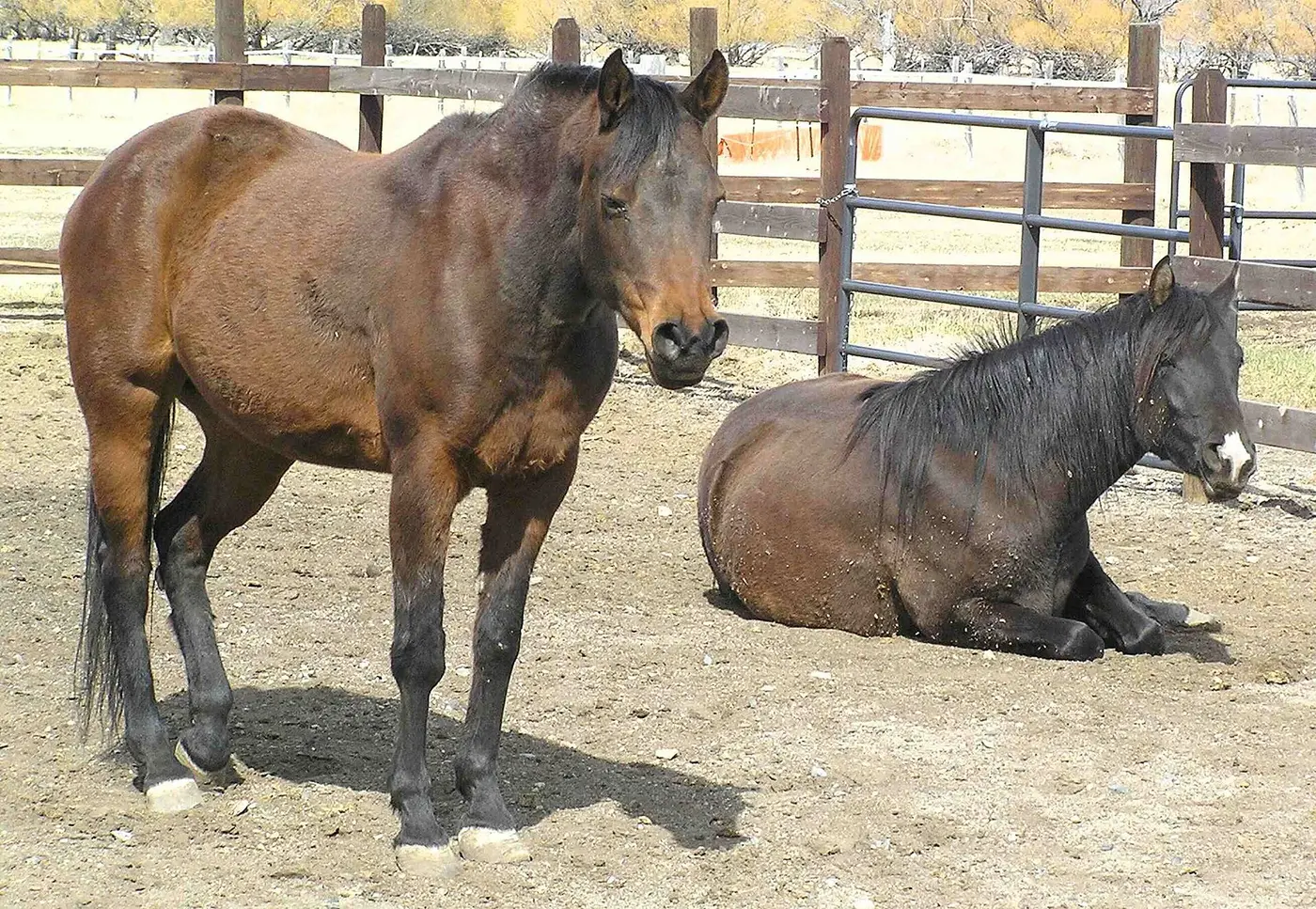

According to Greening and McBride, horses in a herd are often seen switching between lying down and standing up. Rather than all lying down at once, some stay on their feet and stay alert, in what appears to be a rota of group vigilance. The behavior shows up both in horses living with very little human management and in domestic horses. Having companions nearby may be one of the things a horse needs in order to lie down and sleep soundly.