Why do the pages of old books turn yellow?
Two main culprits: lignin left in wood pulp, which changes when exposed to light, and acid formed from the alum used to keep ink from bleeding, which slowly breaks down the paper’s fibers.
95%
Open a paperback that has spent a few decades in a secondhand bookstore and the pages are often tanned a light brown, darkest toward the edges. Leave a newspaper on a sunny windowsill and it yellows surprisingly fast.
Yet at the Shōsōin, the eighth-century imperial storehouse in Nara, Japan, documents written on paper more than 1,200 years ago survive to this day. Old paper is not necessarily fragile paper. What shortened the lives of so many books was a change in papermaking that began in the 19th century.
Paper from wood, and lignin
According to the Library of Congress, until the mid-19th century Western paper was made from cotton and linen rags, using a process that largely kept the long fibers intact. Rag paper is strong and durable. From the mid-1800s on, however, wood replaced rags as the raw material.
Wood is made mostly of cellulose fibers held together by a substance called lignin. According to the Confederation of Paper Industries, the British industry body, trees contain up to 30 percent lignin, which is sensitive to light, degrades, and turns brown in sunlight. Mechanical pulp, made by simply grinding up wood, keeps its lignin, and paper made from it discolors. Newsprint is the classic example. It was never designed to last, and left long enough it loses both its whiteness and its strength.
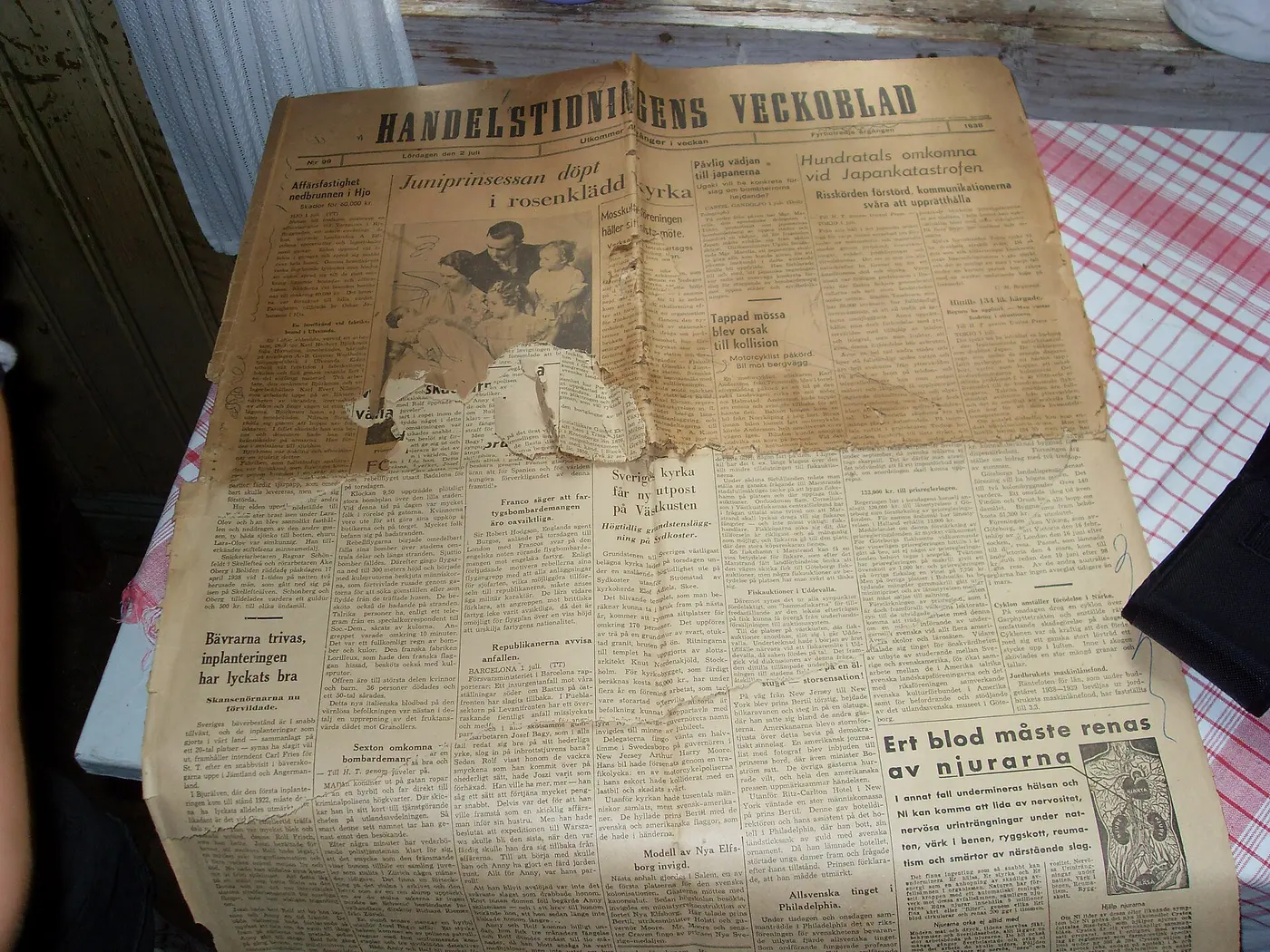

Chemical pulping removes the lignin and yields a much stronger paper. Even so, it is not as durable as rag paper.
Acid from the sizing
There is a second major reason book pages yellow and turn brittle. Untreated paper soaks up ink like blotting paper, so papermakers add sizing. According to the Japanese encyclopedia Nipponica, a method of sizing with rosin, a resin from pine trees, was invented in 1807 and came into wide use.
Japan’s National Diet Library (NDL) explains that to fix the rosin to the fibers, papermakers must add alum, or aluminum sulfate. In the presence of moisture, the alum produces sulfuric acid, which makes the paper acidic. The acid gradually cuts cellulose’s long molecular chains into shorter pieces. According to the Library of Congress, the reaction produces still more acid, so the decay feeds on itself.
Air pollution adds to the damage. Paper absorbs sulfur and nitrogen oxides from the air, and these, too, form acids. The Library of Congress points out that this is why pages are often browner and more brittle at the edges than in the middle.
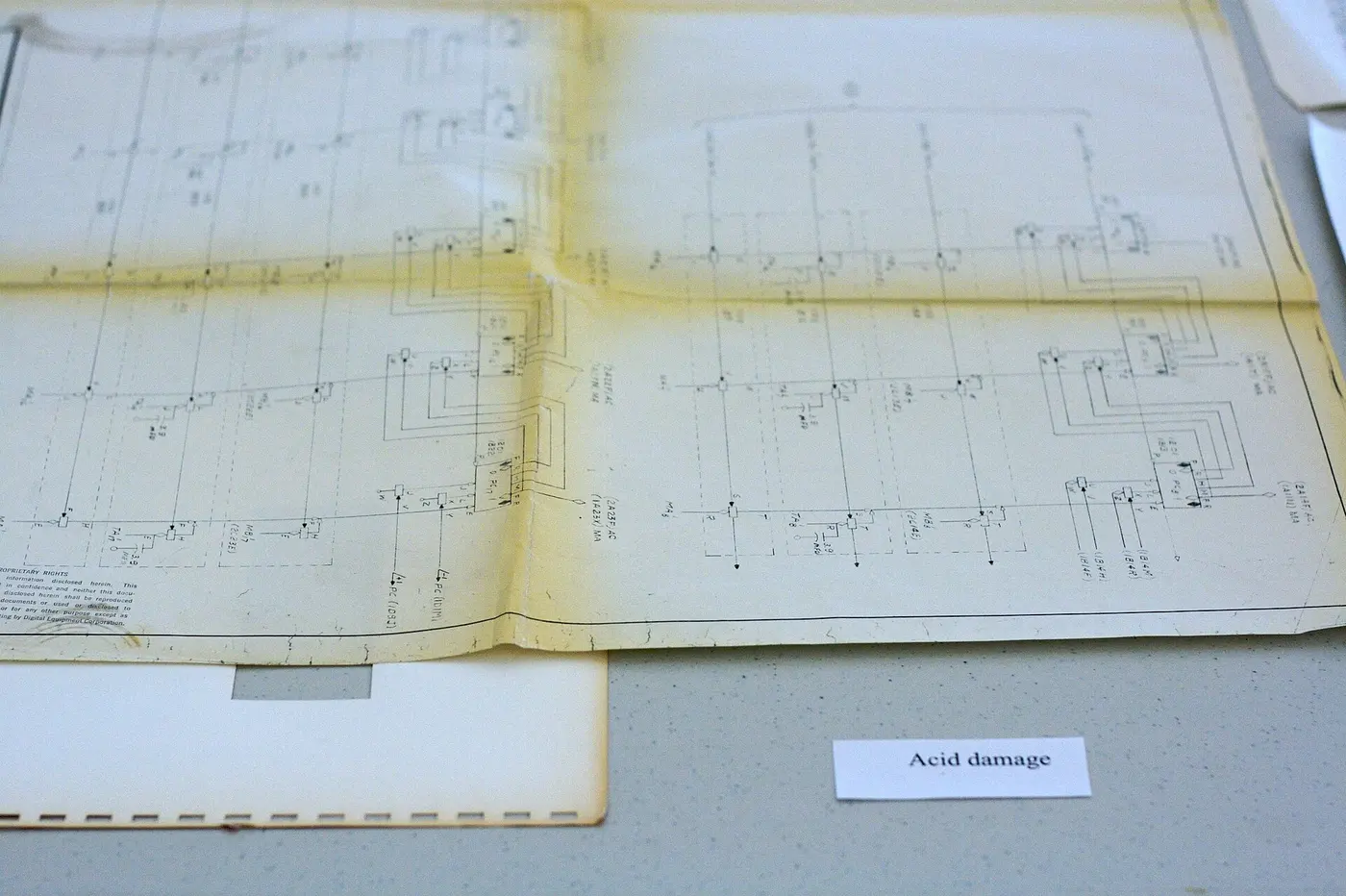

According to the NDL, books printed on such acidic paper fall apart in about 100 years. Traditional Japanese washi, by contrast, made from the tough fibers of plants such as paper mulberry, is pH-neutral and can last more than 1,000 years.
A crisis in the stacks
One of the first to sound the alarm was William Barrow, an American, who predicted in a 1959 report that most books made in the first half of the 20th century would not survive into the next century. The Library of Congress notes, though, that Barrow’s lifetime projections, based on aging paper at high temperatures, have since proven to be wrong.
The decay itself was real enough. According to the NDL, a 1982 survey of Yale University’s library found that about 30 percent of its books were already too brittle to use. In Japan, acid paper became a public issue around 1980, and in 1986 the NDL began surveying how much new material was printed on acid-free paper, which uses a neutral sizing in place of rosin and alum and contains calcium carbonate to neutralize acids. At first, fewer than half of new publications used it. In the 2007–08 survey, the figure for commercial publishers topped 95 percent for the first time.
Neutralizing the acid
Books already printed on acidic paper can have their lives extended by deacidification, which neutralizes the acid. Starting in 2001, the Library of Congress treated about 5.5 million books and other items over two decades. The books are immersed in a liquid containing fine particles of magnesium oxide, and treated volumes are marked with a white dot on the spine as a sign of longevity.
In 2009, the NDL trialed two deacidification methods then available in Japan and confirmed that both were effective and safe. Deacidification cannot restore strength that paper has already lost, though. The trick is to treat books while their paper is still sound.