Why doesn’t gold rust?
Gold holds on to its electrons and does not easily form ions, so it does not react with oxygen, water or sulfur in the air. It does dissolve in aqua regia, though.
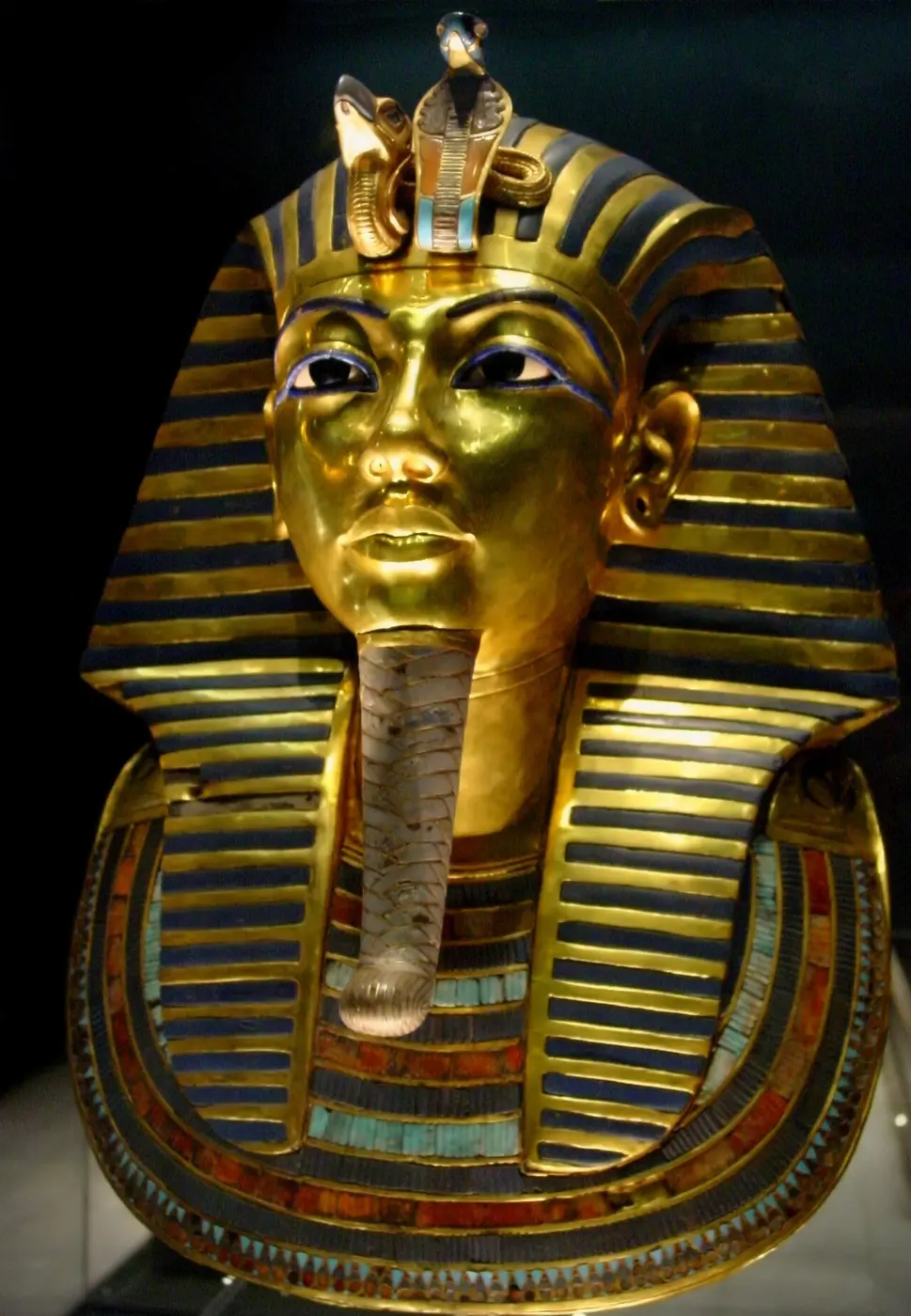
An iron nail left out in the rain turns red with rust, a silver spoon goes black, and a copper roof slowly acquires a green patina. Gold, however, stays golden. As Japan’s Heibonsha World Encyclopedia puts it, the luster of gold is not lost even after hundreds or thousands of years.
Why is gold so unchanging? And can a metal that resists almost everything be dissolved at all?
What rusting really is
Metals corrode because they react with oxygen, water and other substances in the air and turn into new compounds. Red rust forms when iron combines with oxygen and water. Silver tarnishes because it reacts with traces of sulfur compounds in the air, forming black silver sulfide.
And gold? According to the Japanese dictionary Nihon Kokugo Daijiten, gold is chemically extremely stable: it does not react with air, water, oxygen or sulfur, and ordinary acids and alkalis leave it untouched. The Heibonsha World Encyclopedia adds that it does not react with oxygen even at high temperatures. Gold simply ignores the things that make other metals corrode.

A metal that won’t let go of its electrons
When a metal reacts with oxygen or other substances, its atoms give up electrons and become positively charged ions. Chemistry students learn to rank metals by how readily they do this. Potassium and sodium, which shed electrons eagerly, come first, iron sits around the middle, and copper and silver come near the end. At the very bottom are platinum and gold.
But why is gold quite so unreactive? In 1995, B. Hammer and J. K. Nørskov of the Technical University of Denmark published a paper in Nature titled “Why gold is the noblest of all the metals.” “Noble,” in this sense, means unreactive. Using computer calculations, they compared how hydrogen molecules split apart on the surfaces of gold and of three of its neighbors in the periodic table: copper, nickel and platinum.
They found that when another molecule approaches a gold surface and tries to bond, the electrons that would weaken the bond get filled in too, among other effects, so almost no attraction is left. The paper is careful to note that this does not mean gold cannot form chemical bonds at all. It forms very stable alloys with many other metals.
Aqua regia does the trick
The substance that can dissolve gold is aqua regia. According to Nihon Kokugo Daijiten, it is a mixture of concentrated hydrochloric and nitric acids, usually in a ratio of three to one, and its name reflects its power to dissolve gold and platinum, which ordinary acids cannot. The Heibonsha World Encyclopedia says the name, Latin for “royal water,” was given by alchemists.
Neither nitric acid nor hydrochloric acid will dissolve gold on its own. Mixed together, they produce chlorine and nitrosyl chloride, which are powerful oxidizers, and the gold dissolves as a chloride.
The chemist who dissolved the medals
According to the official Nobel Prize website, Niels Bohr’s Institute of Theoretical Physics in Copenhagen, now the Niels Bohr Institute, had been a refuge for German Jewish physicists since 1933. Two German physicists, Max von Laue (Nobel Prize in Physics, 1914) and James Franck (1925), had deposited their gold Nobel medals there to keep them from being confiscated by the German authorities. In Hitler’s Germany, sending gold out of the country was almost a capital offense, and the laureates’ names were engraved on the medals.
In April 1940, Germany occupied Denmark. George de Hevesy, a Hungarian chemist working at the institute, later recalled that he suggested burying the medals, but Bohr disliked the idea because they might be dug up. “I decided to dissolve it,” Hevesy wrote of von Laue’s medal. “While the invading forces marched in the streets of Copenhagen, I was busy dissolving Laue’s and also James Franck’s medals.”
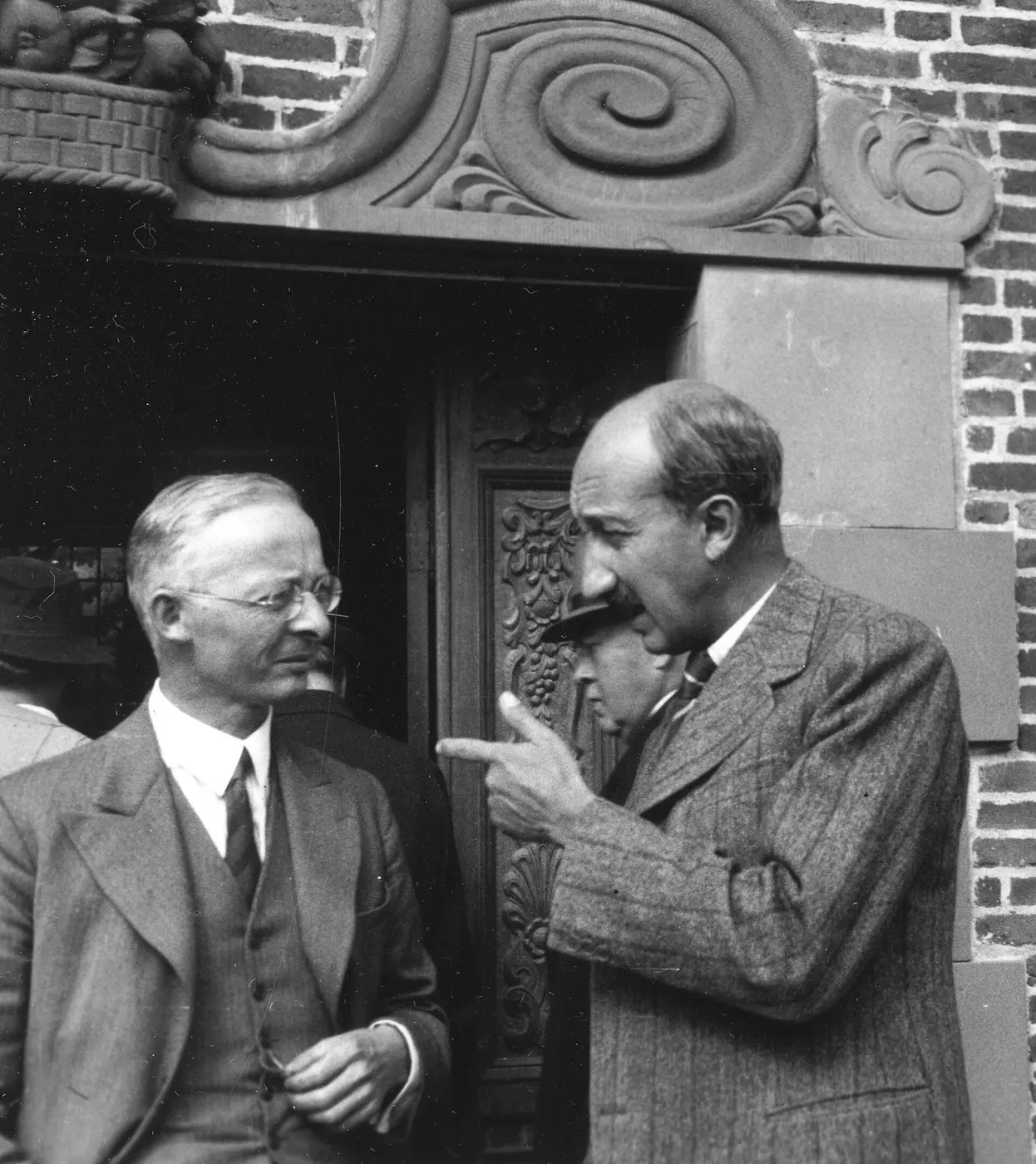

At the time, Nobel medals were made of 23-karat gold and weighed about 200 grams (7 ounces) each. After the war, Hevesy wrote to von Laue that the job had not been easy, because gold is “exceedingly unreactive and difficult to dissolve.” The Germans searched the institute thoroughly but found nothing. The medals sat out the war in aqua regia.
After the war, the gold was recovered from the solution. A letter from Bohr dated January 1950 concerns the delivery of the gold from the two medals to the Royal Swedish Academy of Sciences in Stockholm. The medals were recast, and in January 1952 Franck received his at a ceremony at the University of Chicago.
It is sometimes said that Bohr’s own medal was dissolved, too. But according to the same source, Bohr had already donated his medal in March 1940 to an auction for the benefit of Finnish relief. An anonymous buyer bought it and gave it to a Danish history museum, where it remains. Hevesy himself moved to Sweden in 1943, and the following year he received the 1943 Nobel Prize in Chemistry.