Did a Norwegian invent the paper clip?
No. Johan Vaaler patented a clip of a different shape. The familiar double-loop design is the “Gem,” whose inventor is unknown.
7m
A short length of wire, bent into a loop inside a loop: the paper clip. Most of us have a few dozen rattling around in a desk drawer, and it is so ordinary that hardly anyone wonders who came up with it.
In Norway, the answer used to seem obvious. For decades, Norwegians were taught that the paper clip was a Norwegian invention, the brainchild of a man named Johan Vaaler. Look a little closer, though, and it turns out that the clip Vaaler patented was not the one we all know.
A monument and a stamp
According to Store norske leksikon, Norway’s leading encyclopedia, in 1989 the clip manufacturer O. Mustad & Søn marked the 90th anniversary of Vaaler’s patent application by presenting a paper clip monument 7 meters (23 feet) tall to the BI Norwegian Business School, then in Sandvika just outside Oslo. The monument was later moved to BI’s campus in Oslo. In 1999, for the centenary, the Norwegian postal service issued a commemorative stamp.
Yet both the monument and the stamp show the familiar double-loop clip, not the design Vaaler actually patented.
What Vaaler patented
Vaaler (1866–1910) applied for a German patent on a wire paper fastener in 1899, and in 1901 he received a United States patent as well.
His U.S. patent describes a piece of springy wire bent into a hoop, rectangular, triangular or some other shape, with the two ends lying side by side like tongues so that papers could be slipped between them. There is no inner loop of the kind every modern clip has. The encyclopedia says Vaaler’s clip was of little practical use and never went into production.
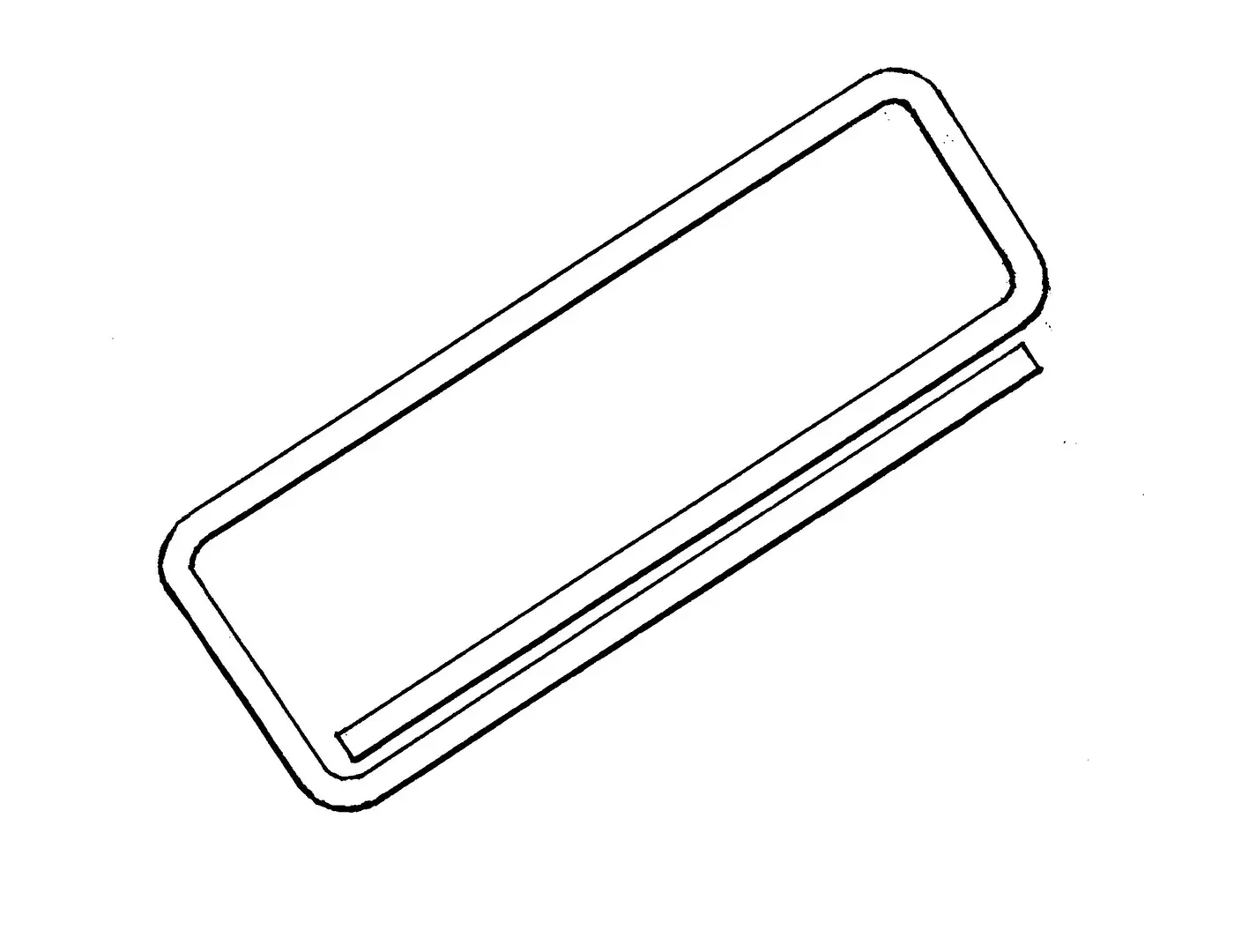

The clip called “Gem”
So who did invent the modern paper clip? Nobody knows for sure. The encyclopedia notes that there were several earlier patents for wire clips, starting with one granted to the American Samuel B. Fay in 1867. But the most successful design, the double loop, was never patented. It was sold under the brand name “Gem,” appears in an advertisement from 1893, and was probably on sale even earlier in both the United States and Britain. In 1899, the American William Middlebrook patented a machine for making clips of this shape.
In other words, by the time Vaaler filed his application in 1899, the modern paper clip was already on the market. The encyclopedia suggests that Gem clips had not yet reached Norway and that Vaaler was probably unaware that better versions were already being sold.
The name lives on far from Britain and America. In Japanese, the standard paper clip is still called a zemu kurippu, and the Digital Daijisen dictionary traces the term to the English “Gem clip.”
A symbol of resistance
During World War II, when Norway was occupied by Germany, a paper clip worn on the lapel became a quiet sign of resistance. A tool for holding sheets of paper together, it told everyone who saw it: we stick together. Red knitted caps were worn in the same spirit, and a comb in the breast pocket meant “we can manage on our own.” The collaborationist party and its paramilitary wing sometimes cracked down hard on people who displayed such symbols in public.
That wartime memory is thought to have given the national-invention story much of its power. But according to the encyclopedia, the claim that Vaaler invented the paper clip did not spread widely until the 1960s. It began in the 1920s, when Halvard Foss, an engineer at the Norwegian patent office, came across Vaaler’s application in German archives, and a search of the National Library of Norway’s digitized collections turns up nothing earlier than 1961. People who wore paper clips during the war chose them because clips hold things together, not because they believed the clip was Norwegian.


The myth was probably first challenged in public in an opinion piece in the newspaper Aftenposten in February 1999. Even so, as late as 2005, Norway’s national biographical dictionary still credited Vaaler with the invention.