Does the English word “tycoon” come from Japanese?
Yes. It comes from taikun, “great lord,” a title the Tokugawa shogunate used for the shogun in its diplomacy. In English it later came to mean a business magnate.
Headlines are full of tycoons: media tycoons, oil tycoons, shipping tycoons. The Oxford Advanced Learner’s Dictionary defines a tycoon as “a person who is successful in business or industry and has become rich and powerful.”
If the word sounds a little un-English, that is because it is. Trace it back and you arrive in Edo-period Japan (1603–1868), at taikun, “great lord,” a title once used for the shogun.
A title for foreign affairs
The shogun was Japan’s military ruler, while the emperor in Kyoto reigned in name only. Taikun was the title the Tokugawa shogunate used for the shogun in its dealings with other countries. According to the Heibonsha World Encyclopedia, it dates from the time of the third shogun, Tokugawa Iemitsu. While restoring relations with Korea, the shogunate had the Korean embassy of 1636 address him as “Great Lord of Japan.”
Why not simply “king”? The same encyclopedia explains that the title of king implied a junior place under the emperor of China, and that taikun reflected Japan’s wish to stand at the center of an international order of its own. Early in the 18th century the scholar Arai Hakuseki briefly had the title changed to “King of Japan,” but the eighth shogun, Yoshimune, restored taikun.
When Japan began signing treaties with Western powers in the 1850s, the title went into those documents as well. According to Nipponica, a Japanese encyclopedia, Western texts wrote it as “Tycoon” to distinguish the shogun from the emperor, whom foreigners called the Mikado.
“The real word”
Townsend Harris, the first American consul general in Japan, recorded the moment he learned the title. “To-day I am told that Ziogoon is not the proper appellation of their ruler, but that it is Tykoon,” he wrote in his journal on October 28, 1857. “Ziogoon is literally ‘Generalissimo,’ while Tykoon means ‘Great Ruler.’” He was not amused. For more than a year, he complained, he had spoken and written “Ziogoon,” and nobody had corrected him until he was about to leave for the capital.
The English text of the commercial treaty that Harris signed the following year, in 1858, names his counterpart as “His Majesty the Ty-Coon of Japan.” In 1860 a Japanese embassy sailed to the United States to exchange the ratified copies. For the American government, the Tycoon was now an official treaty partner. When Abraham Lincoln became president in 1861, he too addressed letters “To His Majesty the Tycoon of Japan.”
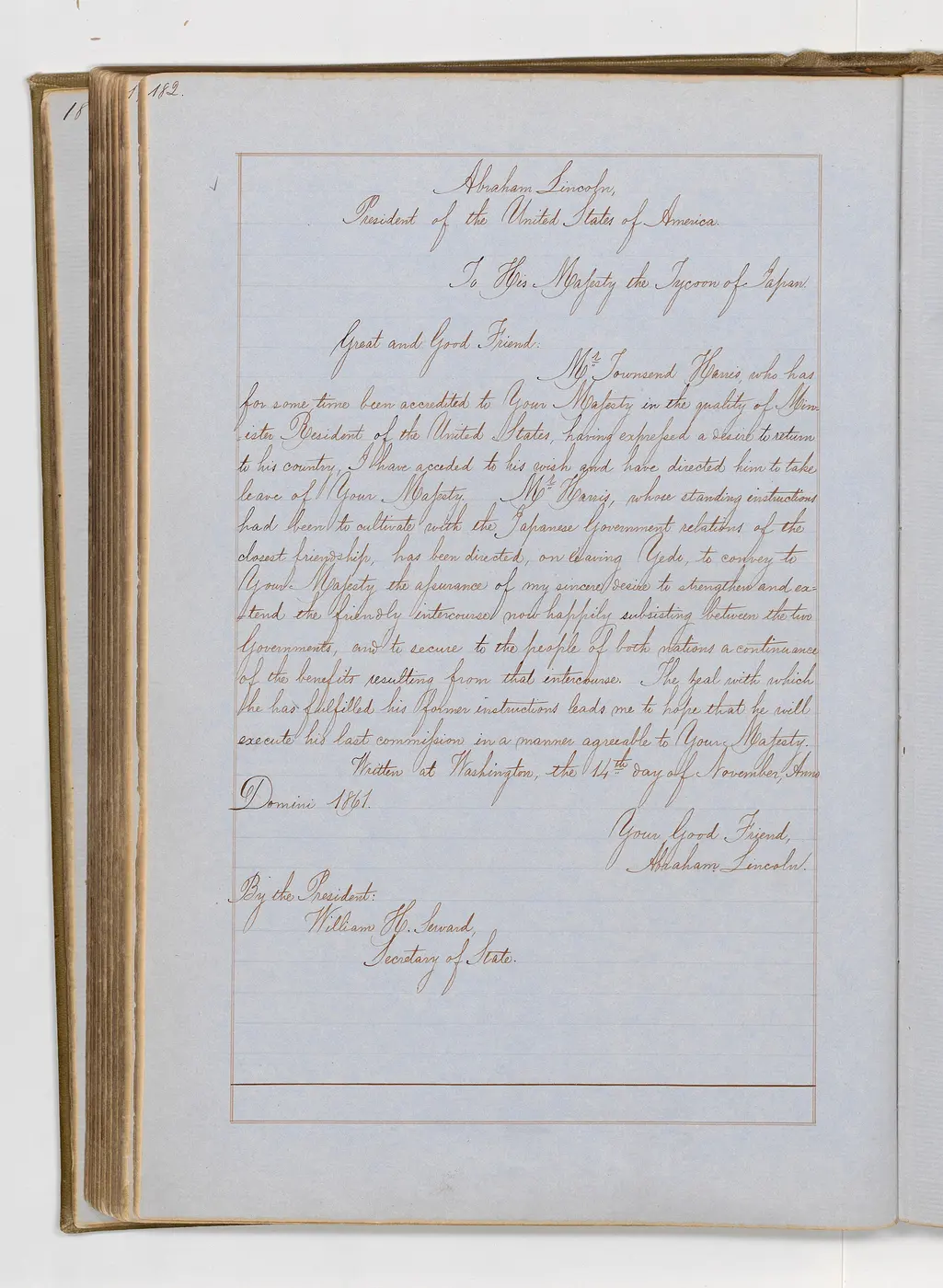

Lincoln becomes “the Tycoon”
At the same time, inside the White House, the word was taking on a life of its own. Lincoln’s private secretaries, John Nicolay and John Hay, took to calling their boss “the Tycoon.”
On August 7, 1863, Hay wrote to Nicolay: “The Tycoon is in fine whack. I have rarely seen him more serene & busy. He is managing this war, the draft, foreign relations, and planning a reconstruction of the Union, all at once.” In the middle of the Civil War, the president had been given the title of a faraway ruler. Dictionary.com describes the nickname as a way of indicating that Lincoln was an important man.
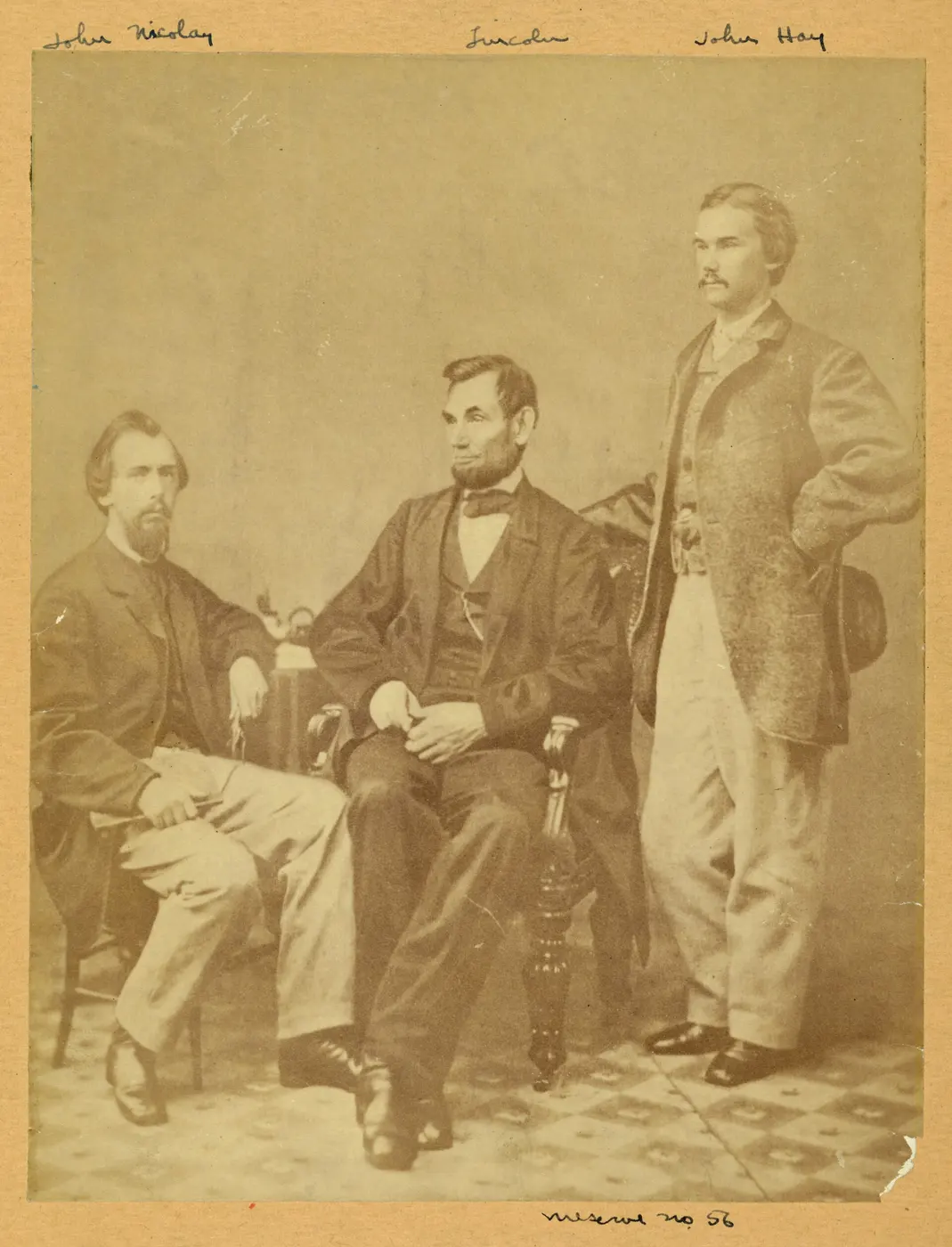
The shogun disappeared, the word stayed
In 1868 the new Meiji government took over Japan’s foreign relations, and taikun vanished from its diplomatic papers. In English, however, “tycoon” lived on as a word for a powerful person. According to NPR, it was after World War I that it came to be applied to giants of business, and by the 1940s journalists were using it almost exclusively for the extremely wealthy.
Japanese reference works have kept track of the word’s new career. The Britannica International Encyclopedia in Japanese notes that while the American English “tycoon” means a business magnate, its origin is taikun. A title that Japan stopped using more than 150 years ago still turns up in English headlines almost every day.