Why is “number eighteen” read as “the box” in Japanese?
Ohako probably comes from keeping something precious in a box. The characters for “number eighteen,” borrowed from a famous set of kabuki plays, were later attached to it.
Every karaoke regular has one: the song you always sing, the one you know you can pull off. In Japanese, that signature piece is your ohako. It is written with characters meaning “eighteen” and “number,” jūhachiban, and can be read that way too. But most people read the same characters as ohako, which literally means “the honorable box.”
What does the number eighteen have to do with a box? The usual answer is that the Ichikawa family of kabuki actors kept the scripts of their best plays in a box. Compare a few Japanese dictionaries, though, and the story turns out to be more tangled.
The Ichikawa family’s eighteen plays
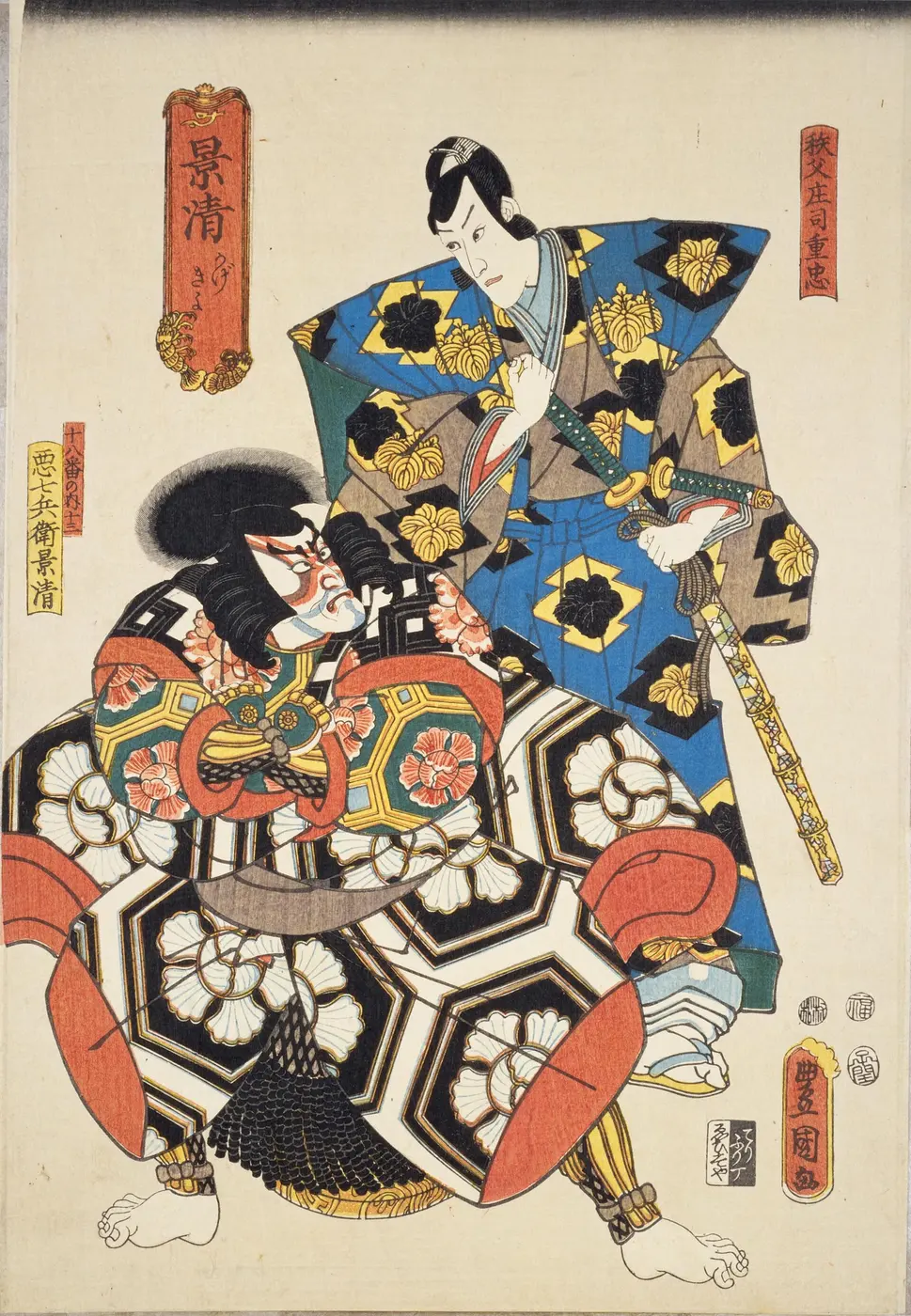
The “eighteen” comes from the Kabuki Jūhachiban, the Eighteen Great Plays of the Ichikawa Danjūrō line, the most illustrious family in kabuki. According to the encyclopedia Sekai Daihyakka Jiten, in the third month of 1832 Ichikawa Danjūrō VII (1791–1859) passed his stage name to his eldest son, who became Danjūrō VIII, and took the name Ebizō himself. On a printed sheet he handed out for the occasion, he listed eighteen plays under the heading “Kabuki Plays, a Set of Eighteen.”
The list included Shibaraku (“Wait a Moment!”), Sukeroku, Narukami and Uirō-uri (“The Medicine Peddler”), all first staged by Danjūrō I, II or IV. Every one was built on aragoto, the family’s trademark “rough style,” in which superhuman heroes in bold red-and-black makeup stomp and glare across the stage. According to the encyclopedia Nihon Daihyakka Zensho, though, many of the plays survived only as titles by then, and most were revived only after the Edo period (1603–1868) had ended.
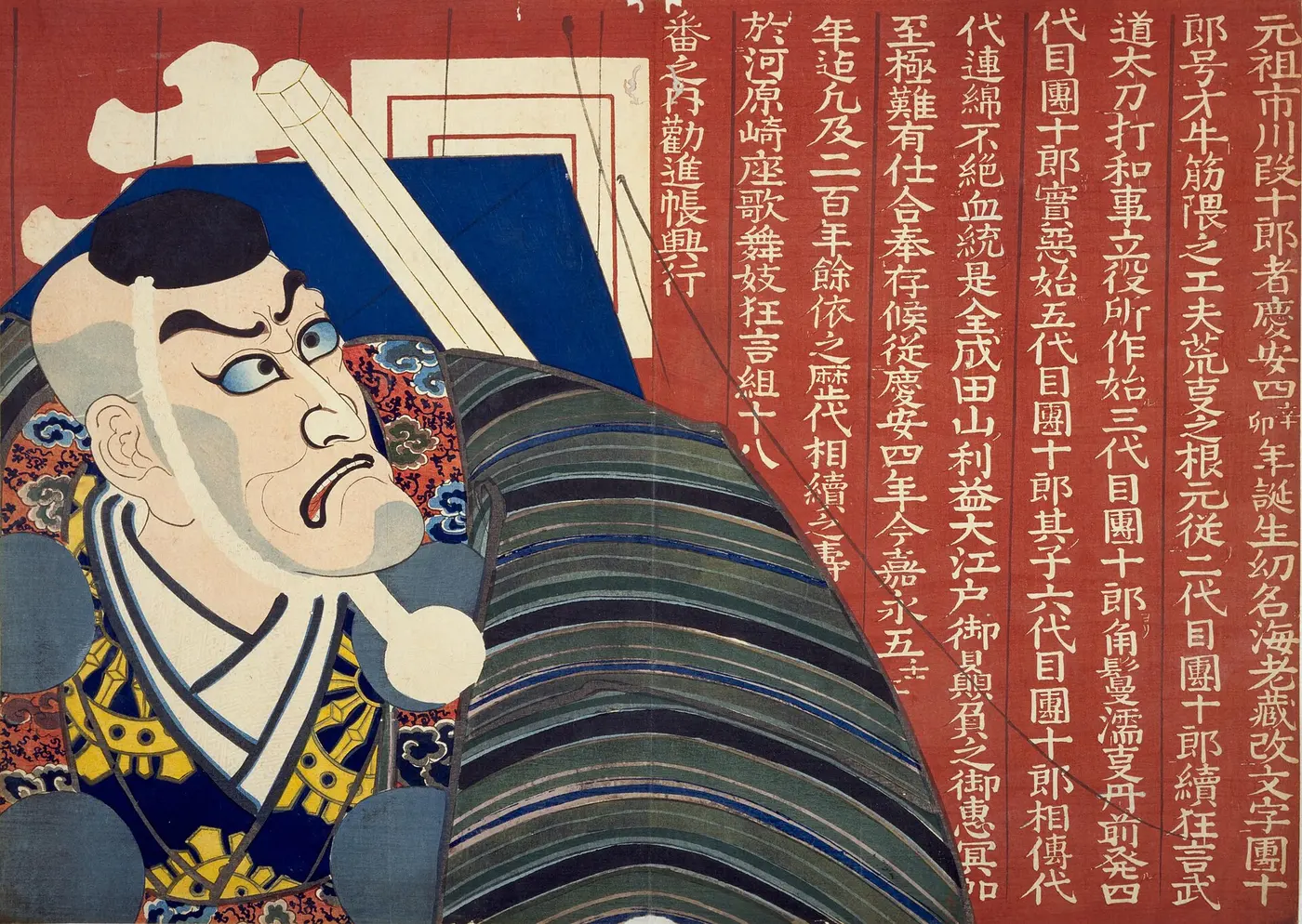
Kanjinchō (“The Subscription List”) was a special case: Danjūrō VII reworked material once performed by Danjūrō I. When he premiered it in 1840, borrowing boldly from the staging of Noh theater, the billboard announced it as one of the Eighteen.

Eighteen before Danjūrō
Calling a set of hit plays “the eighteen” was not Danjūrō VII’s invention. The Nihon Kokugo Daijiten, Japan’s largest dictionary, notes that kabuki had long spoken of its “eighteen.” According to Nihon Daihyakka Zensho, a memoir by the playwright Mimasuya Nisōji records that the phrase “the eighteen kabuki plays” existed before Danjūrō’s list, and that it referred to hit plays of the Edo stage in general, not just the Ichikawa repertoire.
Why eighteen? Nobody knows. Sekai Daihyakka Jiten lists several theories, from an older custom of calling special plays “the eighteen” to the idea that the number stood for “all” or “the best,” as in the “eighteen elements” of Buddhist thought or the “eighteen martial arts.” The question, it says, has not been settled.
Whatever its roots, Danjūrō’s list made the phrase famous. The earliest example the Nihon Kokugo Daijiten gives for jūhachiban in the general sense of “one’s specialty” comes from a popular novel of the 1860s.
Out of the box
And ohako? The Digital Daijisen dictionary says the word comes from the idea of keeping something precious in a box, and adds that it is “also said” to come from the Ichikawa family storing the scripts of the eighteen plays in boxes.
The Nihon Kokugo Daijiten, however, turns up a surprise. Its earliest example of ohako comes from a comic novel published in 1826, six years before Danjūrō VII announced his list, in which someone pulls out his ohako and wows the crowd. The word for a prized specialty already existed.
The dictionary offers its own guess. In Japan a valuable painting or tea bowl is often kept in a box signed by its maker, or by an expert vouching that it is genuine, a practice called hakogaki. Ohako may first have meant a specialty as good as a certified treasure. That sense then merged with the older habit of calling hit plays “the eighteen,” and finally with Danjūrō VII’s famous list.

Nihon Daihyakka Zensho, too, mentions the boxed scripts only as something “that is said.” It concludes that the characters for “eighteen” were more likely attached to ohako because actors called their hit roles their “eighteen” and guarded them as treasured specialties. The tale of the script boxes may simply have come along later to explain the odd pairing of spelling and sound.
From kabuki, ohako spread to the storytellers and comedians of the variety halls and then into everyday speech, where it also came to mean someone’s habitual gesture or pet phrase. In Futabatei Shimei’s novel Ukigumo (Drifting Clouds, 1887–89), the word appears written with the characters for “specialty” and read hako.