Why is fudging a number “reading the mackerel” in Japanese?
No one knows for sure. The best-known theory says fishmongers counted fast-spoiling mackerel in a hurry and fudged the count, but dictionaries present it only as one theory among several.
Asked your age, you knock off a year or two. Asked how many people came to your event, you round up generously. In Japanese, bending a number in your own favor is called saba o yomu, literally “to read the mackerel.” The Digital Daijisen dictionary’s example: reading the mackerel to make yourself four or five years younger.
But why a fish, and why that fish? The expression can be traced back to the first half of the Edo period (1603–1868). Its origin, however, is still a matter of competing theories.
“Reading” means counting
Start with the verb. According to the encyclopedia Nihon Daihyakka Zensho, the original meaning of yomu, now usually “to read,” was “to count.” That sense survives in expressions such as hyō o yomu, “to read the votes,” meaning to estimate a vote count, and byōyomi, “second-reading,” the Japanese word for a countdown.
The Nihon Kokugo Daijiten, Japan’s largest dictionary, gives an early example from the eighth-century poetry anthology Man’yōshū, in which someone waits for a loved one while “reading the months and days,” that is, counting them off. So saba o yomu originally meant “to count the mackerel.”
Saikaku and the actors’ age
The earliest example of the full phrase in the abridged edition of the Nihon Kokugo Daijiten comes from 1753, in a satirical sermon-style book that speaks of someone “reading the mackerel” on a zenisashi, a cord used to string together coins with holes in the middle.
The noun sabayomi, “mackerel-reading,” shows up more than 60 years earlier. In 1687 the novelist Ihara Saikaku published Nanshoku Ōkagami (“The Great Mirror of Male Love”). In one passage he pokes fun at kabuki actors who kept playing youths on stage into their mid-30s. Outwardly they hid their age, he wrote, and they even did “mackerel-reading” with their setsubun beans.
On setsubun, the traditional eve of spring, people scatter roasted beans to drive out demons and then eat one bean for each year of their age, or one more, according to the Nihon Daihyakka Zensho. Saikaku’s actors were fudging even the bean count. Shaving years off one’s age, in other words, has been called “reading the mackerel” for more than 300 years.
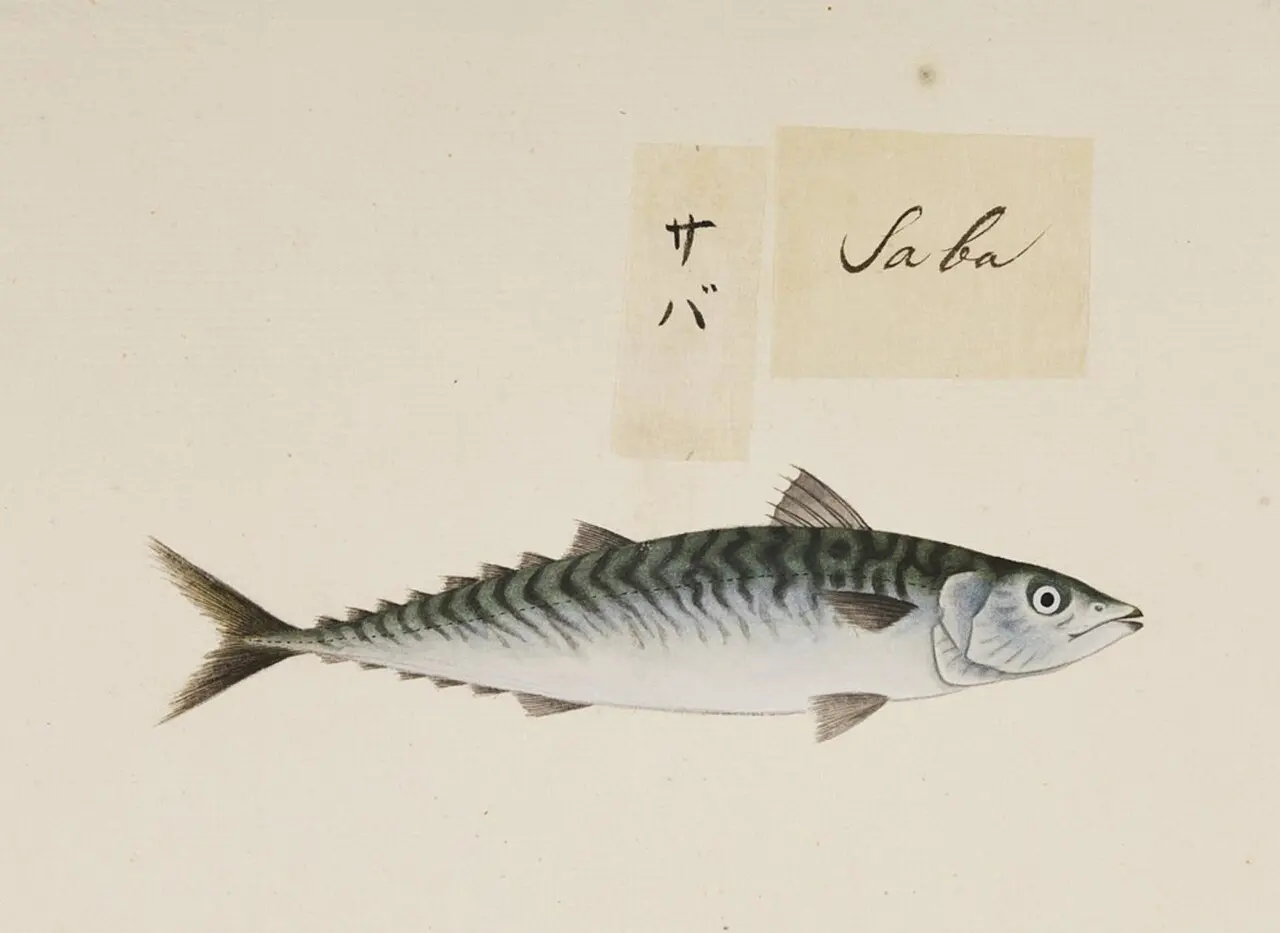

In 1893 the writer Yamada Bimyō’s dictionary Nihon Daijisho defined sabayomi as lying about a number and pocketing the difference, and noted that the phrase came from vulgar slang. The novelist Natsume Sōseki still called it slang in his 1915 novel Michikusa (“Grass on the Wayside”). For a long time, it seems, the phrase had the feel of street talk.
Why mackerel?
So why mackerel? The Digital Daijisen explains that “according to one theory,” people at fish markets deliberately counted mackerel too fast in order to fudge the total. Note the careful wording: one theory, it is said.
The Kotowaza o Shiru Jiten, a dictionary of proverbs and sayings, says there are various theories and lists four. The first is that fishmongers called their fast, rattled-off counting of small fish isaba-yomi, “fish-market counting,” and that this was shortened. The second is that workers cheated when counting a big catch of mackerel. The third is that mackerel spoils so quickly that it had to be sold in a hurry, and counting was correspondingly sloppy. The fourth is that the phrase was borrowed from the way sashisaba, salted mackerel sold in pairs, was counted, with two fish making one unit.
The third theory rests on the fish’s reputation. Japanese even has a saying, saba no ikigusare, “mackerel rots while still alive.” According to the Digital Daijisen, mackerel flesh begins to break down soon after the catch, so a fish that looks fresh may already be going off.
The isaba of the fish market
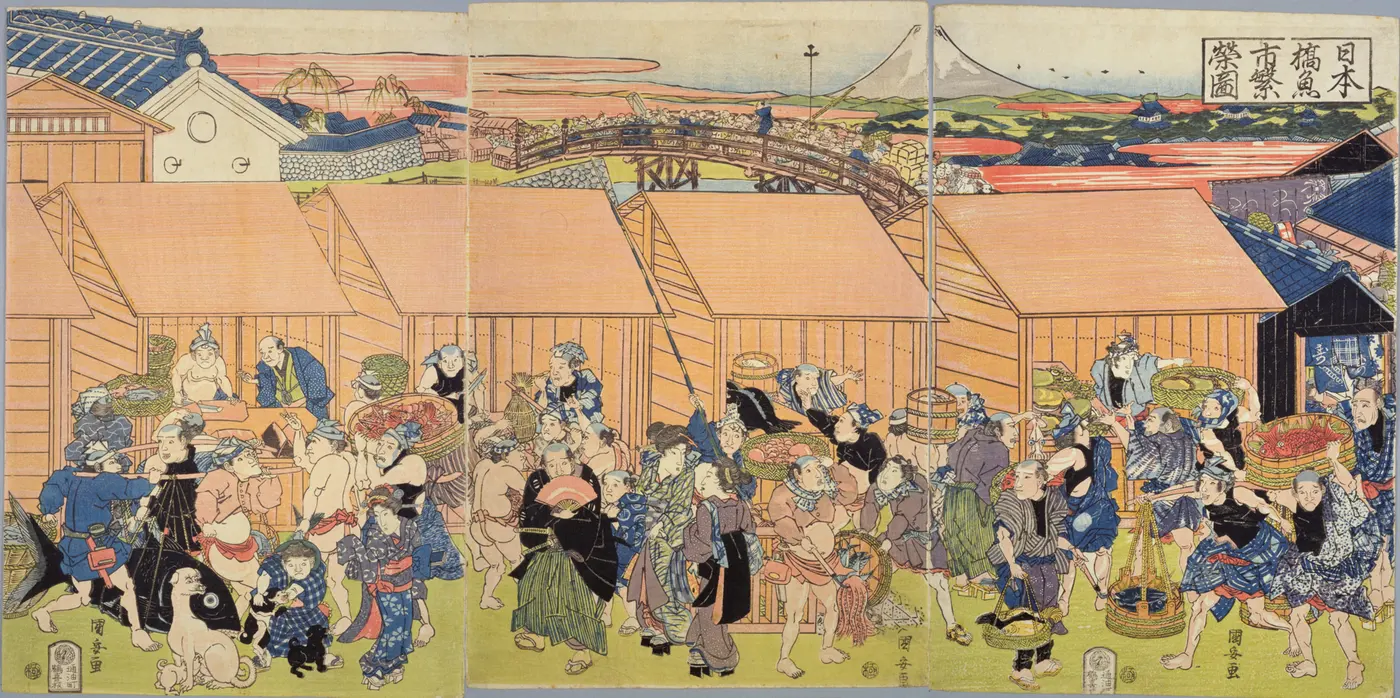
The isaba of the first theory is an old word written with characters meaning “fifty collected.” According to the Nihon Kokugo Daijiten, in the Edo period it was used for fish markets and fish dealers, and even for fishing grounds, fishing boats and seafood processors; from the mid-Edo period on it mainly meant fish wholesalers and middlemen. The encyclopedia Sekai Daihyakka Jiten notes that in many parts of eastern Japan, isaba is still used to mean a fish seller or fish shop.

The sashisaba of the fourth theory were mackerel split open along the back, salted, stacked in twos and pinned together at the head. The Nihon Kokugo Daijiten says they were offered at the Bon festival on trays honoring the long life of one’s parents, and given as seasonal gifts.
Each theory conjures up fish being counted in a hurry. But no record has been found that settles the matter, which is why the dictionaries hedge with “one theory” and “various theories.”