Has the Japanese word “tsundoku” become English?
It is getting there. Tsundoku has spread among English-speaking book lovers, and the Cambridge Dictionary lists it as a noun. It began as a pun in 19th-century Japan.
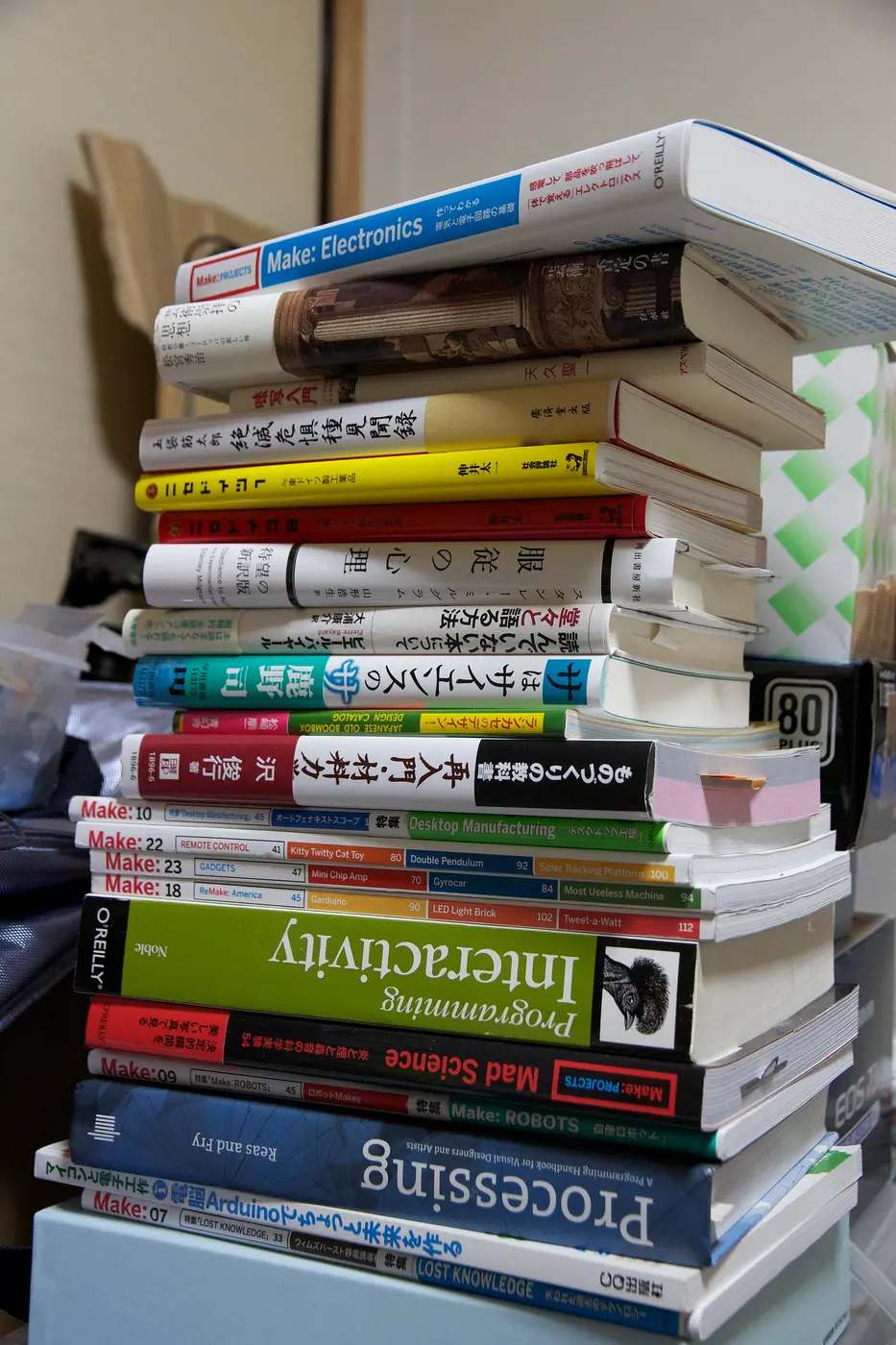
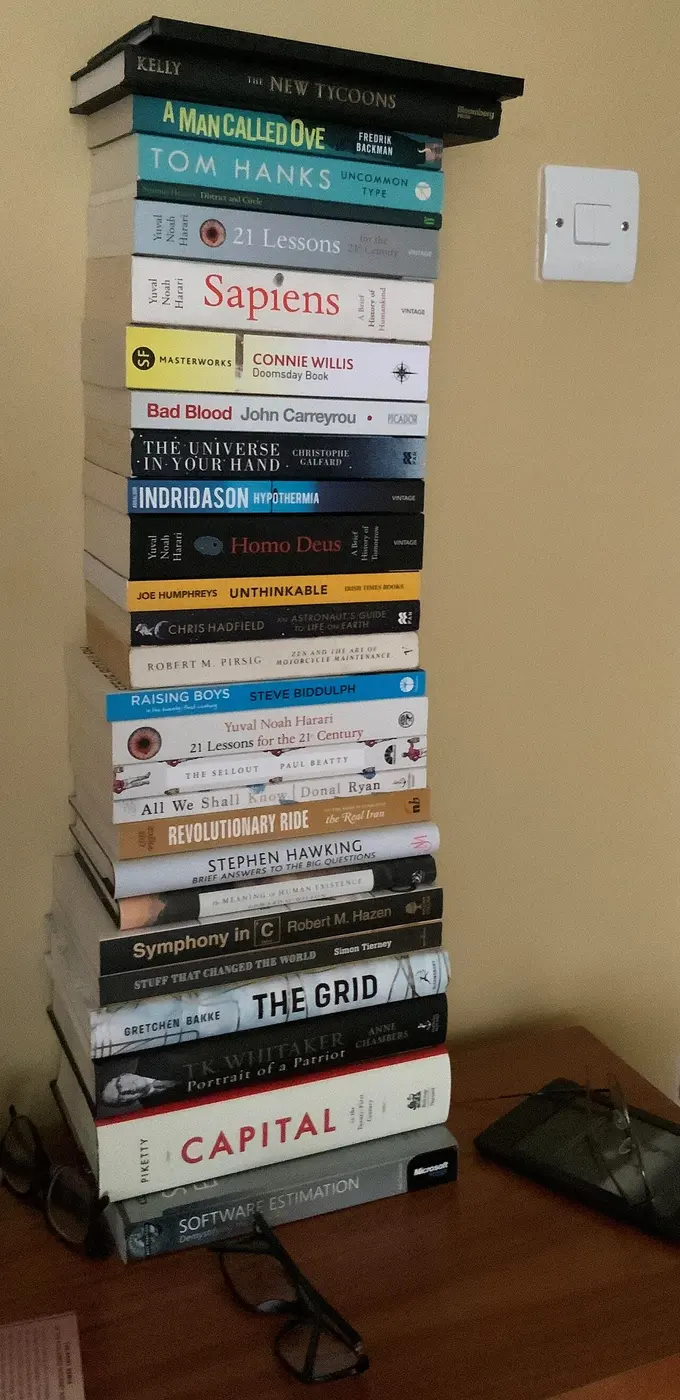
A new release you could not resist, a hefty book you ordered because you were definitely going to read it. Before you know it, there is a stack of unread books by the desk or on the floor. In Japanese, that is tsundoku.
These days the word is familiar to plenty of English-speaking readers too. So how did a Japanese pun end up in an English dictionary?
A pun on “piling up” and “reading”
According to the Japanese dictionary Digital Daijisen, tsundoku is a play on words. It combines tsunde oku, “to pile up and leave,” with the doku of dokusho, “reading.” In casual speech tsunde oku shrinks to tsundoku, and the final syllable is then written with the character for “read.” Say it aloud and it means “leave it in a pile”; write it down and it seems to mean “pile-reading.” The joke is that the books in question are precisely the ones that never get read.

A Meiji-era jibe
The word is older than you might think. In a 2018 article on tsundoku, the BBC spoke to Andrew Gerstle, a professor at the University of London who teaches premodern Japanese texts. “The phrase ‘tsundoku sensei’ appears in text from 1879 according to the writer Mori Senzo,” he explained, adding that it was “likely to be satirical, about a teacher who has lots of books but doesn’t read them.” Since it was already in print by 1879, he said, the word was probably in use before that.
That puts it early in the Meiji era (1868–1912), when Japan was opening up to the West and new books and magazines were pouring off the presses. The unread pile, it seems, was already a running joke. As one of the example sentences in the Cambridge Dictionary puts it, “If you think tsundoku is a modern problem brought on by the ease of ordering books online, you’d be mistaken.”
From Japan to English-speaking readers
Tsundoku became known among English-speaking book lovers in the 2010s. By the time the BBC covered it in 2018, the term was being discussed in a popular post on Reddit’s community dedicated to books. It may sound like a criticism, but Professor Gerstle told the BBC that the word carries no stigma in Japan.
It has started to appear in dictionaries, too. The online Cambridge Dictionary, published by Cambridge University Press, includes tsundoku as a noun meaning “the practice of buying a lot of books and keeping them in a pile because you intend to read them but have not done so yet.” Usefully, it adds that the word is “also used to refer to the pile itself,” and one of its examples even uses the plural “tsundokus.” It also gives the word an English pronunciation, SUN-doh-koo, quietly dropping the t at the start. Not every dictionary has caught up, though. As of November 2026, the word does not appear in the online editions of the Oxford Advanced Learner’s Dictionary or Dictionary.com. Tsundoku is on its way into English, but it is not quite there yet.

What English already had: bibliomania
English did have a word for people with too many books: bibliomania. As the BBC notes, it was the title of a 19th-century book by Thomas Frognall Dibdin, who used it to describe an obsession with collecting rare books such as first editions and illustrated copies.
But the BBC also pointed out a key difference. Bibliomania describes the urge to build a collection. Tsundoku describes the intention to read books, and the collection that piles up by accident. English had no neat word for the second situation, which may be exactly why tsundoku caught on so easily.