What is the “rachi” in the Japanese phrase for getting nowhere?
A rachi is the fence around a horse track. The word came to mean a boundary or a settlement, so “the rachi won’t open” means a matter won’t move forward.
You call a help line and get passed from one person to the next. The meeting has been held three times and still nothing is decided. At moments like these, Japanese speakers say “rachi ga akanai”: literally, “the rachi won’t open.” It means you are getting nowhere.
It is an everyday expression, but the word rachi, written with a character that rarely appears anywhere else, is a mystery to most people who use it. What is a rachi, and why should it open?
A fence around a horse track
According to the Nihon Kokugo Daijiten, Japan’s largest dictionary, a rachi was originally the fence around a riding ground or racecourse. Its earliest example comes from the Nihon Sandai Jitsuroku, an official history compiled in the Heian period (794–1185). An entry for 882 records an order to Yamato Province to build a rachi for the horse-racing ground of the Kasuga Shrine, today’s Kasuga Taisha in Nara.
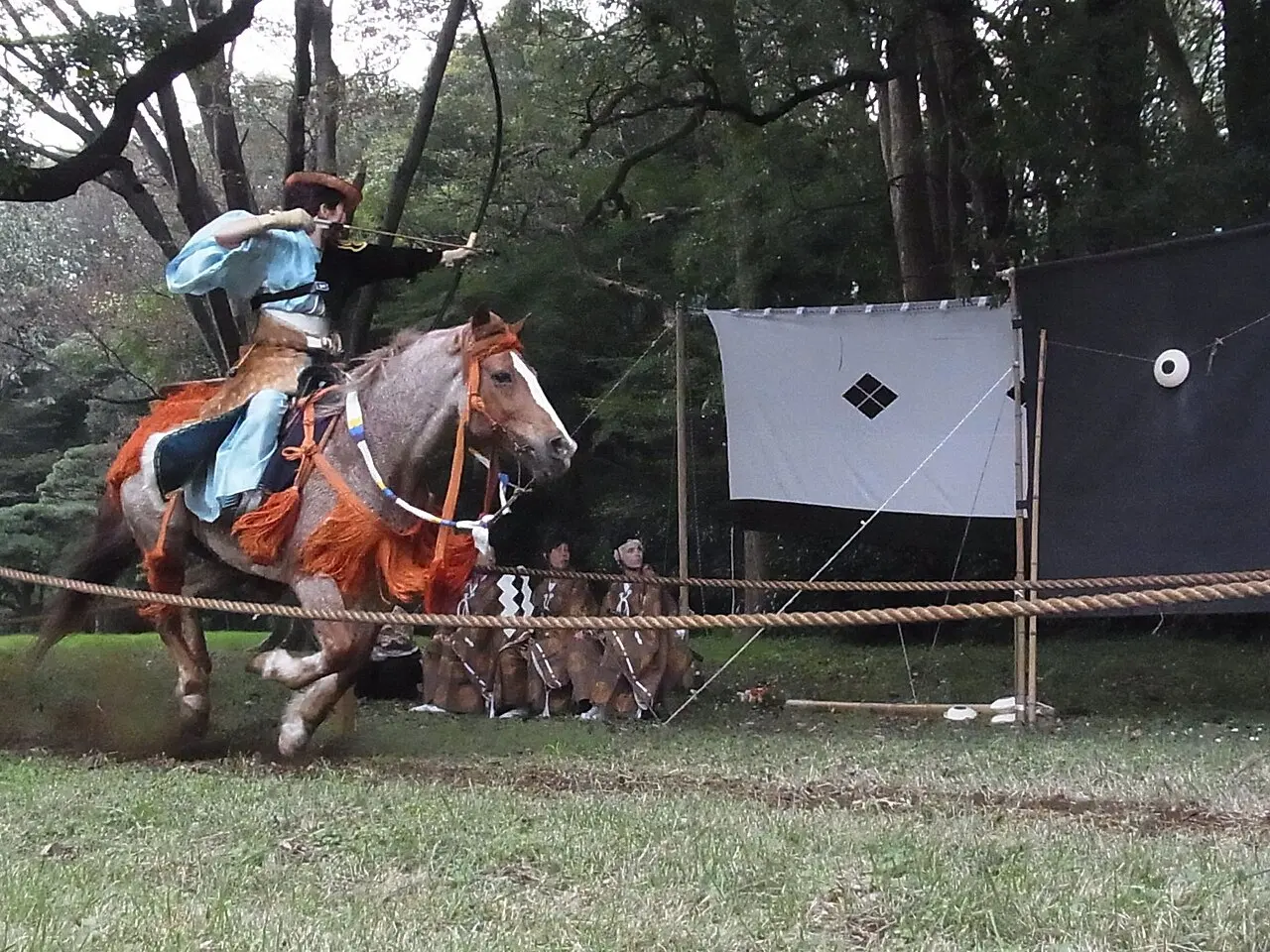
The fences had names of their own. The same dictionary explains that on grounds for mounted archery, the taller fence on the archer’s bow-hand side, where the targets stood, was the “male rachi,” and the lower one on the other side the “female rachi.” Japanese racecourses still call the inner rail the uchi-rachi and the outer rail the soto-rachi.
The written character itself means an enclosure. According to Jitsū, a character dictionary by the scholar Shirakawa Shizuka, the ancient Chinese dictionary Shuowen Jiezi defined it as “a low wall.”

A man whose rachi was open
From a fence, rachi went on to mean a boundary, and then the settling of a matter. The Nihon Kokugo Daijiten suggests this figurative sense arose around the late Middle Ages.
One clue comes from the Vocabulario da Lingoa de Iapam, a Japanese–Portuguese dictionary that Jesuit missionaries published in Nagasaki in 1603–04. It lists the phrase “Rachino aita hito,” “a person whose rachi is open,” and explains it as someone frank who readily listens to reason. Today we might say “someone easy to deal with.”
In the Edo period (1603–1868), a sensible person who got things done briskly could be called a rachiake, a “rachi-opener.” The novelist Ihara Saikaku used the word in a story collection of 1688. Rachi ga aku, “the rachi opens,” has long meant that things are moving and a matter is being settled.
Born at the Kamo horse race?
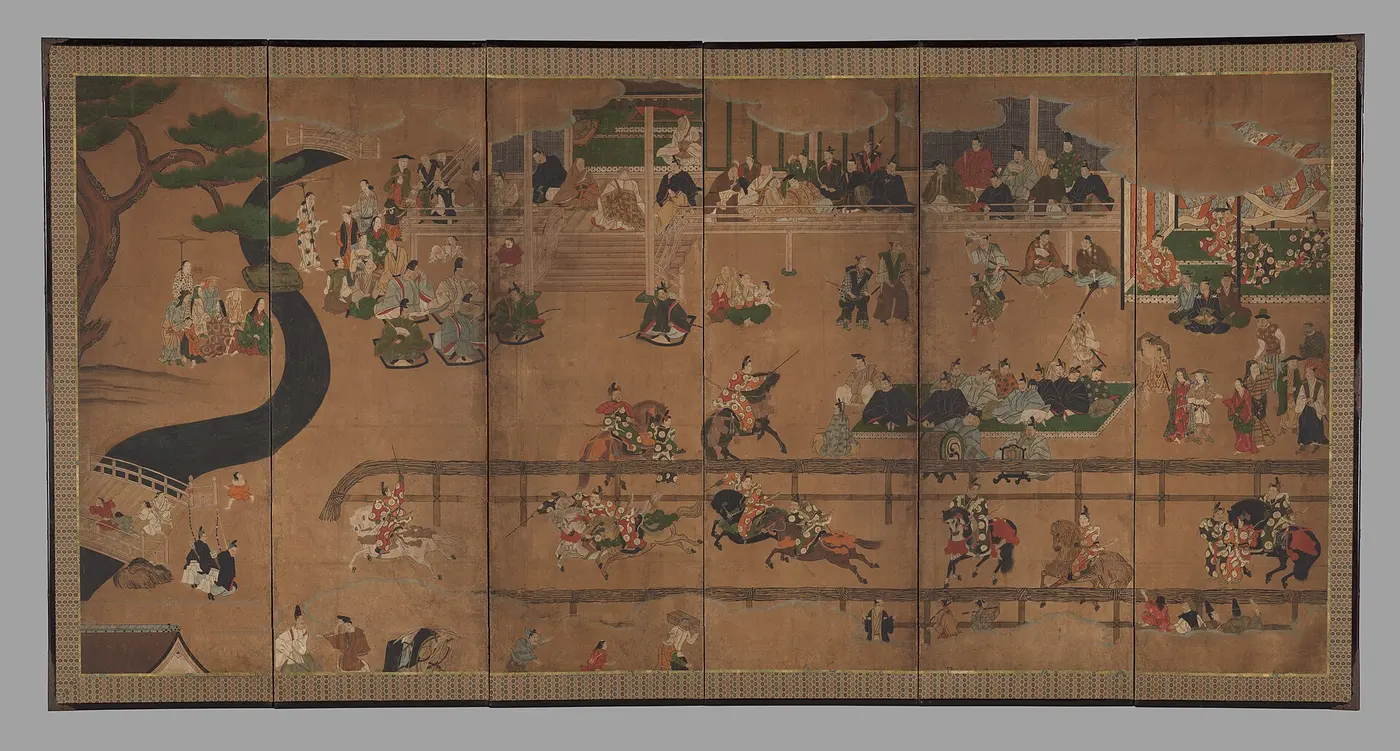
But why should an open fence mean progress? In Jitsū, Shirakawa writes that being allowed into the grounds was called “the rachi opens,” and that the phrase came from the horse race held as a sacred rite at Kamigamo Shrine in Kyoto.
According to the shrine, the Kamo horse race began in 1093, when Emperor Horikawa, praying for peace and good harvests, moved a horse race held at the imperial palace to the shrine. According to the encyclopedia Nihon Daihyakka Zensho, the course ran across a stretch of lawn between the shrine’s first and second torii gates, with a rachi along both sides of the track. The race is still held every year on May 5.

The Nihon Kokugo Daijiten and the Digital Daijisen dictionary, however, say nothing about where the phrase came from. Fenced riding grounds were not unique to Kamigamo. According to the encyclopedia Sekai Daihyakka Jiten, the many riding grounds of Edo, today’s Tokyo, were likewise enclosed by earthen banks and rachi. Until the fence opened, the horses could not run and the spectators could not get in. Whichever ground the phrase came from, that scene probably lies behind it.
Related words, and one impostor
Rachi turns up in other words, too. Furachi, “no rachi,” now means outrageous or inexcusable, but the Nihon Kokugo Daijiten shows it could also mean that a matter was unresolved. Hōratsu, “loosed from the rachi,” means unrestrained or dissolute, from the image of a horse let out of its enclosure. It appears as early as 1106, in the diary of a Heian courtier.
Rachi mo nai, “not even a rachi,” meaning silly or pointless, is a different story. The Digital Daijisen says it may be a corruption of rasshi mo nai, from rasshi, “proper order.” The Nihon Kokugo Daijiten presents both views, so this rachi may never have been a fence at all.