Where does the Japanese word “tasogare” come from?
From “ta so kare,” meaning “who is that?”: the dusky hour of evening when faces are hard to make out.
The sun has set, and the sky is shifting from madder red to indigo. In Japanese, that moment of evening is called tasogare (たそがれ). Tasogare-doki, “the hour of tasogare”; jinsei no tasogare, “the twilight of life”: it is a word with a lonely, lovely ring.
It is written 黄昏, with the characters for “yellow” and “dusk,” but neither character on its own can be read “tasogare.” The spelling comes from kōkon (黄昏), a word borrowed from Chinese meaning “evening twilight,” which was simply assigned to the native Japanese word. So where did the word tasogare itself come from?
“Ta so kare”: who is that?
In older Japanese, tasogare was tasokare. Break it apart and you get ta-so-kare. Ta is an old form of “who,” so is a particle that adds emphasis, and kare means “that person.” Put together, ta so kare means “Who is that?”
As the sun goes down and the light fades, you can no longer make out the face of someone a little way off. Who is that walking toward me? You strain your eyes. That hour, when people are hard to recognize, came to be called tasokare, and the sound later softened into tasogare, or so it is thought.
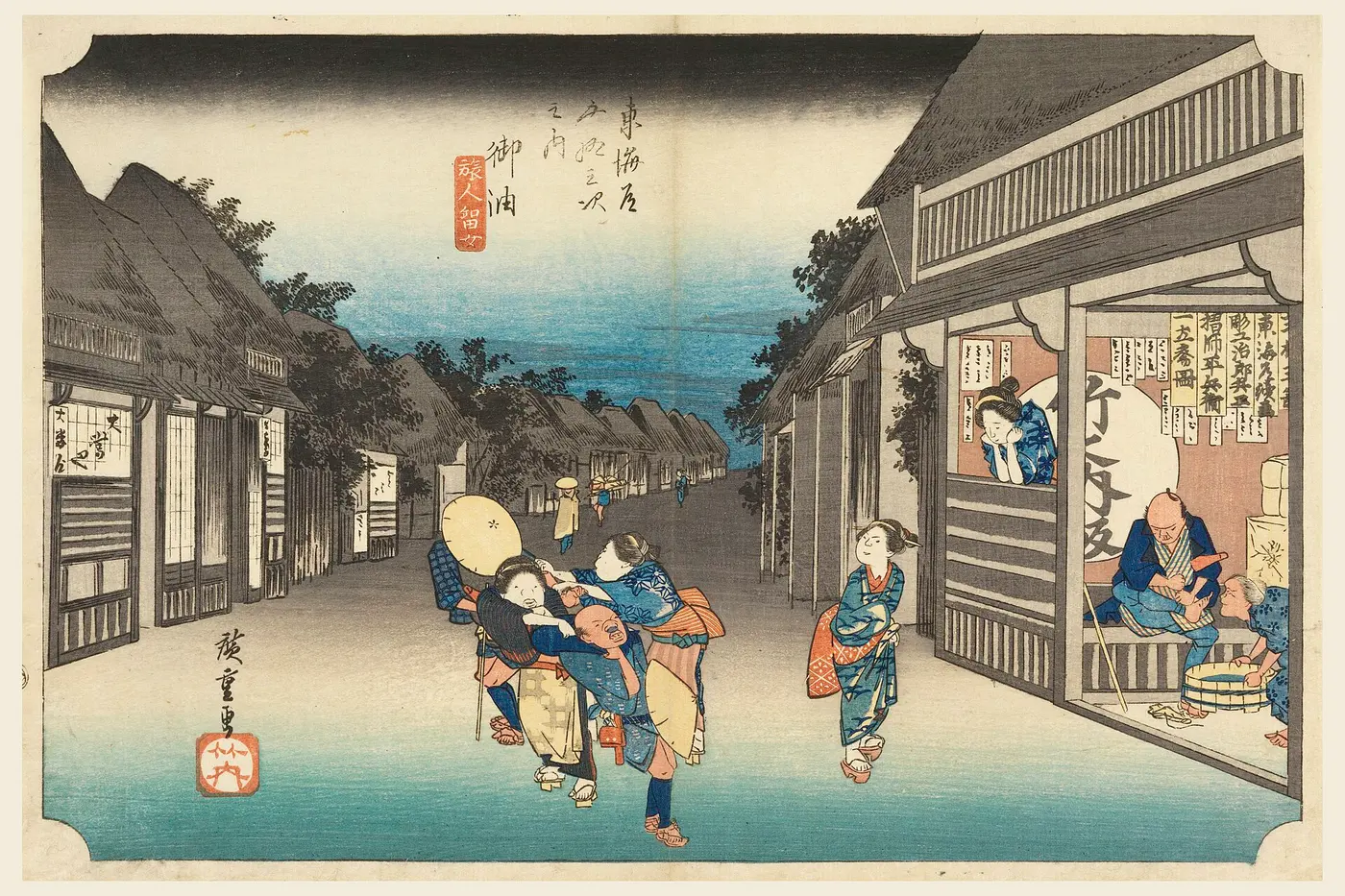

It was not the time of day itself but the question “Who is that?” that became the name of the hour. The word seems to carry even the small unease and loneliness people felt in the evening half-light.
“Who is that?” in the Man’yōshū
The phrase already appears in the Man’yōshū, the anthology of poetry compiled in the Nara period (710–794). Book 10 contains this poem:
誰そ彼と我をな問ひそ九月の露に濡れつつ君待つ我を
Roughly: “Do not ask of me, ‘Who is that?’ I am the one waiting for you, wet with the dew of the ninth month.” It is said to be taken from the Kakinomoto no Hitomaro Collection. Here “ta so kare” is not yet the name of a time of day, but quite literally the question “Who is that?” Even so, the scene of not knowing who someone is in the gloom is exactly that of the later tasogare.
By the Heian period (794–1185), tasokare had come to mean the hour of dusk. In the “Yūgao” chapter of The Tale of Genji, there is a poem about evening-glory flowers, yūgao, glimpsed faintly at tasokare.
Dawn is “kawatare”
If dusk is “ta so kare,” dawn has a very similar word: kawatare (かわたれ).
Kawatare comes from ka wa tare (彼は誰), which also means “Who is that?”, as if the words of tasokare had simply been put in a different order. Before dawn, faces are just as hard to make out as at dusk, and from this came the expression kawatare-doki, “the hour of kawatare.”
Book 20 of the Man’yōshū has a poem beginning “Akatsuki no kawataredoki ni,” “In the kawatare hour of dawn.” It is said to be by a sakimori, a frontier guard sent to defend Kyushu, from Shimōsa Province (today’s Chiba Prefecture). The poem wonders what became of a boat that rowed away behind an island in the dim light of dawn.
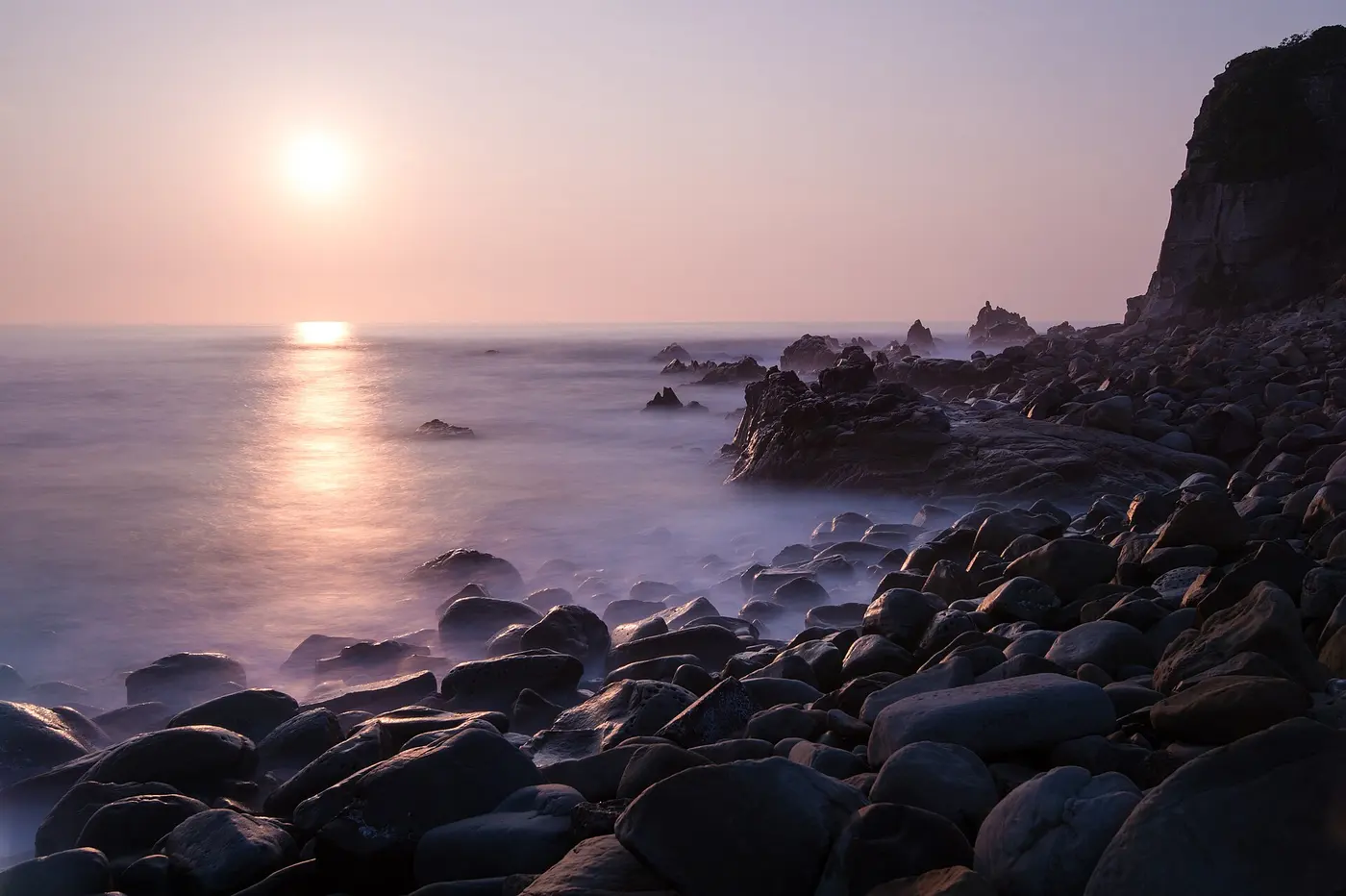

Originally, it seems, both words could sometimes be used for both evening and early morning. Over time it became usual to call the evening tasogare and the dawn kawatare. Even today, dictionaries explain that kawatare-doki “mostly refers to dawn.”
Dusk, the hour of demons
For people of the past, the half-light of dusk was also a somewhat eerie time. Twilight is sometimes called ōmagatoki (逢魔が時), “the hour of meeting demons.” It is said to come from a near-identical word, 大禍時, “the hour of great calamity,” rewritten with characters meaning “meeting demons.”
You cannot see the face of whoever is coming, and you cannot even be sure it is human. For people living before electric lights, the question “Who is that?” may have been far more pressing than it is for us.