Where does the word “OK” come from?
The leading theory: it abbreviates “oll korrect,” a deliberate misspelling of “all correct.”
1839
Few words have crossed borders as effortlessly as “OK.” It pops up as a matter of course in Japanese conversation, in airport announcements and on smartphone buttons. Yet if someone asks what it actually stands for, surprisingly few people can answer right away.
In fact, the origin of these two little letters was a puzzle that troubled linguists for a long time. And the answer, once it came to light, turned out to be almost disappointingly playful.
A game of deliberate misspelling in 1830s Boston
Toward the end of the 1830s, a strange kind of abbreviation was all the rage in the newspapers of Boston. Writers didn’t just abbreviate words by their initials; they misspelled them on purpose first. For example, “no go” became “N.G.,” and “all right” was spelled “oll wright” and written “O.W.” It was a sort of running in-joke in print, with readers enjoying the challenge of working out the original words.
Amid this fad, “o.k.” appeared in the Boston Morning Post on March 23, 1839. It came in a tongue-in-cheek piece by the editor Charles Gordon Greene, with the explanation “all correct” attached. In other words, “all correct” was jokingly spelled “oll korrect,” and its initials became “o.k.”
The person who uncovered this story was the American linguist Allen Walker Read. He combed meticulously through newspapers of the period and published a series of papers in the journal American Speech in 1963 and 1964. Today his explanation is widely accepted as the most convincing.
A presidential election made it stick
Most of these abbreviations, though, were forgotten once the fad passed. Nobody uses “O.W.” or “N.G.” anymore. So why did “OK” alone survive?
Read focused on the US presidential election the following year, 1840. The incumbent, Martin Van Buren, who was running for reelection, came from Kinderhook, New York, and was nicknamed “Old Kinderhook.” His supporters took its initials, formed “O.K. Clubs,” and used “O.K.” as a kind of rallying cry.
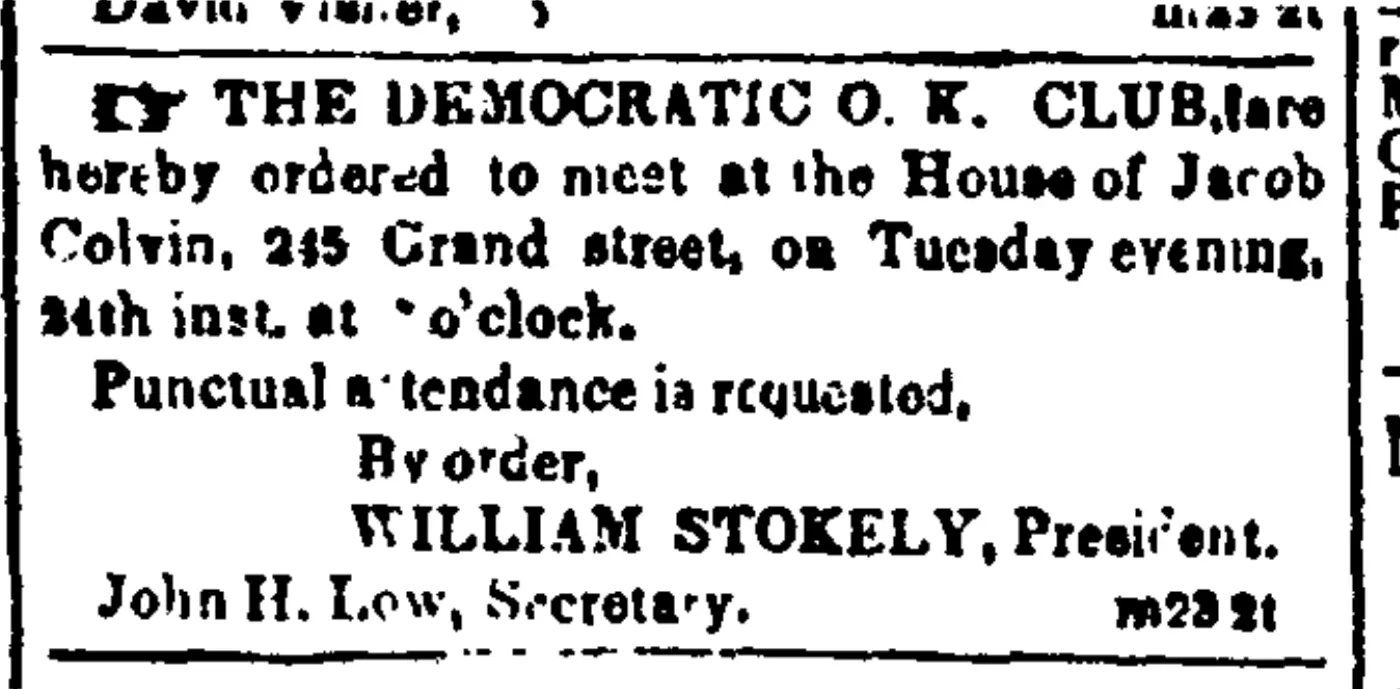

A word that already meant “all right” picked up the momentum of a campaign slogan, and “OK” swept across the United States. Van Buren himself, incidentally, lost that election. That only the word came out a winner is a nice bit of irony.
Plausible-sounding folk tales
Many other origins for “OK” have been proposed over the years. One says it comes from okeh, a word meaning “it is so” in the language of the Choctaw, a Native American people. Others trace it to Wolof, a language of West Africa, or to the Scottish “och aye.”
There is even a story that it all began when Andrew Jackson, the seventh president, misspelled “all correct” as “oll korrect.” This tale is thought to have been spread by his political opponents during the 1840 campaign to mock Jackson as uneducated.
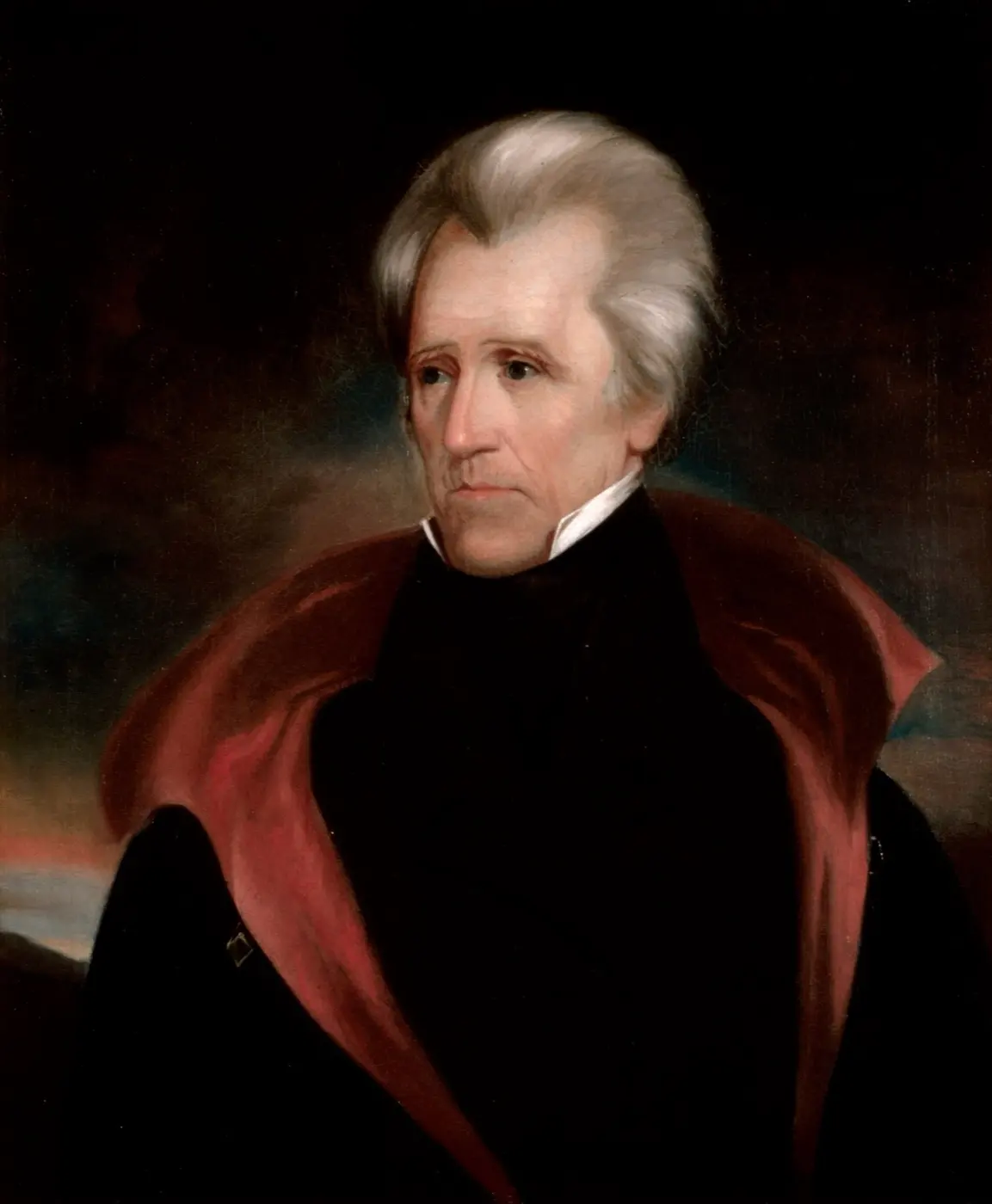

All of these make appealing stories, but no documents have been found to back them up, and linguists regard them as folk etymology. It may be a good lesson that in the world of word origins, the neater the story, the more skeptical you should be.
From in-joke to world word
After that, “OK” spread into more and more settings, helped along by things like the spread of the telegraph, and in the twentieth century it traveled beyond the English-speaking world. In Japanese, ōkē (オーケー) is thoroughly familiar, sometimes accompanied by a gesture of making a circle with the fingers. A word that began as nothing more than a clever joke among journalists is now understood in many languages. A word born from a deliberate misspelling has become one of the least misunderstood words of all. There is something delightful about that.