Is the Japanese word “hotchikisu” named after a person?
Yes. The name of an American maker, the E. H. Hotchkiss Company, became the Japanese word for a stapler.
1903
Meeting handouts, school worksheets, a bundle of receipts. Most people in Japan call the tool that snaps a few sheets of paper together a hotchikisu (ホッチキス). It is so familiar, and so firmly part of everyday speech, that it almost feels like a native Japanese word.
Say “hotchikisu” to an English speaker, though, and you will mostly get a blank look. In English, the usual word is “stapler.” So where did the Japanese name come from, and why does it sound like an English surname?
“HOTCHKISS,” stamped on the body
Hotchkiss was originally an American family name. In the late 19th century, in the state of Connecticut in the eastern United States, there was a company called the E. H. Hotchkiss Company, run by George Hotchkiss and his son E. H. Hotchkiss. Starting in the late 1890s, the company sold a stapler called the “Hotchkiss No. 1,” which could be loaded with a strip of staples and fire them one after another.
Staplers of this kind are said to have first gone on sale in Japan in 1903 (the 36th year of the Meiji era, 1868–1912). They were imported from the United States by Itōki Shōten in Osaka, today’s office-furniture maker Itoki, and the words “HOTCHKISS No. 1” were stamped on the body.
At the time, the device had no settled name. Nobody in particular coined one; people simply seem to have started calling it hotchikisu after the lettering on the machine. It is one of those trademarks that turned into an ordinary noun, the manufacturer’s name becoming the name of the tool itself, much as some brand names have become everyday words in English.
There are other examples close to home. In Japan, clear adhesive tape is commonly called serotēpu (セロテープ), which began as a product name from the tape maker Nichiban. In the case of the stapler, the name belonged to a company across the ocean and, further back, to a family.
Invented by a machine-gun engineer?
There is another well-known story about the name. It claims that Benjamin Hotchkiss, an American-born weapons engineer, invented the stapler by adapting the mechanism that feeds bullets into a machine gun. Bullets fed in one after another, staples punched out one after another: the image fits so neatly that it sounds believable, and it has been repeated so often that many people take it as fact.
Benjamin Hotchkiss certainly existed. He designed weapons such as a cannon that fired while rotating a cluster of barrels, and he founded an arms company in France. That company later became known for machine guns bearing the Hotchkiss name, too.
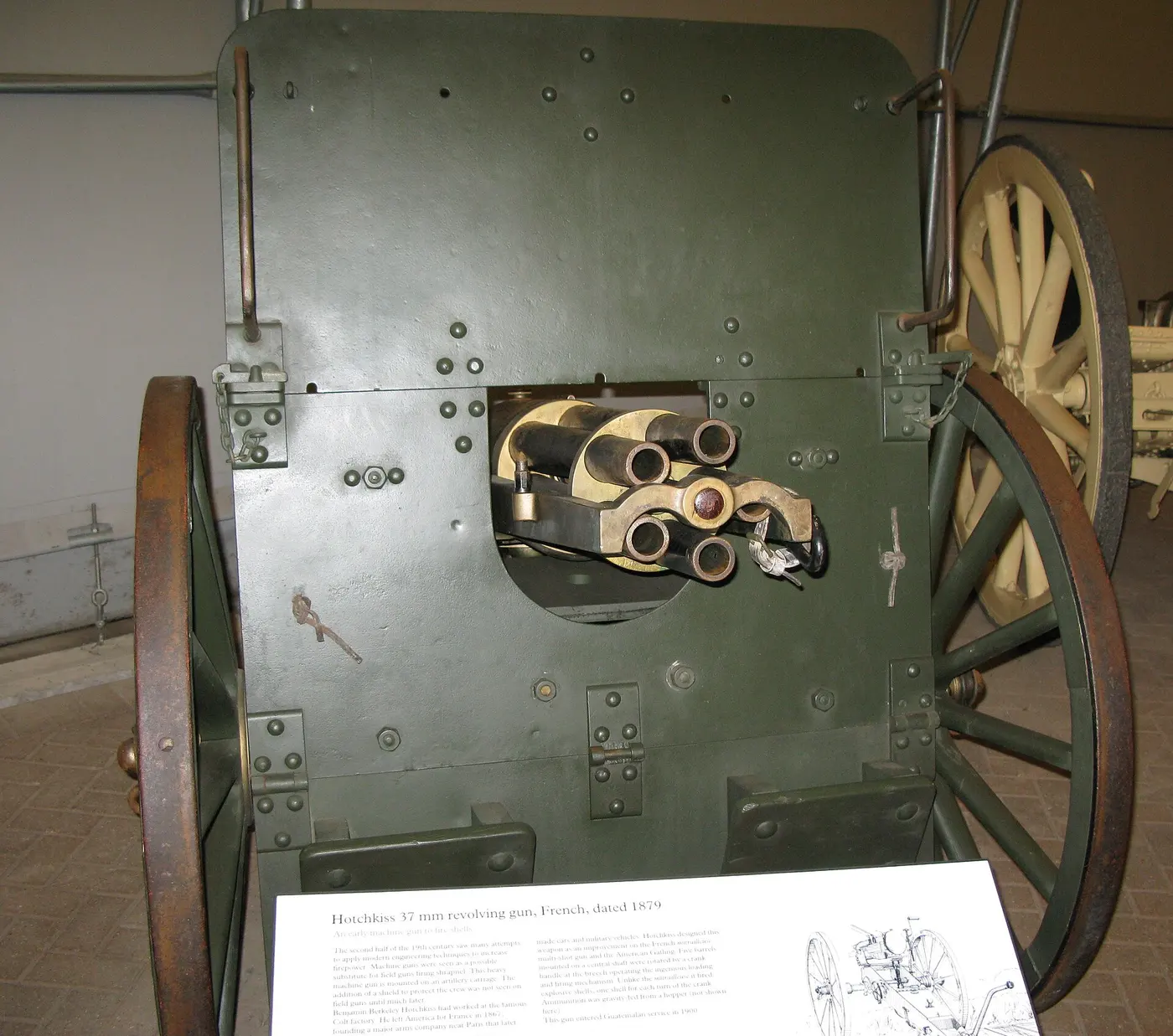

But the idea that he invented the stationery item doesn’t hold up. Benjamin Hotchkiss died in 1885, and the E. H. Hotchkiss Company was founded about ten years later. The two men did share Hotchkiss family blood, but it turns out they were only distant relatives whose common ancestor lay many generations back.
According to research by a stationery historian, this “machine-gun theory” hardly appears in English-language sources at all and seems to be a story that spread in Japan. Because the two men shared a surname, their stories were probably fused together at some point, and a good story did the rest.
The official name is “stapler”
In Japan today, there is no single agreed name for the tool. Under the Japanese Industrial Standards (JIS), it is a sutēpura (ステープラ), a borrowing of “stapler,” while newspapers and the public broadcaster NHK generally write it hochikisu (ホチキス). In shops and homes, hotchikisu is by far the most common. One small tool, in other words, goes by three slightly different names depending on who is talking.
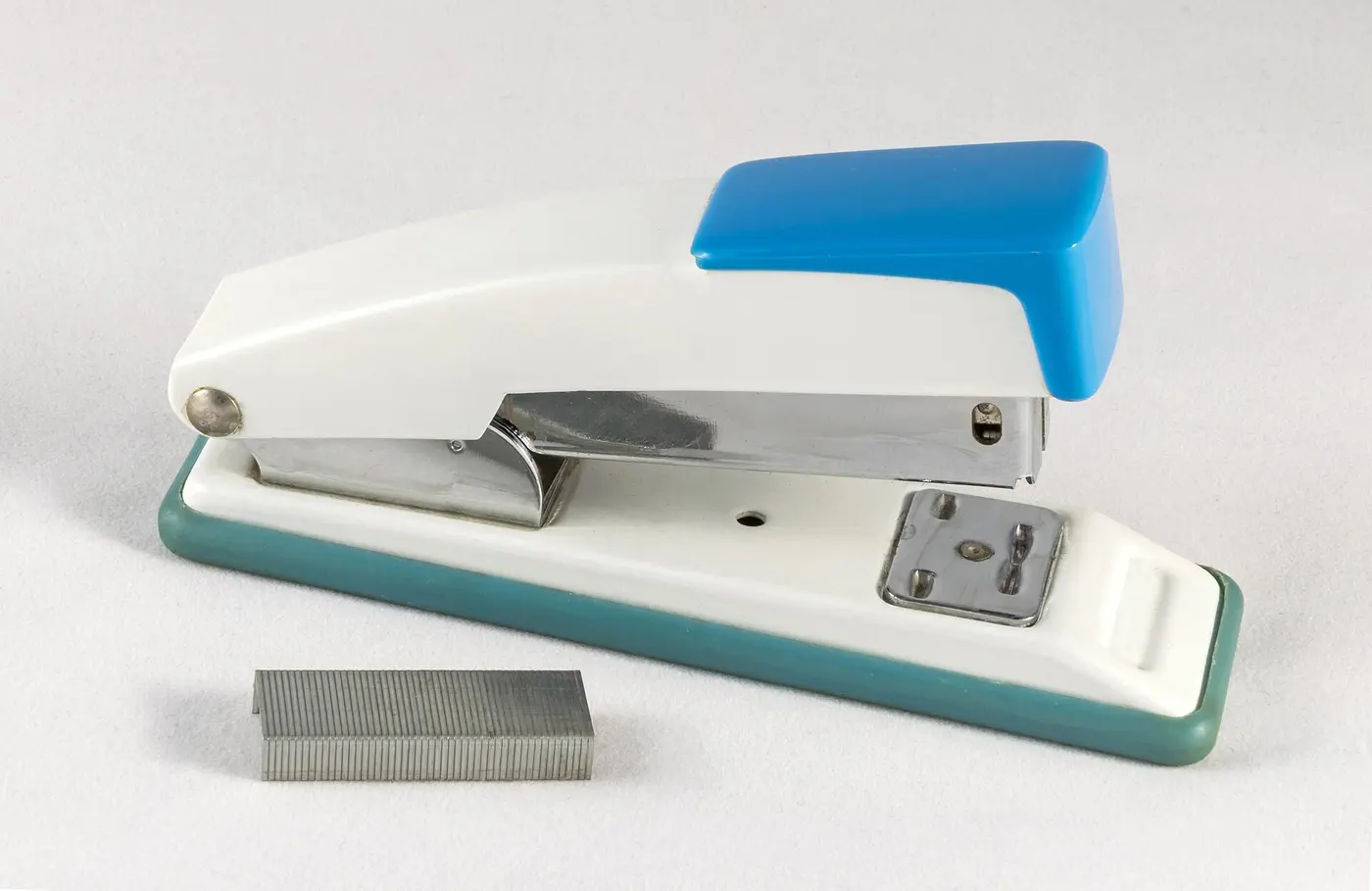

The stapler became a “one per person” tool after World War II. In 1952, a group of companies, including the one that would later become the stationery maker Max, jointly released the SYC-10, a compact stapler that fit in the palm of the hand. The “10” indicated that it used No. 10 staples. Until then, one stapler per office had been enough; with this product, it began turning into a piece of stationery everyone kept within reach.