Who coined the word “robot”?
Czech painter Josef Čapek. His brother Karel’s play R.U.R. carried it around the world.
1920
Robot vacuums, industrial robots, robotic rovers trundling across Mars. These days, it is hard to get through a day without hearing the word “robot.” From children’s cartoons to cutting-edge research, few words are used quite so widely. It feels as if the word has always been with us.
Yet the word’s history is surprisingly short: just over a hundred years. Before that, no language on Earth had a word “robot.” So who came up with it first? The answer involves a play, a painter’s studio, and an old word for hard labor.
The artificial people of R.U.R.
The word “robot” first appeared in public in R.U.R., a play published in 1920 by the Czech writer Karel Čapek. The title stands for “Rossum’s Universal Robots,” the name of a company.
The play is set in a factory that mass-produces artificial people to do humanity’s work. The robots never tire and never complain, and they are sold all over the world, but eventually they rise up against their human makers. It is, in a sense, the original version of a plot that has since become a classic: the created turning on the creator. It raised a question that still echoes through debates about technology today: what happens when the things we build no longer want to serve us?
The play was staged at the National Theatre in Prague in January of the following year, 1921, and it was an instant success. By 1923 it is said to have been translated into 30 languages, and the word “robot” traveled across borders along with it.
The real name-giver was his brother
Karel himself, however, said more than once that he had not invented the word. The real name-giver, he explained, was his older brother, the painter Josef Čapek.
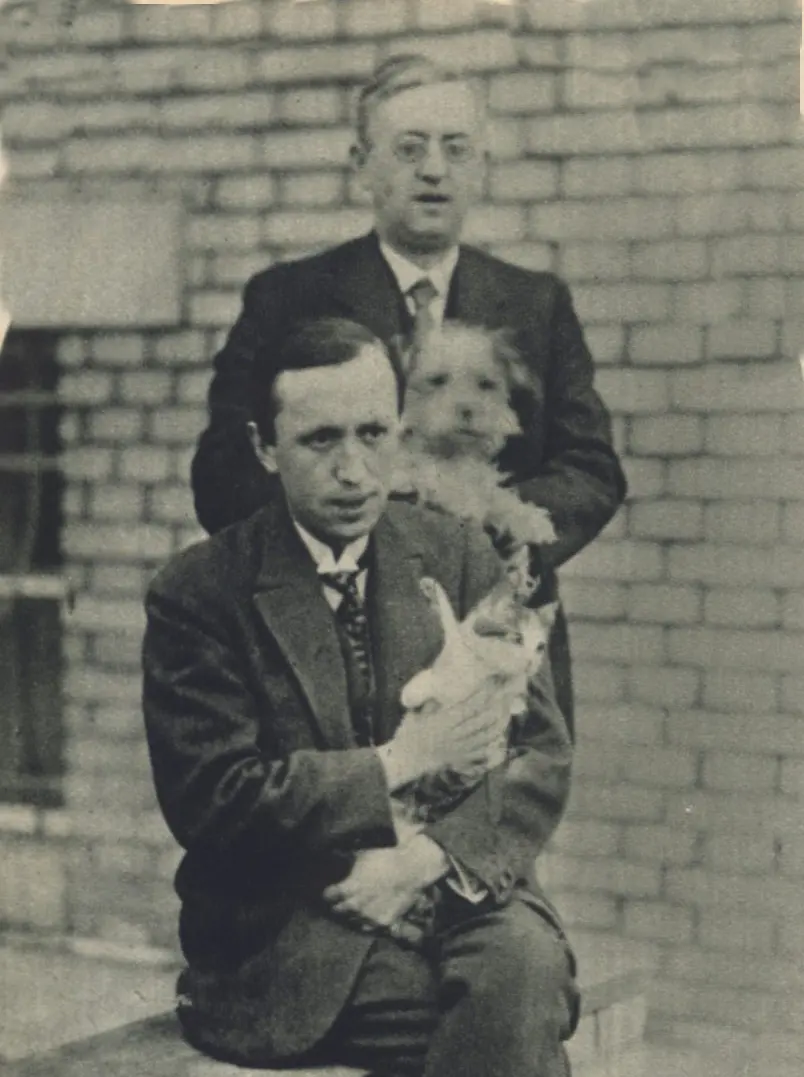

In December 1933, Karel described how it happened in the Czech newspaper Lidové noviny. When the idea for the play came to him, he went straight to his brother’s studio. Josef was at his easel, in the middle of a painting. Karel told him, “I don’t know what to call these artificial workers. I could call them ‘labori,’ from the Latin labor, but it strikes me as a bit bookish.” With his brush still clenched between his teeth, Josef muttered, “Then call them robots,” and went on painting. It is hard to imagine a more casual birth for such a famous word.
So a word now used all over the world came from a single remark by a painter with a brush in his mouth. Josef was known not only as a painter but also as a writer and illustrator.
“Robota” means drudgery
The word Josef reached for was the Czech robota. It referred to the corvée, the forced, unpaid labor that serfs once had to perform for their feudal lords. From the very beginning, then, “robot” carried the sense of “one who is made to work”—a fitting name for beings manufactured purely to labor.
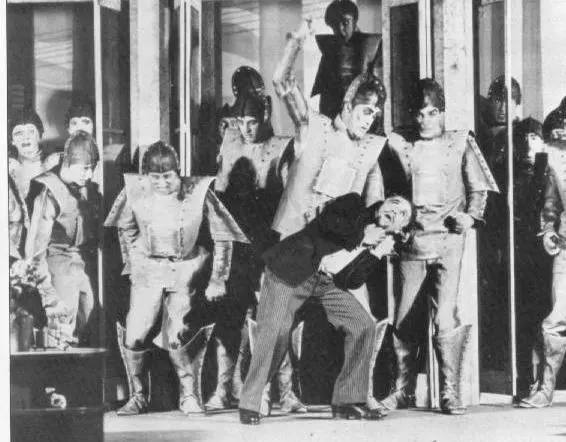

Another surprise is that the robots of R.U.R. were not metal machines at all. The robots in the play were assembled from artificially made organic matter and looked almost exactly like humans. In today’s terms, they were closer to androids or artificial humans. The image of a “robot” made of gears and bolts took shape later, in the films and novels that followed. Čapek’s original robots were, in a way, far closer to us than the clanking machines that later borrowed their name.
The “artificial human” arrives in Japan
R.U.R. reached Japan early on. In July 1924, it was staged at the Tsukiji Little Theatre in Tokyo under the title Jinzō Ningen (人造人間), “Artificial Human.” Audiences in Tokyo met the play’s artificial workers only a few years after those in Prague. And so, little by little, the word “robot” became known in Japan, too.
In 1928, the biologist Makoto Nishimura exhibited an artificial human called Gakutensoku at an exposition held in Kyoto. It was a large figure that could change its facial expression and move a pen, and it is sometimes called the first robot in the East. In just a few years, the word born of two Czech brothers had crossed the sea and sparked dreams of invention in Japan as well.