Why is a sun shower called a “fox’s wedding” in Japanese?
Accounts differ. One theory: rain from a clear sky felt as uncanny as being tricked by a fox.
On a bright, sunny day, a raindrop suddenly lands on your cheek. You look up, but the sky is still blue and the sun as dazzling as ever. In Japanese, this kind of rain is called either tenkiame (天気雨), literally “fine-weather rain,” or kitsune no yomeiri (狐の嫁入り), “the fox’s wedding.” In a survey by the weather information company Weathernews, 54 percent of respondents nationwide said they use tenkiame and 44 percent kitsune no yomeiri. In the Kansai region around Osaka and Kyoto, however, kitsune no yomeiri was the choice of 83 percent.
But what could rain from a clear sky possibly have to do with a fox getting married?
It began with “fox fires” trailing across the hills at night
In fact, the phrase kitsune no yomeiri has a second meaning besides a sun shower. It also refers to a mysterious sight: a string of eerie lights glimpsed in a line across the hills or fields at night.
Until around the Edo period (1603–1868), weddings in Japan were often held in the evening or at night, and the bride’s party would travel in procession, carrying lit paper lanterns. The ghostly kitsune-bi, or “fox fires,” strung out across the darkness looked just like that line of lanterns, and so, it is said, people concluded that a fox must be getting married. A local gazetteer of Echigo (today’s Niigata Prefecture) records that lights resembling lanterns or torches could sometimes be seen stretching unbroken for more than one ri, a traditional unit of about 4 kilometers (2.4 miles).
So why a sun shower?
What about the sun-shower meaning, then? Here, several theories have been passed down.
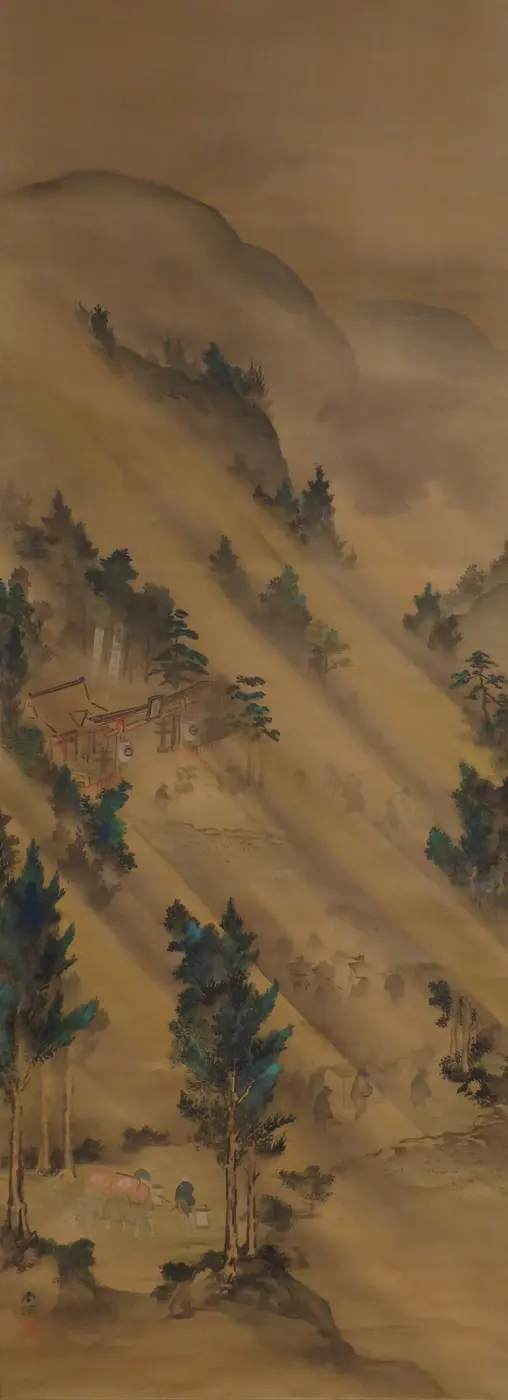

The best-known explanation is that rain falling while the sun shines, something that “shouldn’t happen,” felt as if you were being bewitched by a fox. In Japanese folklore, fooling humans was the fox’s specialty. Another theory holds that foxes make it rain to keep people away, so that no human will see their wedding procession. There is no way to say which is correct, but all of them share the same instinct: seeing a fox behind something mysterious.
A puppet play of the ningyō jōruri tradition first staged in the early 18th century is said to contain a line linking sun showers with the fox’s wedding, which suggests the association was widely known in the Edo period. Katsushika Hokusai, too, painted a single picture showing a fox’s wedding procession under a sunny sky, alongside villagers hurrying to bring in their crops.
A name that changes from place to place
Names and legends vary from region to region. Some places call a sun shower kitsune-ame, “fox rain,” while others call it kitsune no shūgen, “the fox’s wedding ceremony,” or kitsune no yometori, “the fox taking a bride.” In Kumamoto Prefecture, there is reportedly a tradition connecting the fox’s wedding with the appearance of a rainbow, and in Aichi Prefecture with a fall of hail.
One reason the phrase is so beloved in Kansai is that foxes were a familiar presence there. Foxes are regarded as messengers of Inari, the Shinto deity of rice and prosperity, and at shrines such as Fushimi Inari Taisha in Kyoto, they lived close to people’s daily lives. A custom called kan-segyō, in which people went around the hills and fields in the cold of winter leaving out fried tofu and red-bean rice for the foxes, was also handed down, mainly in Kansai. With foxes so close at hand, perhaps a strange sky naturally looked like their handiwork.
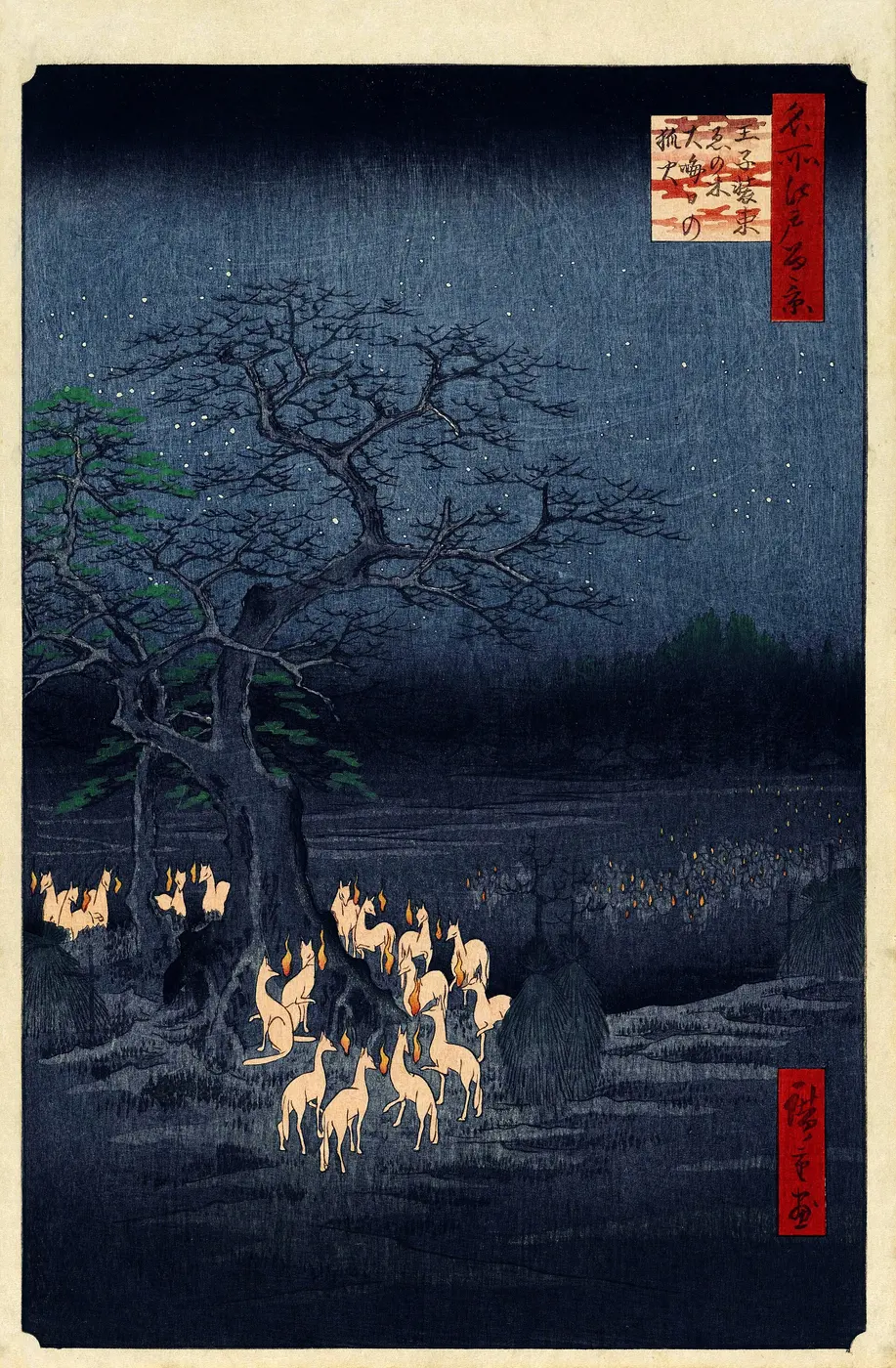
Closeness to foxes was not limited to Kansai, though. In Edo, as Tokyo was then called, there was a legend that on New Year’s Eve, foxes from all over the Kantō region gathered at Ōji Inari Shrine, lighting fox fires as they came to pay their respects.

Sun showers around the world are animal weddings too
Sun showers, of course, have scientific explanations. Raindrops may reach the ground only after the cloud that dropped them has dissolved or drifted away; a small rain cloud overhead may simply not be blocking the sun; or strong winds may carry rain over to a place where the sky is clear.
What is fascinating is that cultures outside Japan also liken this phenomenon to an animal wedding. In Korea, a sun-shower day is reportedly called “the day the fox gets married” or “the day the tiger gets married,” and in South Africa it is known as a “monkey’s wedding.” Sun and rain, two things that should never go together, happen at once. The idea of comparing that strangeness to a wedding turns up, curiously, in lands far apart.