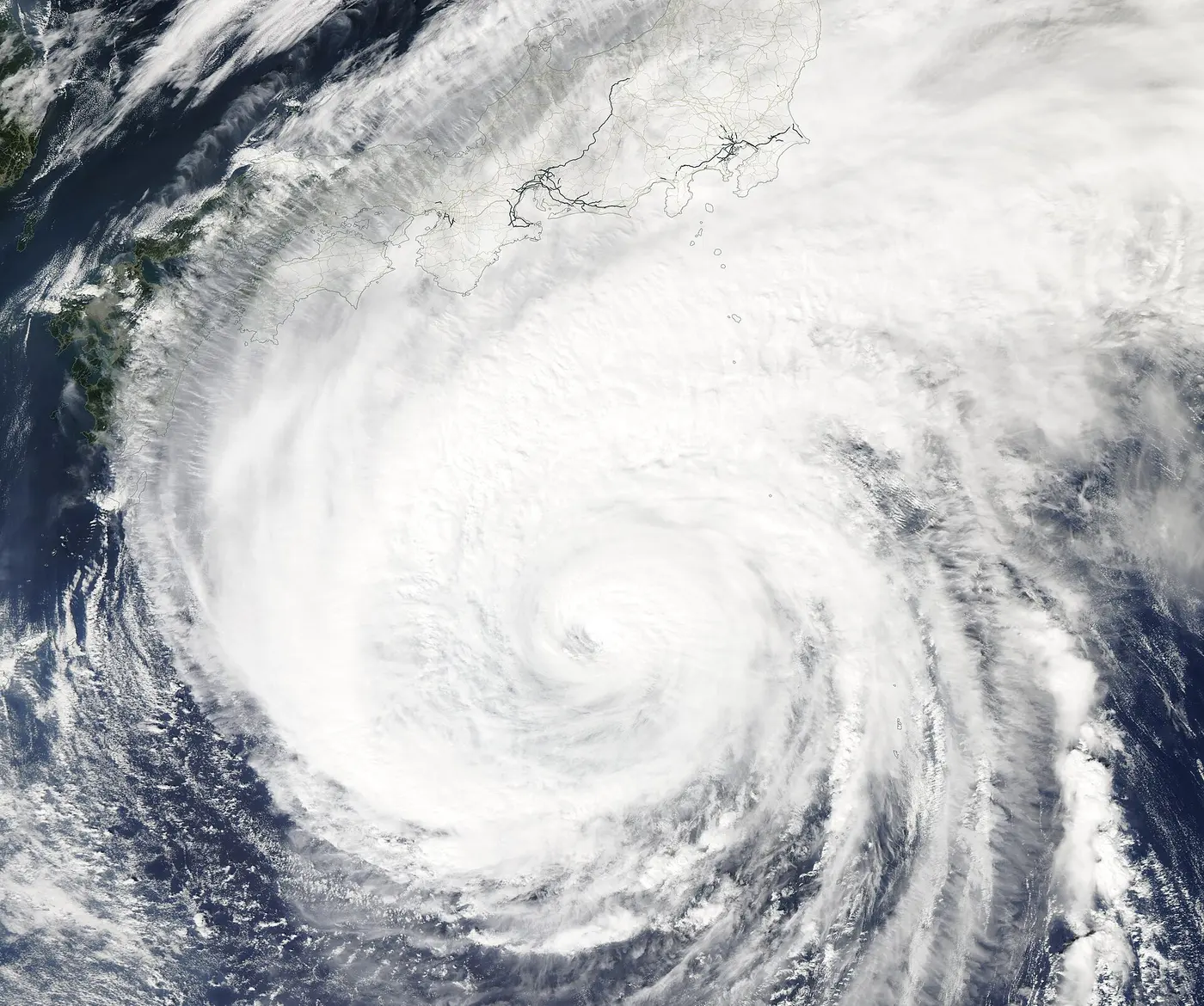
Where does the Japanese word “taifū” come from?
颱風, the Meiji-era translation of English “typhoon,” took hold and was respelled 台風 after World War II.
From summer into autumn, the word taifū (台風), “typhoon,” comes up in Japanese weather forecasts almost every year. For anyone living in Japan, it is an utterly ordinary word.
Look at the characters again, though, and something seems strange. The second, 風, means “wind,” which makes sense. But why the first, 台? Is it the 台 of Taiwan (台湾)? Or the 台 of daidokoro (台所), “kitchen”? As it turns out, this 台 was originally a stand-in for a different character altogether.
Once called “nowaki”
Since ancient times, the Japanese have called the violent winds of autumn nowaki or nowake (野分), wind strong enough to “part the fields” by flattening the grass. In the Heian period (794–1185), The Pillow Book includes a passage describing the morning after a nowaki, and The Tale of Genji even has a chapter called “Nowaki.”
But nowaki referred broadly to strong autumn winds. It did not carry the precise meaning of today’s taifū: a tropical low-pressure system that forms over the southern seas and grows stronger.
Okada Takematsu and 颱風
Taifū is said to have become a scientific term toward the end of the Meiji era (1868–1912). In 1907, the meteorologist Okada Takematsu, who would later head the Central Meteorological Observatory (today’s Japan Meteorological Agency), is said to have applied the characters 颱風 to the sound “taifū” as a translation of the English word “typhoon,” defining it as a well-developed tropical cyclone.
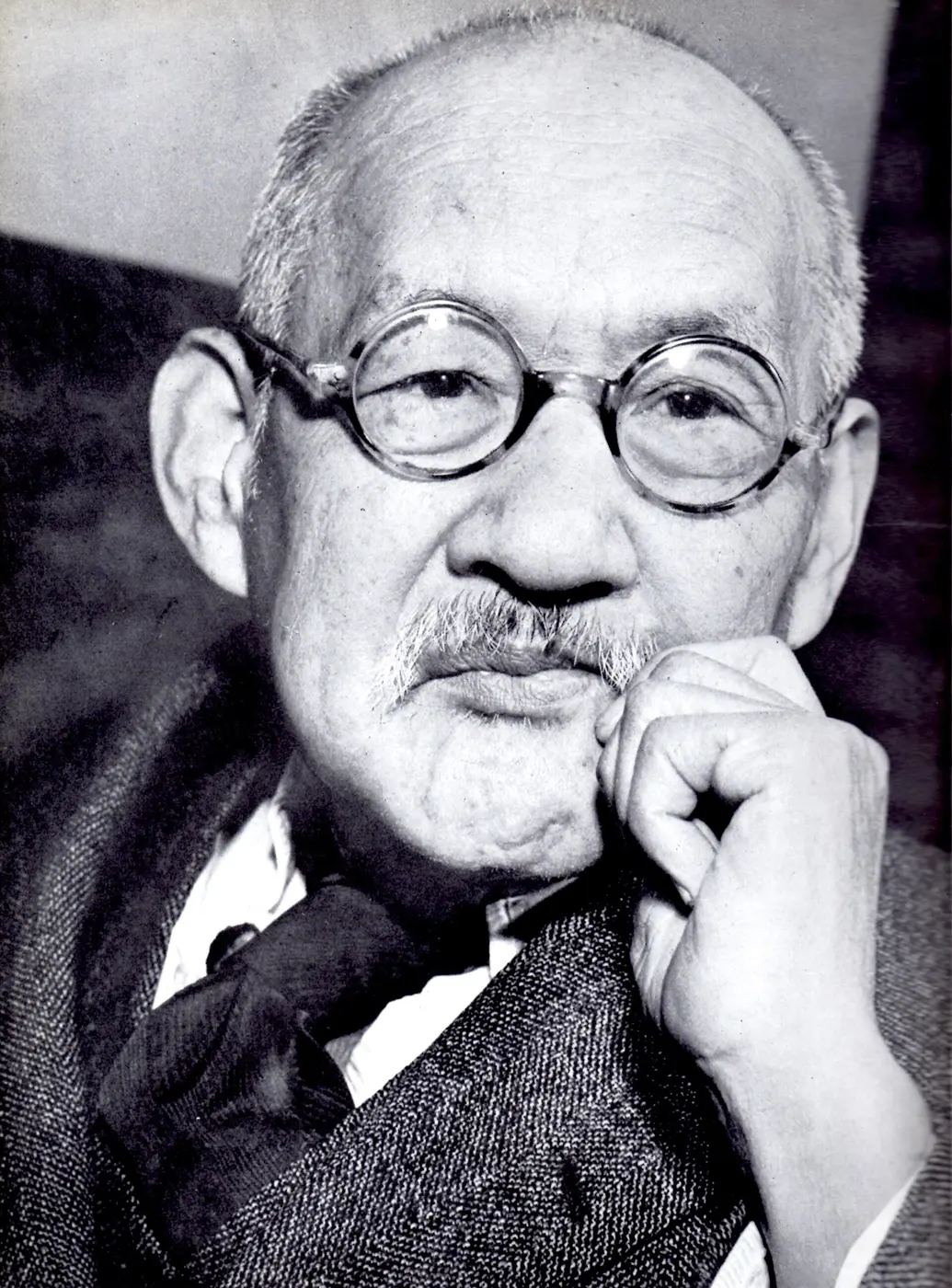

The word 颱風 spread to the general public in the Taishō era (1912–1926). But in 1946, after World War II, Japan adopted the tōyō kanji, a list setting out the range of characters for everyday use, and 颱 was left off. Then in 1956, under a policy of replacing such characters with others of the same sound, 颱風 came to be written 台風. In other words, the 台 in taifū was originally a substitute for 颱.
Three candidates for “typhoon”
So where did the English word “typhoon” come from? Here there are several theories, and the question has not been settled.
One is that it came from Chinese. The idea is that European sailors heard words such as tai fung (大風, “great wind”) in Cantonese in southern China, or 颱風 and 風颱 as used in Fujian and Taiwan, and carried them home.
The second is that it came from tūfān, a word for a storm or great flood in Arabic, Persian and other languages. The word is thought to have been used by people traveling across the Indian Ocean and to have entered Europe by way of forms such as Portuguese tufão.
The third is a link to Typhon, a monster of Greek myth. Typhon was a child of Gaia, the earth goddess, and was said to have a hundred snake heads sprouting from his shoulders. He fought Zeus, king of the gods, and lost, and he was also thought of as a source of storm winds. Some suggest that his name may have influenced tūfān.
In English, after a variety of spellings beginning with “touffon” in 1588, the word settled into its present form, “typhoon.” It may be most natural to think that several words blended and influenced one another to produce it.
Japan’s “taifū” and the English “typhoon” are not the same thing
Seen this way, taifū has made a remarkable journey. Words from Asia and the Middle East became the English “typhoon” by way of European sailors; Meiji Japan translated it as 颱風; and after the war it was respelled 台風. It may carry not only an exchange of Chinese characters, but words from distant seas as well.
Yet despite sharing a history, today’s Japanese taifū and English “typhoon” refer to slightly different things. The Japan Meteorological Agency calls a tropical cyclone in the northwestern Pacific or the South China Sea a taifū once its maximum sustained wind speed (10-minute average) reaches about 17 meters per second. In English, “typhoon” usually means something stronger, with maximum sustained winds above roughly 33 meters per second (64 knots, about 74 mph). Some storms that Japanese calls taifū are not yet typhoons in English.