Does the Japanese slang “shikato” come from a playing card?
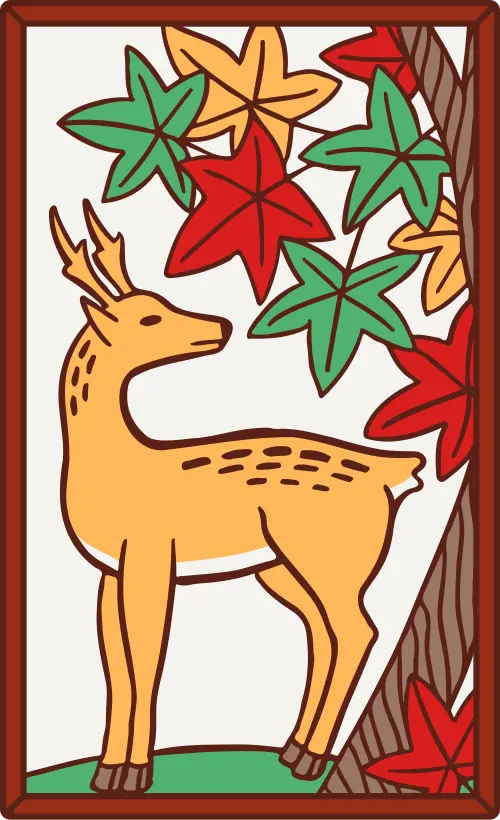
That is what dictionaries say. On the October card in hanafuda, a deck of Japanese flower cards, a deer turns its head away. In gamblers’ jargon the word first meant “to play dumb.”
Not answering when someone speaks to you, refusing even to meet their eyes: in colloquial Japanese, ignoring someone on purpose is shikato suru, “to do shikato.” Because the word is usually written in katakana, the script used for loanwords, it can look like something borrowed from abroad. It isn’t.
According to Japanese dictionaries, the word leads back to one card in hanafuda, the traditional Japanese “flower card” deck, and to a small gesture made by the deer painted on it.
The deer that looks away
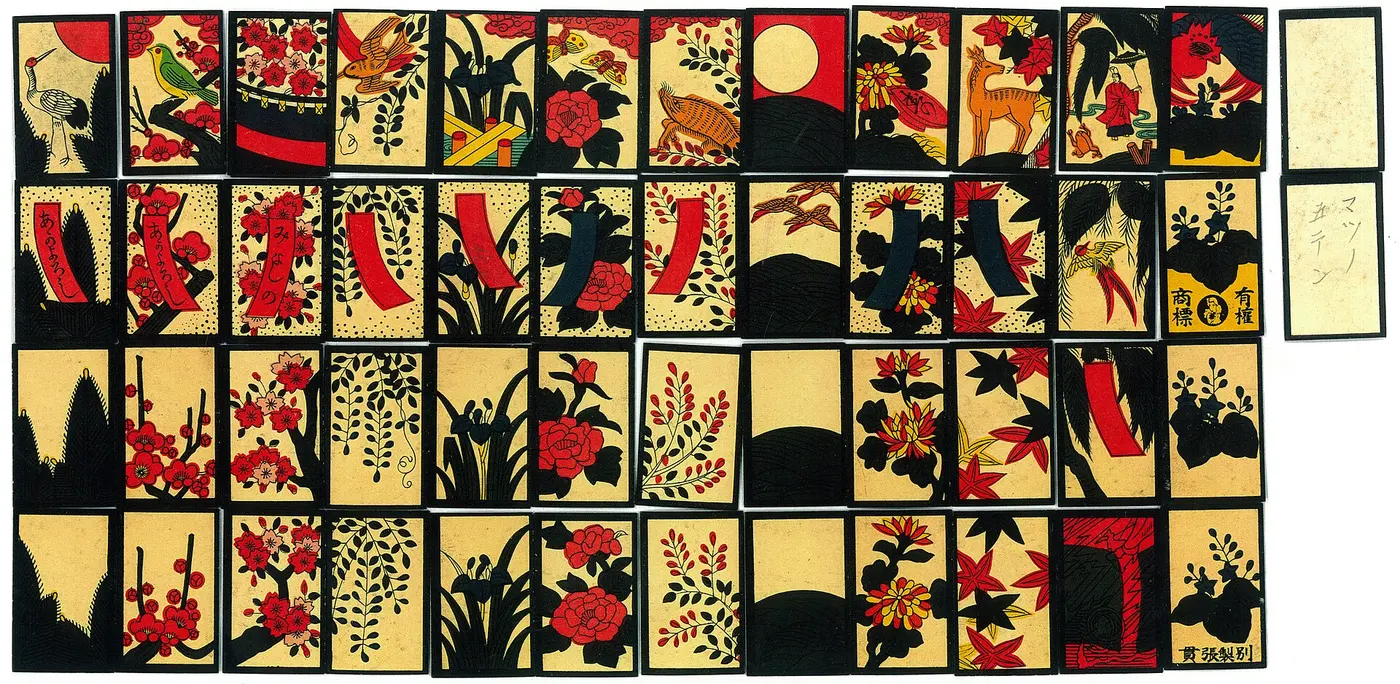
A hanafuda deck has 48 cards. According to the Digital Daijisen dictionary, each of the twelve months is assigned a plant, from pine for January through maple for October to paulownia for December, and each month has four cards with set point values. According to the encyclopedia Sekai Daihyakka Jiten, the high-scoring cards add animals or objects to the plants.
October’s plant is the maple. On its ten-point card, a deer stands beneath the red leaves. It does not face the viewer: it twists its neck and looks off to the side.
The Nihon Kokugo Daijiten, Japan’s largest dictionary, says shikato comes from this card: in hanafuda, the deer in the maple design looks sideways, and the card is worth ten points. Shika means deer and tō means ten, so shika-tō, “deer-ten,” was clipped to shikato. The Digital Daijisen likewise traces the word to the October deer “looking the other way.”

Gamblers’ slang for playing dumb
Hanafuda was a game, but it was also a gambling tool. According to the Nihon Kokugo Daijiten, inoshikachō, “boar-deer-butterfly,” best known as the scoring combination of the bush clover boar, the maple deer and the peony butterflies, was also the name of a hanafuda gambling game: if the bottom card of a face-down pile turned out to be the boar, the deer or the butterflies, among others, the dealer swept up every stake on the table. Shikato seems to have come from that world.
The Ingo Daijiten (“Great Dictionary of Slang”), published by Kōseisha, collects definitions from glossaries of underworld and trade jargon compiled since the late 19th century, reproduced as originally written. It has an entry for “shikatō,” defined as “to play dumb.” The explanation: the maple deer in hanafuda is a ten, and it looks away. The entry is classed as gamblers’ slang.
From pretending not to know something to pretending someone isn’t there is a short step.
A youth word since the 1960s
The word broke out of the gambling world relatively recently. The Digital Daijisen notes that young people began using it in the early 1960s.
Its meaning has broadened a little, too. Besides “ignoring someone,” the same dictionary gives “shutting someone out of the group.” According to the Nihon Kokugo Daijiten, it is mostly used in the form shikato suru.
Deer and maples, an old pairing
Why is there a deer on the October card in the first place?
According to Sekai Daihyakka Jiten, the leading theory is that hanafuda was devised as a substitute after gambling cards were banned in the Kansei Reforms of the late 18th century. It combined two older kinds of cards. One was Tenshō karuta, a 48-card gambling deck modeled on the Portuguese cards brought to Japan in the 16th century. The other was kachō-awase, a matching game of flower and bird pictures. Kachō-awase already featured several of today’s hanafuda pairings, including cranes with pines, bush warblers with plum blossoms, and deer with maples. After the Meiji government lifted the ban, hanafuda enjoyed a boom, and the standard designs used today probably became fixed in the mid-1890s.

Maples and deer are a classic combination in Japanese poetry as well. The famous anthology Hyakunin Isshu (“One Hundred Poets, One Poem Each”) includes a verse attributed to Sarumaru Dayū: “Deep in the mountains, treading through the fallen maple leaves, the deer cries out. When I hear its voice, how sad the autumn is.” In the poem, the deer’s cry in the autumn mountains is the very sound of sadness. Today the same deer lends its name to the misery of being ignored, which is quite a change of role.