Where does the Japanese phrase “pin kara kiri made” come from?
From names of playing cards. Pin is thought to come from Portuguese for “dot,” and kiri, most likely, from “cross.”
“Wine runs from pin to kiri.” “Wristwatch prices are pinkiri.” The Japanese phrase pin kara kiri made (ピンからキリまで), “from pin to kiri,” means from the very best to the very worst, or from beginning to end, a little like “from A to Z.” These days it is often shortened to pinkiri.
But what exactly are pin and kiri? Both are written in katakana, the script used mainly for foreign words, because they have long been thought to come from abroad. The clue lies in a card game that arrived from Portugal during Japan’s Sengoku, or Warring States, period.
Cards from the “southern barbarians”
In the mid-16th century, when Portuguese merchants and missionaries arrived in Japan, they brought firearms and Christianity along with a host of goods and words. Pan (bread), castella sponge cake, tobacco and karuta (playing cards) were among them. The word karuta itself comes from carta, Portuguese for “card.”
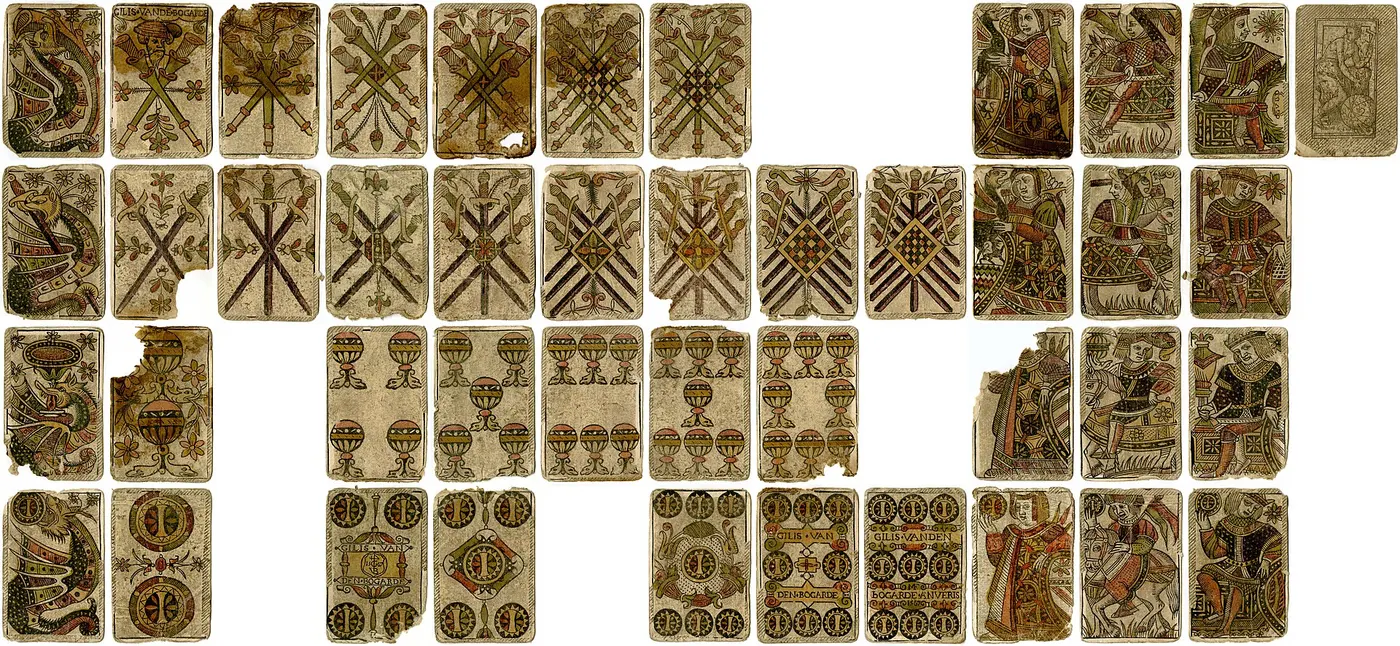
Before long, cards modeled on the Portuguese ones were being made in Japan. These later came to be called Tenshō karuta. Tenshō was the name of the era from 1573 to 1592, and it is thought that card-making spread in Japan around that time. A deck had four suits of 12 cards each, 48 cards in all.
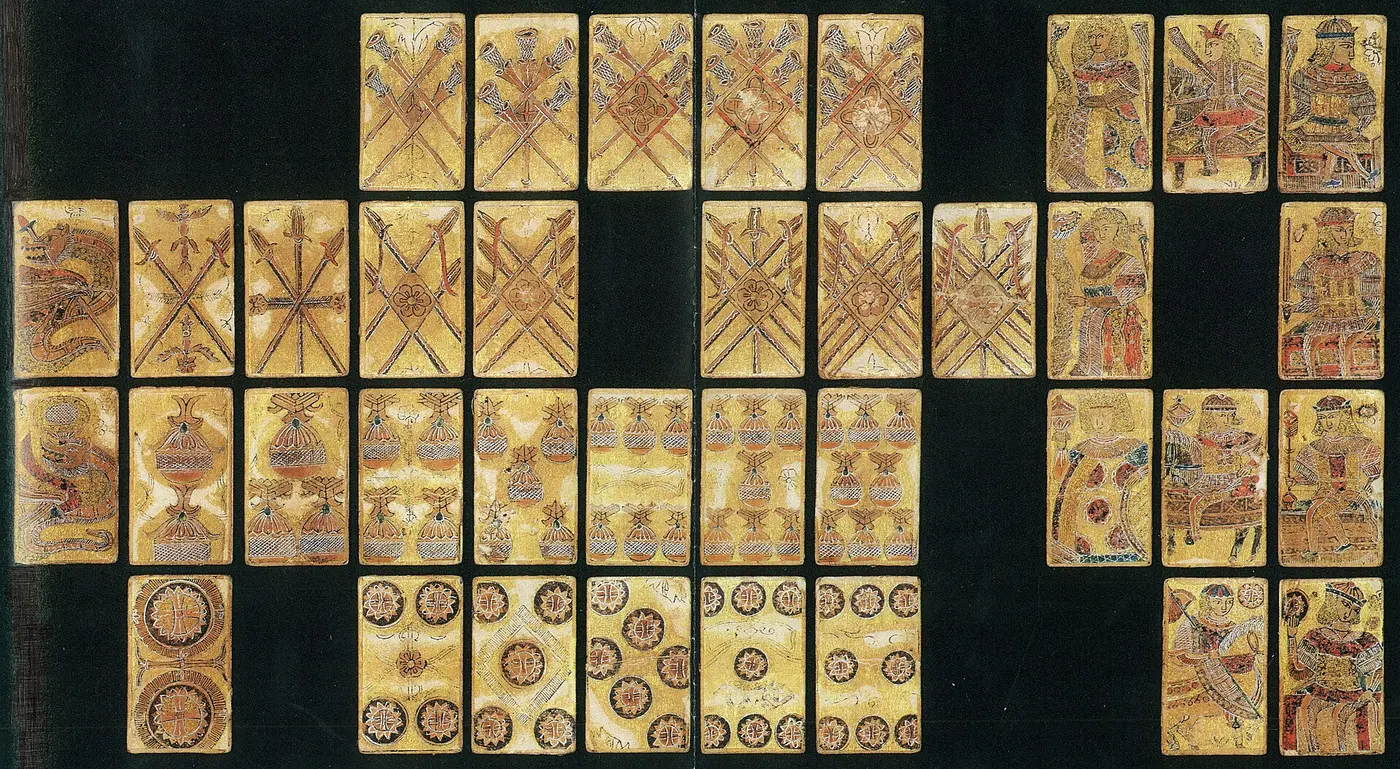

In Tenshō karuta, the 1 card of each suit was called pin and the 12 card kiri. So pin kara kiri made is thought to have originally meant “from the 1 card to the 12 card”: from the first card of the deck to the last.
Pin: Portuguese for “dot”
Pin is said to come from pinta, Portuguese for “dot” or “spot.” The 1 on a card or a die has just a single spot, and so the number one came to be called pin.
The word was in wide use in the Edo period (1603–1868); a jōruri puppet play from 1735 already uses “pin” for the one on a die. From “one,” it also came to mean “first” or “the very best.”
Incidentally, the pin in pinhane, “skimming off part of someone else’s share,” is the same word. It is said to come from servants and the like pocketing 10 percent of the money they handled.
Kiri: “cross” or “cut-off”?
Kiri, on the other hand, has two main theories.
One is that it comes from cruz, Portuguese for “cross.” From the shape of the cross, kiri is said to have also come to mean “ten,” and many dictionaries give this theory.
The other is that it comes from the native Japanese word kiri (切り), meaning a cut-off point. As in korekkiri (“this is the last of it”) or kugiri (“a break”), kiri carries the sense of an end or a limit. If kiri was simply the name of the last card in the deck, everything falls neatly into place. One of Japan’s major dictionaries even notes that this native-word theory is also a strong one.
It is written in katakana because people have thought of it as a loanword, but what kiri really is remains unclear.

On the late-Edo stage
One early known use of pin kara kiri made comes from a line in Funeni Uchikomu Hashima no Shiranami (also known as Ikakematsu), an 1866 kabuki play by Kawatake Mokuami: “There’s high and low, from pin to kiri.” It is used just as it is today, to mean every grade from top to bottom. Mokuami was a playwright who wove the everyday speech of Edo’s townspeople vividly into his dialogue, so by then the phrase must already have been a familiar expression.
Tenshō karuta came to be used more and more for gambling and was repeatedly cracked down on. Yet the names of the cards lived on in the language. Even today, people who have never played these cards say pin and kiri in everyday conversation.