What is the difference between onigiri and omusubi?
In the dictionary, none. Both are polite words for a rice ball, and there is no rule tying either name to a shape or filling.
Freshly cooked rice, a little salt, a pickled plum or a piece of salmon tucked inside, and a firm squeeze of the hands. The Japanese rice ball turns up in packed lunches, on school outings and at emergency food stations after disasters. It is about as basic as Japanese food gets.
Yet this simple food goes by two names: onigiri and omusubi. You hear both at home and in shops. So what is the difference?
The same thing, says the dictionary
Start with a dictionary. The Nihon Kokugo Daijiten, Japan’s largest dictionary, explains both onigiri and omusubi as polite words for nigirimeshi, literally “squeezed rice.” As far as the dictionary is concerned, they name the same thing.
So which is used more? In a nationwide survey by the NHK Broadcasting Culture Research Institute in 2003, 89 percent of people said they use “onigiri,” 29 percent “omusubi” and 13 percent “nigirimeshi.” Multiple answers were allowed, so the total tops 100 percent, which suggests that quite a few people use both words.
Convenience store chains are split too. Lawson says onigiri, while FamilyMart says omusubi. A 2013 news report said that 7-Eleven called the kind with crisp, separately wrapped seaweed “onigiri” and the rest “omusubi,” though the company explained that this was merely an internal convention.

Named after a god?
Even so, plenty of theories try to explain a difference between the two words.
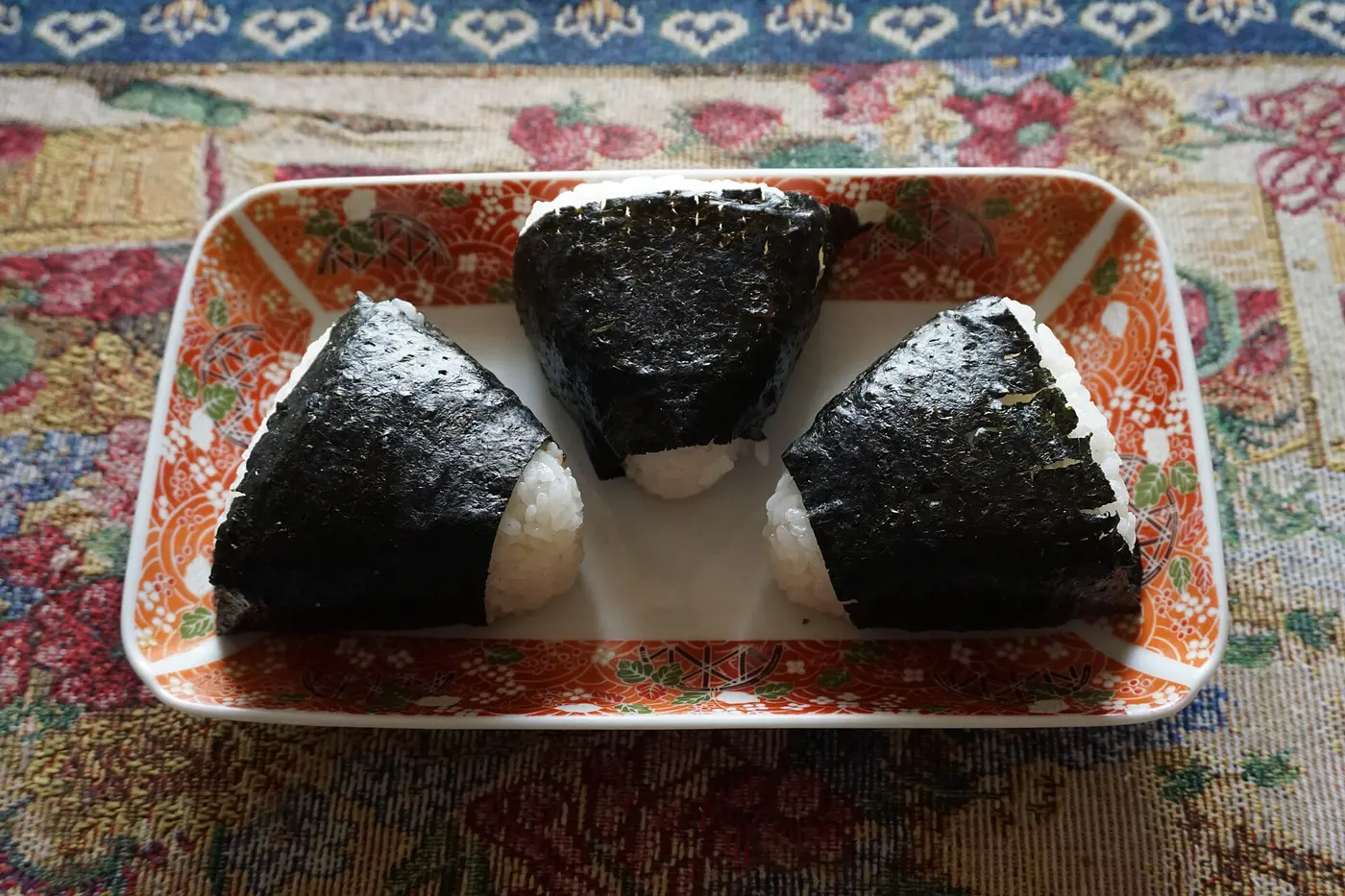
A well-known one says the musubi in omusubi is the same musubi found in the names of gods in the Kojiki, Japan’s oldest chronicle, such as Kamimusubi no Kami. Musubi is said to mean the power that brings all things into being, and the story goes that people shaped rice into a mountain-like form to receive the gods’ power, and called it omusubi. From there grew the idea that only triangular rice balls are omusubi. There are even reports of an area in Chiba Prefecture, near Tokyo, where big rice balls are omusubi and small ones onigiri.
None of this, however, goes beyond folklore. As the dictionary suggests, it is safest to say that no rule separates the two by shape. Sources even disagree about which of the two words spread from nyōbō kotoba, the special vocabulary of the ladies who served at the imperial court.
Shapes vary by region
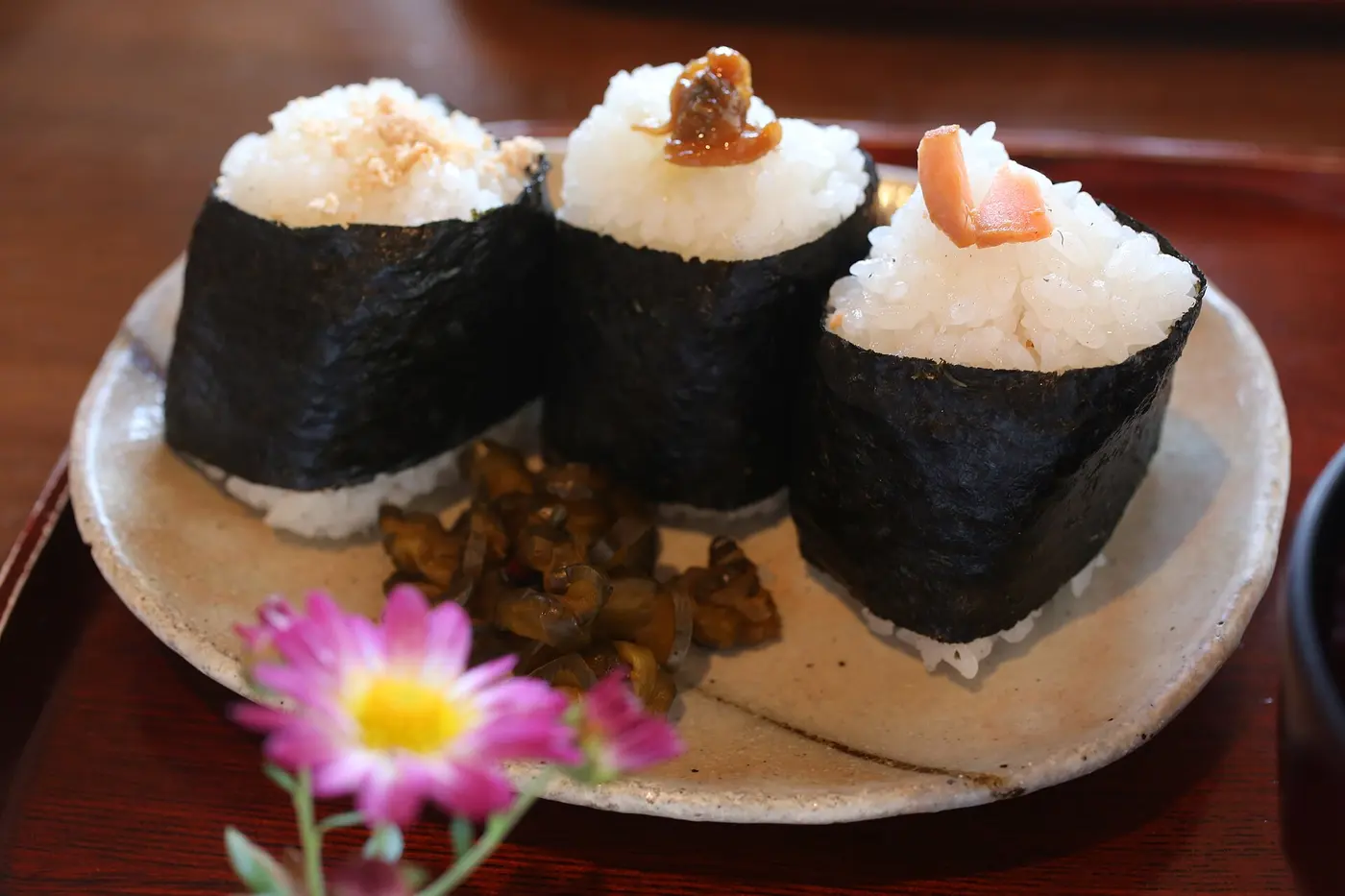
Shapes were never fixed either. According to the Nipponica encyclopedia, rice balls in Edo (old Tokyo) were round or triangular, mostly triangular, while in the Kansai region around Osaka and Kyoto the standard shape was a small cylinder like a rice bale, and around Matsuyama in Ehime Prefecture they were made as long triangles.
There was also a custom of shaping rice balls differently for funerals. Around Tokyo, for example, rice balls were usually triangular but were made round for a funeral.

A 2,000-year-old rice ball
Rice balls have a very long history. The Hitachi no Kuni Fudoki, a gazetteer of a province in eastern Japan compiled in the early eighth century, already uses the word nigiri-ii (“squeezed rice”). In the Heian period (794–1185), rice balls were called tonjiki and were handed out to officials and attendants at ceremonies and banquets.
An archaeological find goes back even further. In 1987, at the Sugitani Chanobatake site in what was then the town of Rokusei (now Nakanoto) in Ishikawa Prefecture, a lump of carbonized rice shaped rather like a chimaki rice dumpling was found in the remains of a dwelling from the middle Yayoi period, about 2,000 years ago. Dubbed “Japan’s oldest onigiri,” it inspired Onigiri Day on June 18, combining the roku (six) of Rokusei with the 18th, the day of each month set aside to promote eating rice.