Is the word “ikura” Russian?
Yes. It comes from the Russian ikra. In Russian, though, the word covers fish roe of every kind, not just salmon eggs.
Glossy orange beads glistening on top of a bowl of rice: ikura, salmon roe, is a star of Japanese food, essential on gunkan-maki (“battleship” sushi wrapped in seaweed) and in seafood rice bowls.
Yet the name ikura is always written in katakana, the Japanese script used mainly for words borrowed from other languages. Unlike maguro (tuna) or uni (sea urchin), it doesn’t look like an old Japanese word. And it isn’t one. It comes from Russian.
In Russian, “ikra” means any fish roe
The source of ikura is the Russian икра, ikra, stressed on the second syllable. Japanese dictionaries explain the word as coming from Russian for “fish eggs.”
In Russian, though, ikra doesn’t refer to salmon roe alone. It is a broad word covering all kinds of fish roe, and even the eggs of frogs and other amphibians. So Russians tell them apart by color: salmon and trout roe is “red ikra,” and sturgeon roe, that is, caviar, is “black ikra.” From a Japanese point of view, cod roe and herring roe would all be ikra in Russian too.
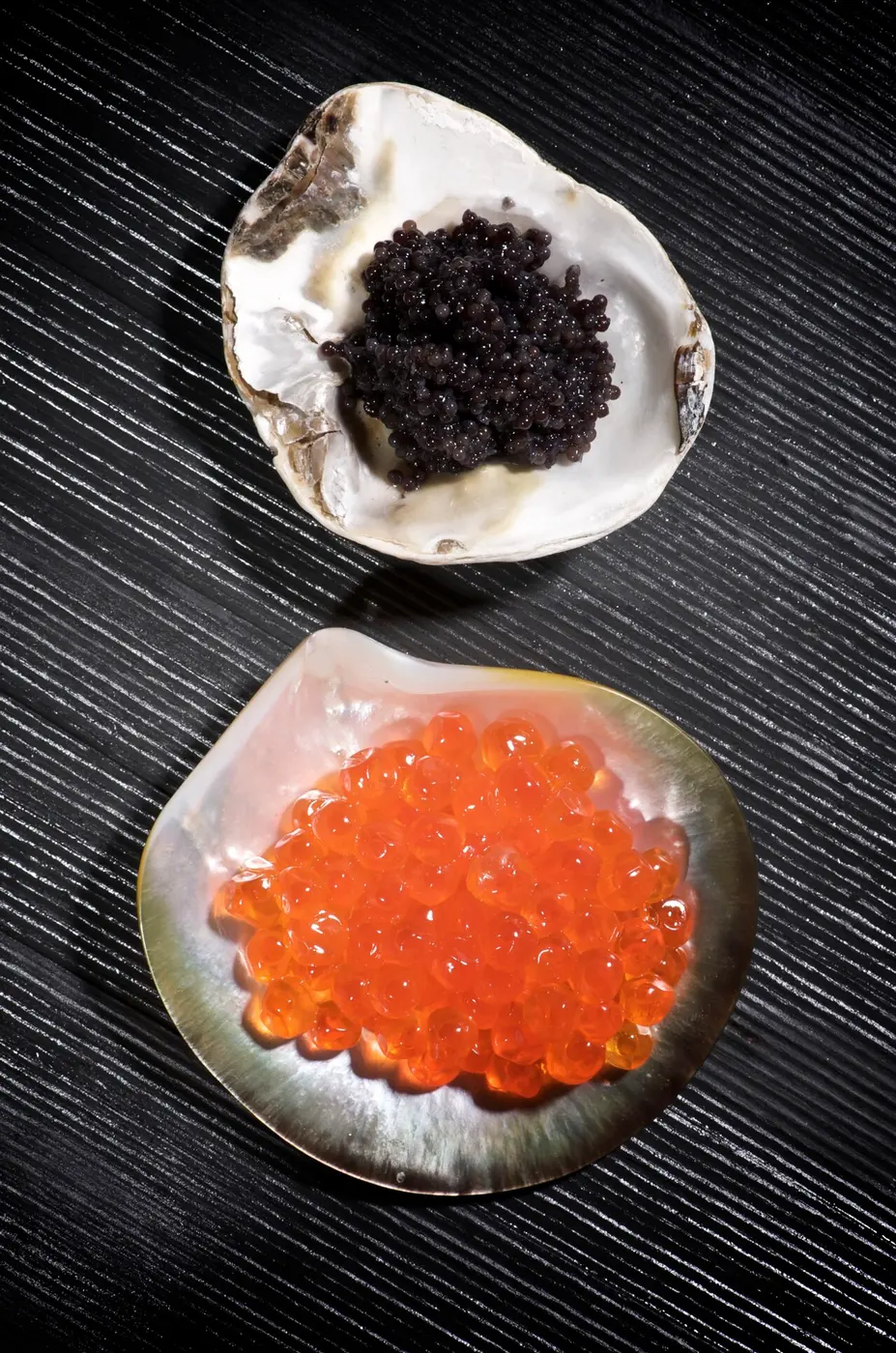

Intriguingly, Russian cooking also has spreads made from finely chopped and stewed eggplant or zucchini, and these are called “eggplant ikra” and “zucchini ikra,” because their grainy texture recalls fish eggs.
Arriving in the early 20th century
So when did the word reach Japan?
The Nihon Kokugo Daijiten, Japan’s largest dictionary, says the custom is thought to have begun around the Russo-Japanese War of 1904–05, when Russians ate salmon roe as a substitute for caviar. One encyclopedia credits Russian prisoners of war with making it as a stand-in for caviar.
As a result of that war, the southern half of Sakhalin, the large island north of Hokkaido, became Japanese territory. The Karafuto (Sakhalin) Government’s fisheries experiment station, set up in 1918, ran trials in making ikura. It is said that Japanese ikura production began when the station test-made a long-keeping salted product using a method brought from Russia.
Among the dictionary’s earliest examples of ikura in Japanese is a line from a 1928 household encyclopedia: “The caviar seen on the market today (the Russian specialty ‘ikura’) is salmon roe.” In the early Showa era (from 1926), it seems, salmon roe was being sold in Japan as “caviar.”
Ikura versus sujiko
Once in Japan, the word’s meaning narrowed sharply. In Japanese, ikura means only salmon or trout eggs separated one by one and cured in brine or soy sauce. Roe salted while still held together in its membrane is called sujiko and treated as a different product.
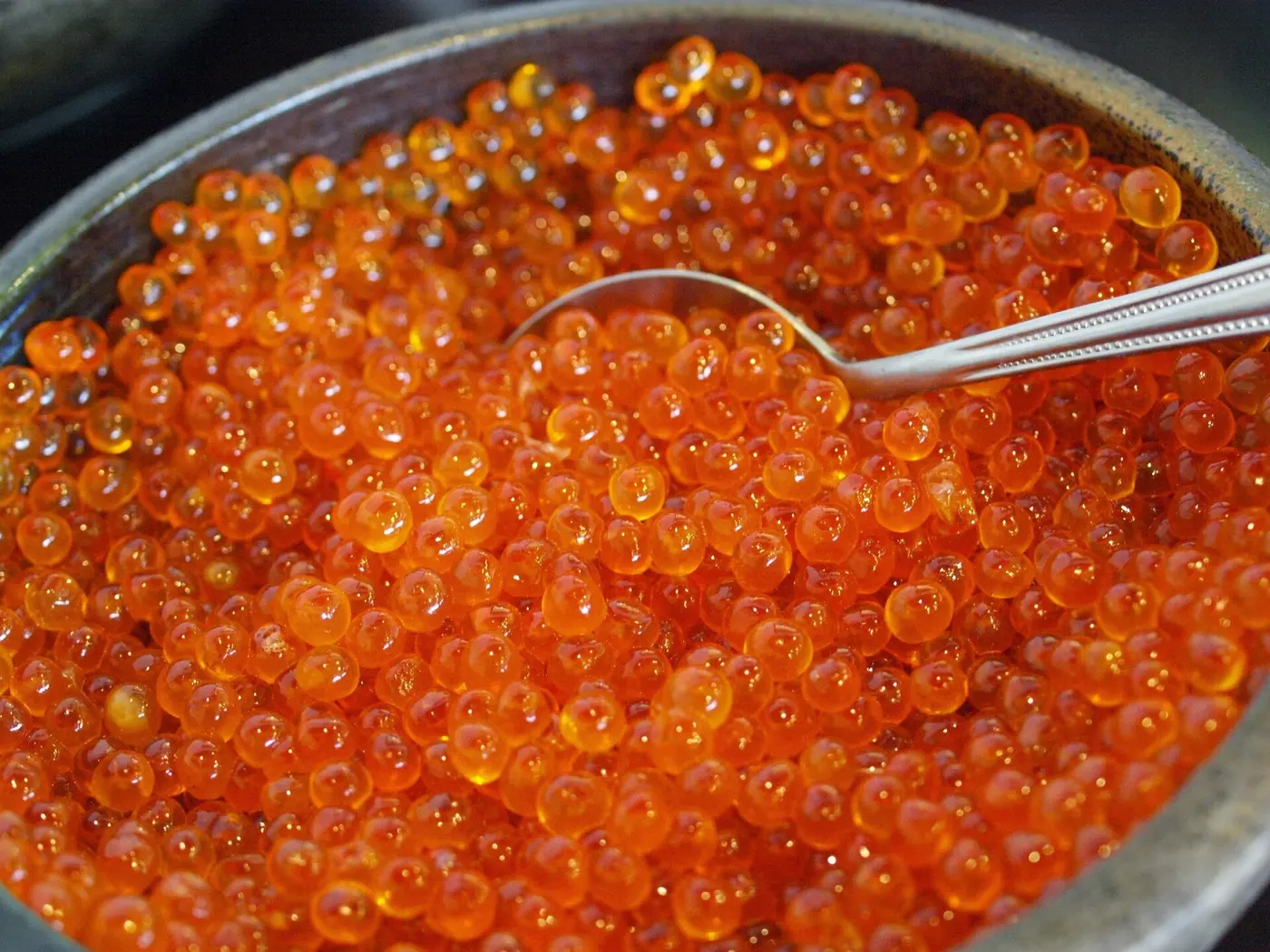

Japanese does have an old native word for the roe of salmon and similar fish, hararago, and dictionaries list it as another name for ikura. Today, though, the Russian-born ikura has firmly taken center stage.
And the narrowed Japanese ikura has since traveled abroad again along with sushi. “Ikura” now appears on sushi menus around the world, and some languages, such as Indonesian, have borrowed it from Japanese to mean salmon roe. A Russian word, in other words, has made its way around the world by way of Japan.
Note, by the way, that the English word “caviar” itself is not Russian. It is traced back to Persian and Turkish and reached the rest of Europe by way of Italian and French.
Other words from Russian
Ikura is not Japanese’s only Russian loanword. Noruma, meaning a work quota, comes from the Russian norma; it is said to have spread after the Second World War, brought home by Japanese detained in Soviet labor camps in Siberia.
Kanpa, meaning a fundraising drive, is a shortened form of the Russian kampaniya (“campaign”), and interi, meaning an intellectual, comes from the Russian intelligentsiya.