What does “Galápagos” mean?
“Tortoise,” in old Spanish. The islands are named after their giant tortoises; the popular idea that the word means “saddle” came later.
In Japan you still sometimes hear the word garakē. It refers to the feature phones that evolved in their own peculiar direction in Japan before smartphones took over, and it is short for “Galápagos phone.” Japanese people also speak of “Galápagos-ization” when a domestic product or practice drifts out of step with the rest of the world.
The original Galápagos are the islands in the Pacific Ocean about 900 kilometers (560 miles) off the coast of Ecuador in South America. But what does the word “Galápagos” itself mean?
The “islands of the tortoises”
In Spanish, the archipelago is the Islas Galápagos. Galápago is an old Spanish word for a tortoise or turtle, so the name translates as “the tortoise islands.” The word is older than Spanish itself and is thought to go back to a language spoken on the Iberian Peninsula before the Romans arrived.
The first European to reach the islands was Tomás de Berlanga, the Bishop of Panama. In 1535, his ship, bound for Peru, lost its wind and was carried off by currents, reaching the islands on March 10. There was almost no fresh water, and two crew members and ten horses died. In his letter to the Spanish king, Berlanga already listed galápagos among the animals he had seen there.
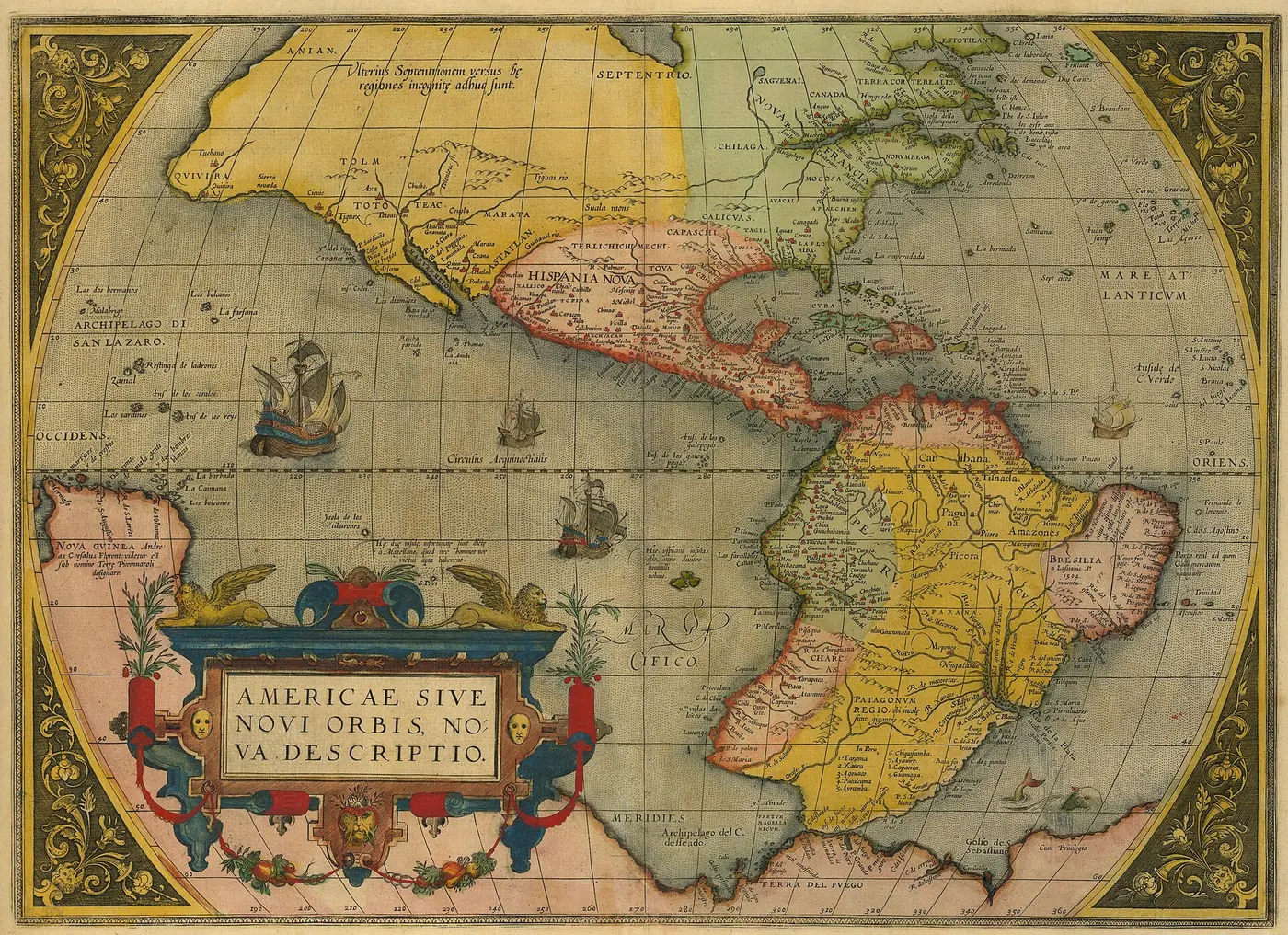

The name first appears on a map published in 1570 by Abraham Ortelius, a cartographer from Flanders (in today’s Belgium). There the islands are marked as the islands “de los Galopegos.” The giant tortoises living there had simply given the islands their name.
The “saddle” story is backwards
You may have heard a different explanation: that galápago is Spanish for a kind of saddle, and that the tortoises, and then the islands, were named for shells that looked like saddles.
The Galápagos historian John Woram points out that this gets things the wrong way around. Galápago originally meant a tortoise, and the saddle meaning first appears in a dictionary in the 1869 edition published by the Royal Spanish Academy, more than 300 years after Berlanga’s voyage.
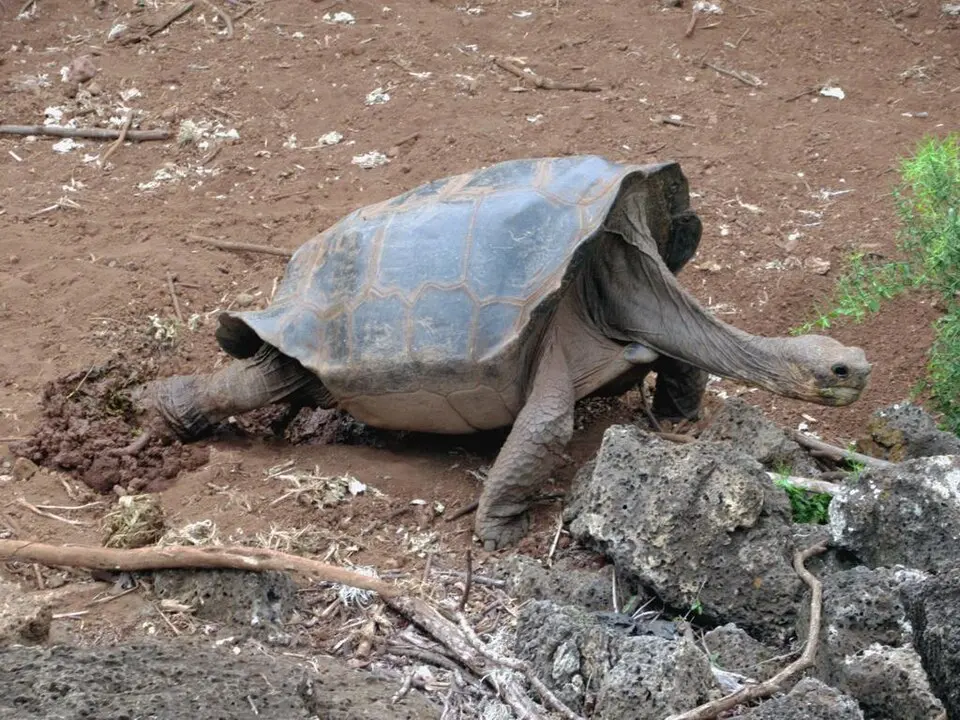

According to Woram, the journal of US Navy Captain David Porter, published in 1815, compared the shells of tortoises from one of the islands to Spanish saddles. Saddles of a similar shape later came to be called “tortoise saddles.” In other words, the saddle was named after the tortoise, not the tortoise after the saddle.
The remark Darwin let slip by
The person who made the islands world-famous was the English naturalist Charles Darwin, who stayed in the archipelago aboard HMS Beagle from September 15 to October 20, 1835.
In his account of the voyage, Darwin recorded that the islands’ vice-governor, Nicholas Lawson, had told him that the tortoises differed from island to island and that he could tell with certainty which island any one of them came from. Darwin later admitted that he did not pay enough attention to this at the time. Yet the fact that living things varied slightly from island to island would eventually feed into On the Origin of Species in 1859.
“Galápagos” in Japanese
Islands where life evolved in its own way, cut off from the outside world: from that image, “Galápagos” became a Japanese metaphor for anything that developed independently in isolation. Japan’s remote Ogasawara Islands are called “the Galápagos of the Orient,” and mobile phones that evolved in sophisticated ways to suit the Japanese market alone became “Galápagos phones,” or garakē for short.