When did “otaku” start meaning an obsessive fan?
In 1983, when the columnist Akio Nakamori used it in a manga magazine as a label for the young fans who crowded Tokyo’s Comic Market. Before that, otaku was simply a polite way of saying “you.”
Anime otaku, train otaku, even health otaku. In Japan today, otaku simply means someone who is passionately absorbed in a hobby. The word has made it into English too, and fans of Japanese anime around the world sometimes use it about themselves.
Yet the word started out as an honorific: a polite way to refer to someone else’s home, or to the person in front of you. How did a courteous form of address become a name for obsessive fans?
A polite word for “you”
According to the Nihon Kokugo Daijiten, Japan’s largest historical dictionary, otaku first meant “your house,” a respectful way to refer to another person’s home, with examples from the late 18th century. From there it came to mean the other person’s household or husband, and eventually the other person themselves, as a polite pronoun.
The lexicographer Hiroaki Iima, an editor of the Sanseido Kokugo Jiten dictionary, has traced how that usage developed in a column for Kangaeru Hito, a web magazine published by Shinchosha. In the 1950s young people began using otaku to address one another. The novelist Nobuhiko Kobayashi recalled being told, “Otaku, please get in this line,” at a student protest he joined in the early 1950s. In a 1984 book, the novelist Motoko Arai describes a university friend saying, “Otaku, you’re going to get called on next class.” Iima himself used the word with friends in the 1980s; it felt, he writes, a little grown-up.
The 1983 column
The columnist Akio Nakamori seized on this way of talking. Beginning in the June 1983 issue of the manga magazine Manga Burikko, he wrote a series called “A Study of Otaku” about the boys and girls who flocked to the Comic Market, or Comiket, the huge fan-made comics fair in Tokyo. People called them maniacs, he wrote in the first installment, or fanatics, or gloomy types, but none of those names quite fit. “So for certain reasons,” he declared, “we have named them otaku, and that is what we will call them from now on.”
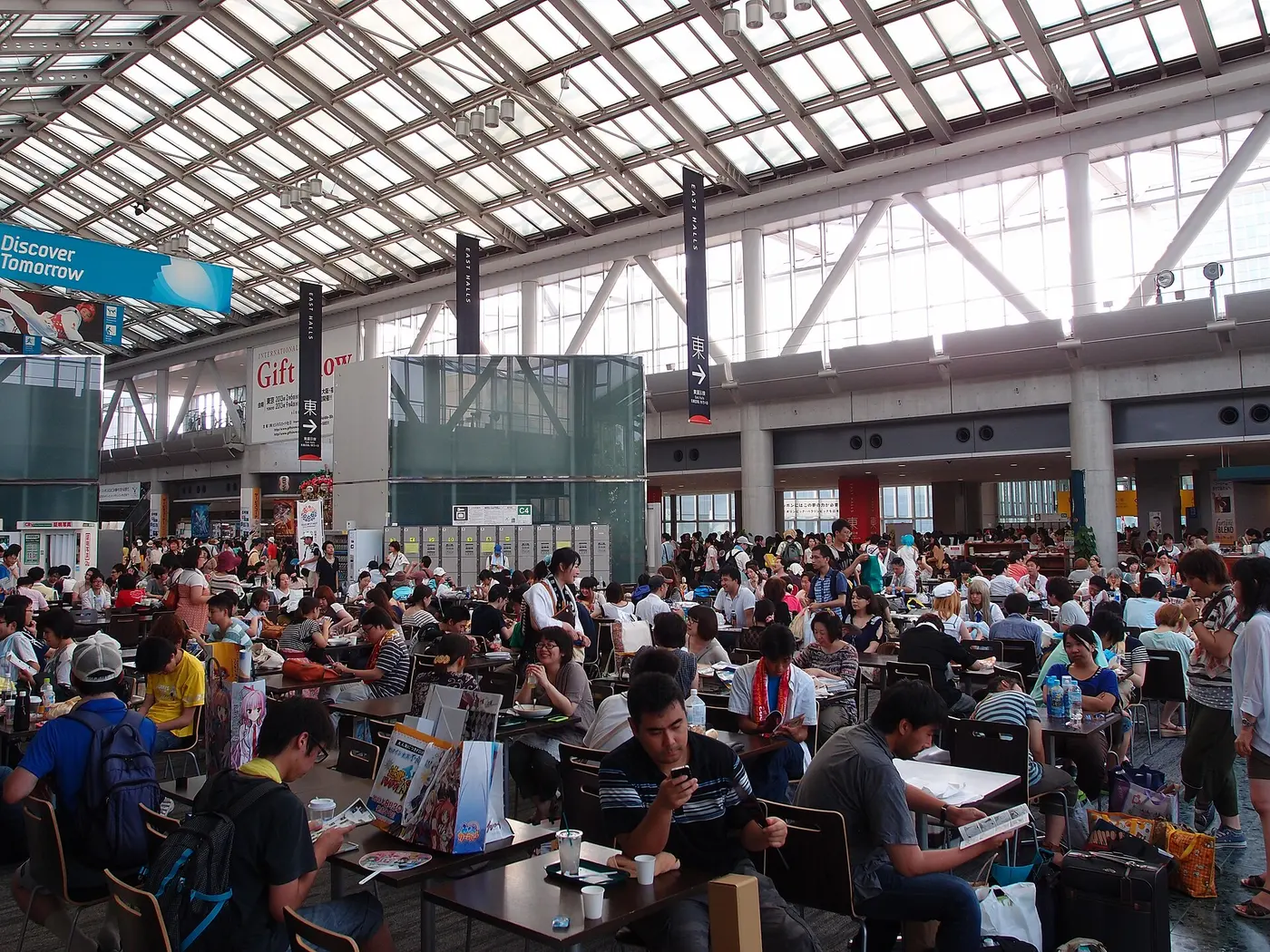

According to Iima, the column was openly mocking. Nakamori called it creepy that junior-high kids at Comiket addressed their friends as “otaku.” The column drew protests, but otaku spread anyway as a put-down. The Japanese dictionary Digital Daijisen says this sense came into use in the mid-1980s and was at first somewhat disparaging. Iima recalls that in the late 1980s a classmate pointed out, with obvious contempt, that calling people “otaku” was how anime maniacs talked. He never used the word to address anyone again.
A dark turn, then a comeback
What fixed the word in the public mind was a series of murders of young girls in Tokyo and Saitama in 1988 and 1989. According to Iima, sensational reports that the man arrested owned huge numbers of anime and other videotapes led many people to believe that otaku, fans of manga, anime and computers, were genuinely dangerous. At the time, he writes, it took courage to call yourself one.
The tide turned in the 2000s. In 2005 the Nomura Research Institute estimated that Japan had some 1.72 million otaku pouring their money and free time into their passions, a market worth 411 billion yen. The Sanseido Kokugo Jiten, which Iima helps edit, defined otaku up to its sixth edition in 2008 as “an (introverted) enthusiast absorbed in a particular hobby.” In the seventh edition, in 2014, that became “a person absorbed in a particular hobby who has detailed knowledge of it.” Few words, Iima writes, have seen their reputation swing so wildly in just a few decades.


Otaku in English
Merriam-Webster defines otaku as “a person having an intense or obsessive interest especially in the fields of anime and manga” and dates its first known use in English to 1992. Its etymology note mentions Nakamori’s column and the theory that fans who were strangers first used the pronoun as a mark of “somewhat excessive politeness,” and then “self-consciously as a means of expressing solidarity.” The Cambridge Dictionary and the Oxford Advanced Learner’s Dictionary both include the word, describing a person in Japan who is very interested in computers or anime but may find it hard to deal with people. As a Merriam-Webster article on the word notes, English speakers are still divided over whether otaku is an insult or a harmless, even affectionate, label.