Where does the Japanese word “mottainai” come from?
It is written as mottai, “dignity,” plus nai, “none,” but its history is less tidy. It first meant “improper” or “outrageous,” and the sense of “what a waste” appears in the 14th century.
Leave a few grains of rice in your bowl, and someone in Japan is likely to say “mottainai!” Throw away something that still works, and you will hear it again. It is usually translated as “what a waste.” In 2005 the Kenyan environmentalist Wangari Maathai began urging the world to adopt it as a byword for protecting the environment.
Look the word up in a Japanese historical dictionary, though, and you find that it did not always mean “wasteful.”
What is “mottai”?
In writing, mottainai is spelled with the characters for mottai plus nai, “there is none.” According to the Japanese dictionary Digital Daijisen, mottai means a dignified or imposing air, or the quality and bearing of a person or thing. It survives in phrases such as mottai o tsukeru, “to put on airs.” So mottainai would seem to mean “lacking dignity,” and that might seem to settle it.
The Nihon Kokugo Daijiten, Japan’s largest historical dictionary, points out a puzzle, however. Mottainai is found from the medieval period, but mottai used on its own appears only in the Edo period (1603–1868), centuries later. The Kagakushū, a dictionary from the middle of the Muromachi period (1336–1573), does have an entry for mottai, but what it actually explains is mottainai. The first character, it says, means “not,” and the pair together means “lacking its proper form.”
You may also read that mottai was originally a Buddhist term for the true nature of things. But neither the Nihon Kokugo Daijiten nor Digital Daijisen mentions any Buddhist connection in its entry for the word.
First it meant “outrageous”
So what did mottainai first mean? The oldest sense given in the Nihon Kokugo Daijiten is “improper, departing from how things ought to be; outrageous.” Its example comes from the Uji Shūi Monogatari, a collection of tales from around 1221.
Next comes the sense “too good for me; more than I deserve.” An example appears in an entry for 1378 in the diary of the Zen monk Gidō Shūshin. Then, in the Taiheiki, a war chronicle from the late 14th century, we find the sense that leads to today’s meaning: regret that something useful is being thrown away, or that someone capable is not being put to good use.
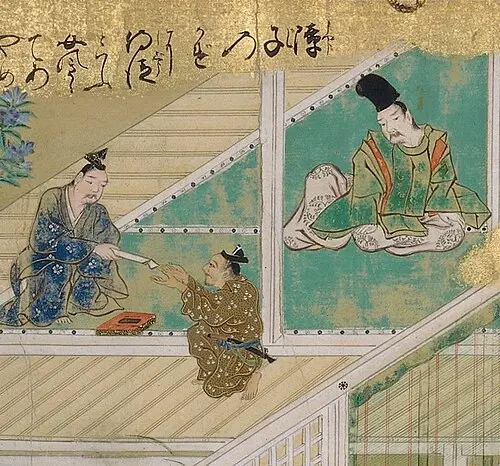

By the early Edo period the modern use was well established. In Chiekagami, a book of stories published in 1660, a lord is about to throw away some coins when his attendants stop him, saying, “What a mottainai thing to do!”
A 2005 newsletter from the Shiga Prefectural Library sums up the dictionary’s account this way. At first the word meant that something had strayed from what it ought to be. When someone received an honor beyond their station, it came to mean “too good for me.” When something that could be used was thrown away or left idle, it came to mean “what a waste.”
Maathai’s “MOTTAINAI”
It was Wangari Maathai who gave this old word a new job. According to the Mainichi Shimbun’s MOTTAINAI campaign, Maathai founded the Green Belt Movement in 1977, encouraging rural women in Kenya to plant trees. In December 2004 she received the Nobel Peace Prize, the first African woman to win it and the first laureate honored for environmental work.
In February 2005 she visited Japan for the first time at the Mainichi Shimbun’s invitation, and came across the word in an interview. It summed up the “three R’s” of environmentalism, reduce, reuse and recycle, in a single word, and it added a fourth: respect for the earth’s irreplaceable resources. Maathai called for MOTTAINAI to become a word the whole world shared.


She kept using it on the world stage. Speaking on behalf of civil society at the United Nations Summit on Climate Change in September 2009, she said: “Even at personal level, we can all reduce, re-use and recycle, what is embraced as Mottainai in Japan, a concept that also calls us to express gratitude, to respect and to avoid wastage.”
In December 2025 the Oxford English Dictionary added mottainai as one of 11 new words of Japanese origin, as Nikkei Asia reported in January 2026.