Why is fare dodging in Japan named after a tobacco pipe?
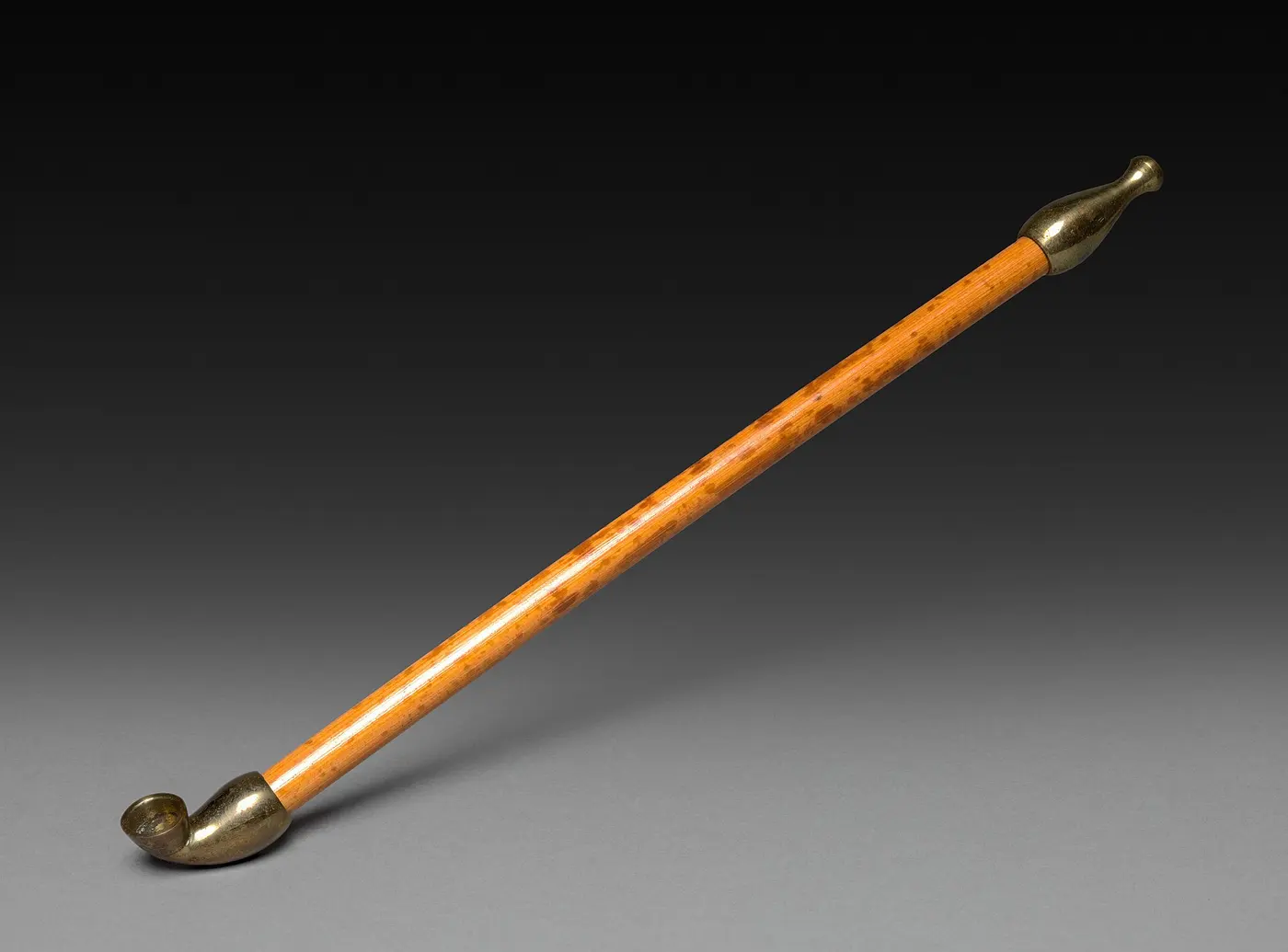
Because a kiseru, the traditional Japanese pipe, has metal only at its two ends and bamboo in between. Paying only near the stations where you get on and off looked just like it.
Buy a ticket good only for the first stop or two, carry a commuter pass that covers only the stations near your destination, and ride everything in between for free. In Japan this is kiseru jōsha, “pipe riding,” or simply kiseru. It is, of course, fare evasion.
A kiseru is a traditional Japanese tobacco pipe. Why would it lend its name to a train scam? Books from around 1900 reveal that the first “pipe riders” were up to something a little different.
A pipe with metal ends
According to the Nihon Kokugo Daijiten, Japan’s largest dictionary, the word kiseru comes from the Khmer word for “tube,” and the pipe is said to have reached Japan around the Keichō era (1596–1615). Shredded tobacco is packed into a small bowl at one end, and the smoke is drawn through a mouthpiece at the other. The tube between the curved head and the mouthpiece is called the rau.
On most kiseru the head and mouthpiece are metal and the rau is bamboo. The Digital Daijisen dictionary explains the fare-dodging sense accordingly: a kiseru has metal only at its two ends. In Japanese, the word kane means both “metal” and “money.” Pay money only at the ends of your journey, ride free in the middle, and your trip looks just like the pipe.

First, a show-off’s trick
The earliest “pipe riding” on record, however, had nothing to do with free rides.
The poet and scholar Ochiai Naobumi (1861–1903) left a note, published after his death in Hagi-no-ya Ikō (1905), about a railway buff who asked him whether he knew what “pipe riding” was. Members of parliament often did it, the man explained. Leaving Shinbashi station in Tokyo, where friends saw them off, they rode in the top class, but only as far as Yokohama, where they switched to a bottom-class ticket. A little before their home city, Kyoto or Osaka, where people would come to greet them, they bought a top-class ticket again and moved back. “The front and back are metal, and the middle is bamboo, like a pipe, so it is called pipe riding,” the man said. Ochiai added: “What amusing ways of riding there are in this world.”
This was pure vanity, a grand show only where people could see. The metal here stood less for money than for the shine of the pipe’s fittings. This sense keeps turning up in self-improvement books of the 1910s and 1920s, as an example of empty show.
The pipe rider fined in 1918
Meanwhile, fare-dodging “pipe riding” was making the papers. In a 1920 book, the journalist Miyatake Gaikotsu introduced it as “a new word,” citing an article headlined “Pipe Rider Fined” in the Tokyo Asahi Shimbun of January 29, 1918.
On the morning of the 27th, the article said, the Shinbashi stationmaster grew suspicious of a commuter pass shown by a young man in silk and gold-rimmed glasses. He turned out to hold two passes, one between Shinbashi and Hamamatsuchō and one between Yokohama and Sakuragichō, and had been using them to travel between Tokyo and Yokohama. He settled by paying 100 yen and 48 sen. Gaikotsu found the expression, with money showing only at the two ends and none in the middle, “wonderfully witty.”
The new-word dictionaries of the 1920s and 1930s picked up the term. One from 1931 described two kinds: riding free between two short tickets, and the show-off’s habit of riding second class at the start and end of a trip and third class in between. For a while, the two meanings lived side by side.
The older pun: Lord of Satsuma
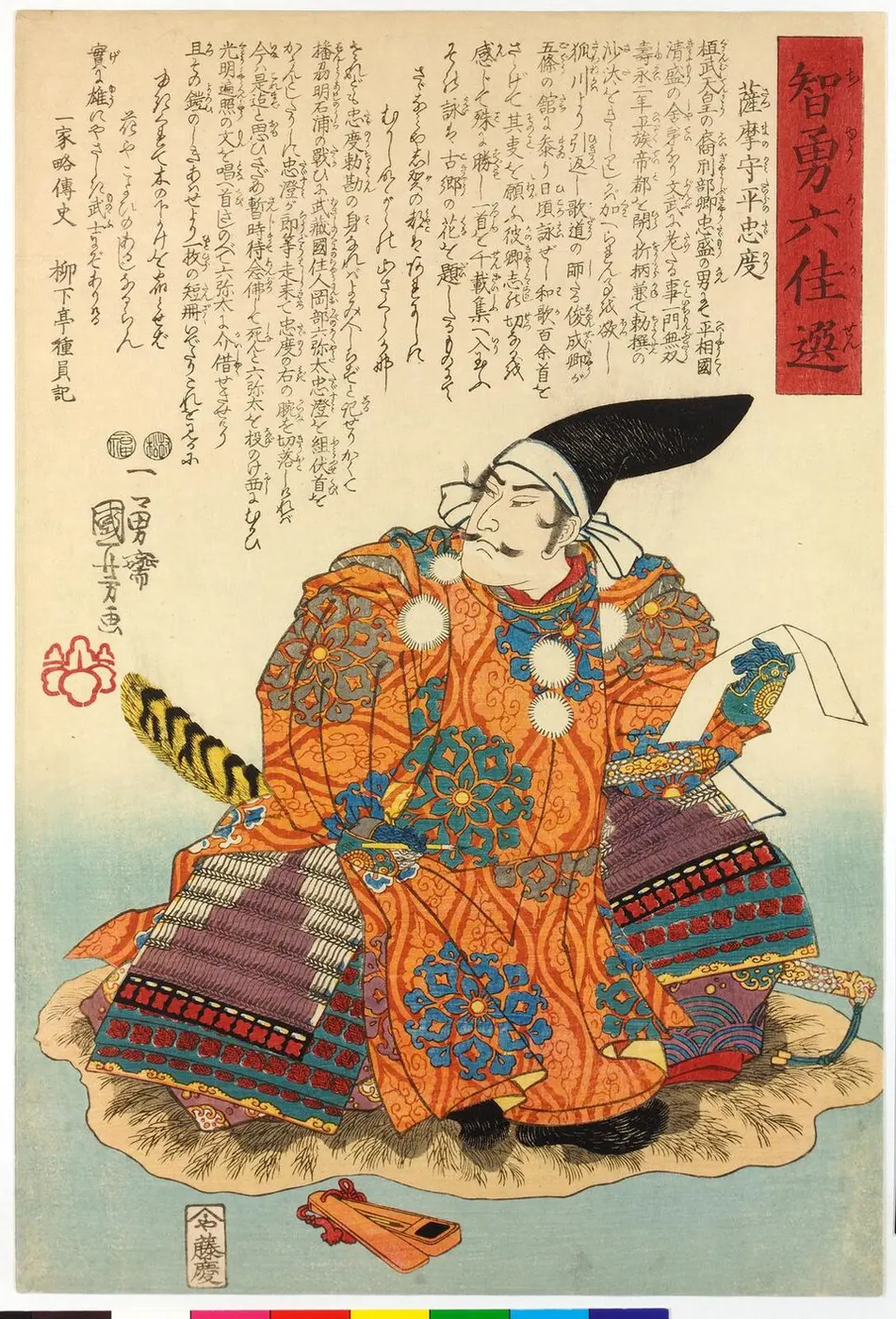
Japanese had an even older joke for riding free: Satsuma no kami, “Lord of Satsuma.” The late-12th-century warrior and poet Taira no Tadanori (1144–1184) held that title, and his given name, Tadanori, sounds exactly like tada-nori, “free ride.”
In the kyōgen comic play Satsuma no Kami, a teahouse owner tells a penniless monk that the ferryman at the Kanzaki crossing loves wordplay: when asked for the fare, say “a young lord of the Taira,” and when asked what that means, say “Satsuma no kami Tadanori.” According to the encyclopedia Sekai Daihyakka Jiten, the monk gets as far as “Satsuma no kami,” forgets the punch line, blurts out something about dried seaweed and gets a scolding. The Nihon Kokugo Daijiten finds the pun in kyōgen scripts from the late 16th or early 17th century.

The joke lived on into the railway age. In Tokutomi Roka’s novel Kuroshio (1902–05), the words for “riding without paying” are glossed “Satsuma no kami.” A 1941 handbook on criminal methods lists “Lord of Satsuma” and “pipe riding” side by side as ways of cheating the railways. From ferries to trains, people have always found a pun for a free ride.