Is the Japanese word “dontaku” Dutch?
Yes. It comes from zondag, Dutch for “Sunday.” In the early Meiji era it came to mean Sunday or a day off, and it lives on in the name of a famous festival in Fukuoka.
1876
Every year on May 3 and 4, the center of Fukuoka, on the southern island of Kyushu, is taken over by the parades of the Hakata Dontaku Port Festival. Costumed figures of the gods of good fortune lead the way, followed by dance troupes and thousands of people in fancy dress. It is one of the largest festivals in Japan.
But what does dontaku mean? It sounds like an old Japanese word, yet it is actually foreign. And it once had a close relative in everyday Japanese: handon, a word for a half-day off on Saturdays.
Dutch for Sunday
According to the Nihon Kokugo Daijiten, Japan’s largest dictionary, dontaku comes from the Dutch zondag, and was sometimes also written sondaku. Zondag means Sunday. As Dutch etymological dictionaries explain, it is made of zon, “sun,” and dag, “day,” built exactly like the English Sunday and the German Sonntag.
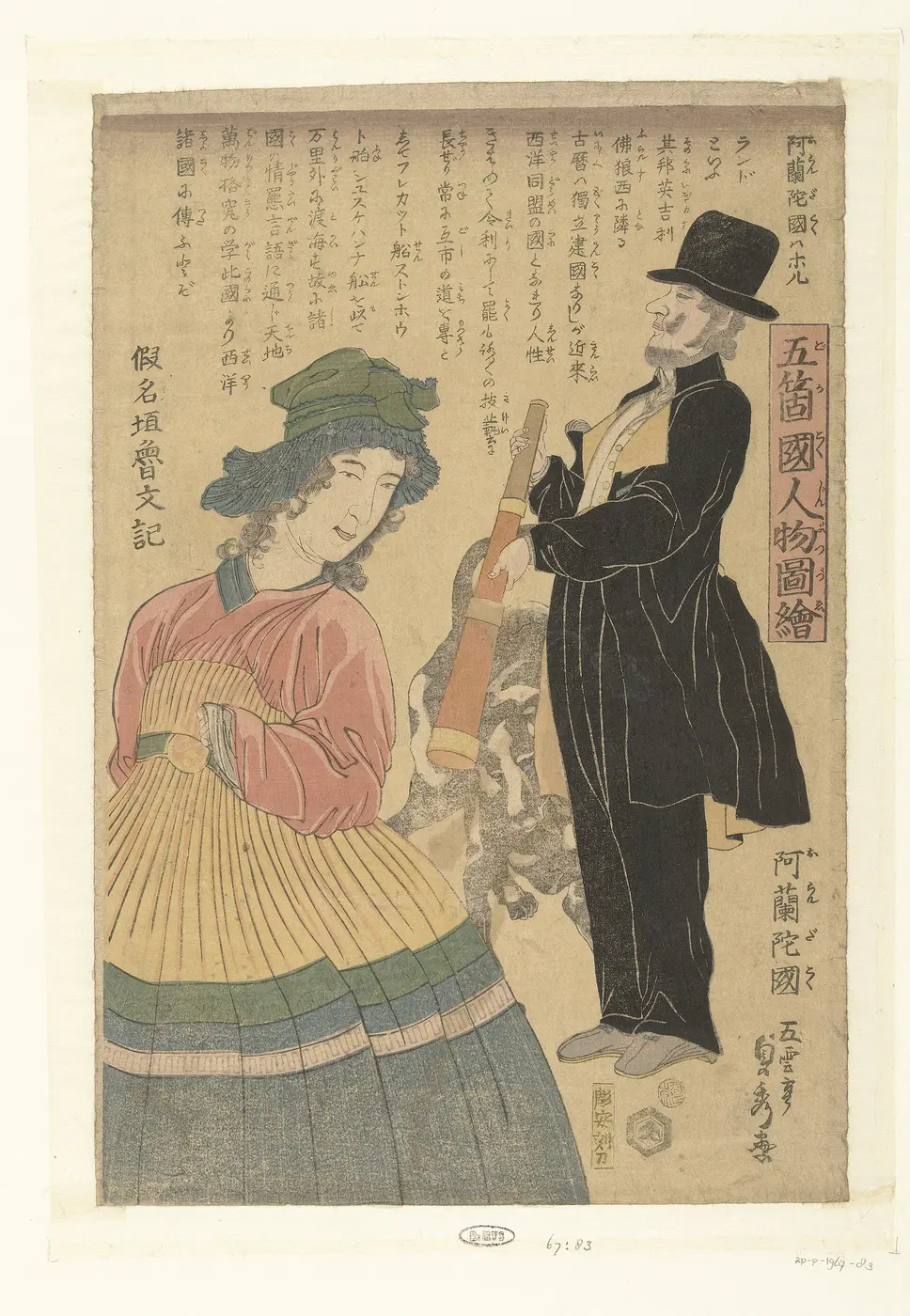
During the Edo period (1603–1868), the Dutch were the only Westerners allowed to trade with Japan, and Dutch was the language through which Japanese scholars studied Western science. Even so, dontaku does not appear in Japanese writing until after the Meiji Restoration of 1868. The earliest example in the Nihon Kokugo Daijiten comes from Aguranabe, a comic novel set among the customers of a beef hotpot restaurant, written in 1871–72 by the popular author Kanagaki Robun. It mentions “the dontaku of one-and-six,” with a gloss explaining that dontaku means Sunday. In another of his books, Robun explains the word for his readers: “sondaku, commonly called dontaku, the Western Sunday holiday.”

From “ones and sixes” to Sundays
That phrase “dontaku of one-and-six” reflects a moment of change. According to the Nihon Kokugo Daijiten, since the Edo period the days of each month ending in 1 or 6, that is, the 1st, 6th, 11th, 16th, 21st and 26th, had been known as ichiroku-bi, “one-six days,” and were used as days off or lesson days. In the first years of Meiji they became the official days off for government offices, so civil servants got a break roughly every five days.
In March 1876 this was abolished, and Sunday became the day off. According to the Heibonsha World Encyclopedia, Saturday afternoons off began the same year. As the seven-day week took hold, dontaku, the name for Sunday, came to mean any day off, or simply taking a rest. In a novel by Tsubouchi Shōyō from the 1880s, a character announces that “the clock is on dontaku,” meaning it has stopped.
Half a dontaku
Saturday afternoons off soon produced a new word: handon. Japanese dictionaries agree that the don is short for dontaku, so handon is literally a “half dontaku.” The Nihon Kokugo Daijiten cites an example from 1877 in a satirical magazine, describing someone counting on their fingers the days until handon. Some feelings never change.
A festival named dontaku
The Hakata Dontaku festival grew out of matsubayashi, a New Year’s custom in the merchant town of Hakata, now part of Fukuoka. In the Edo period, townspeople dressed as gods of good fortune paraded into Fukuoka Castle to offer New Year’s greetings to the local lord.
The custom came to be called dontaku only in the Meiji era. In 1872 the prefectural government banned it, and when it resumed some years later, it began to be called dontaku, after the word for a holiday. The date is often given as 1879, but others place it in the late 1880s or the 1890s, so it remains uncertain. By 1901, a magazine reported that the day was known as dontaku. The World Encyclopedia also mentions a second theory about the name: that it came from a chant, matsu dono ya, sung during the procession.
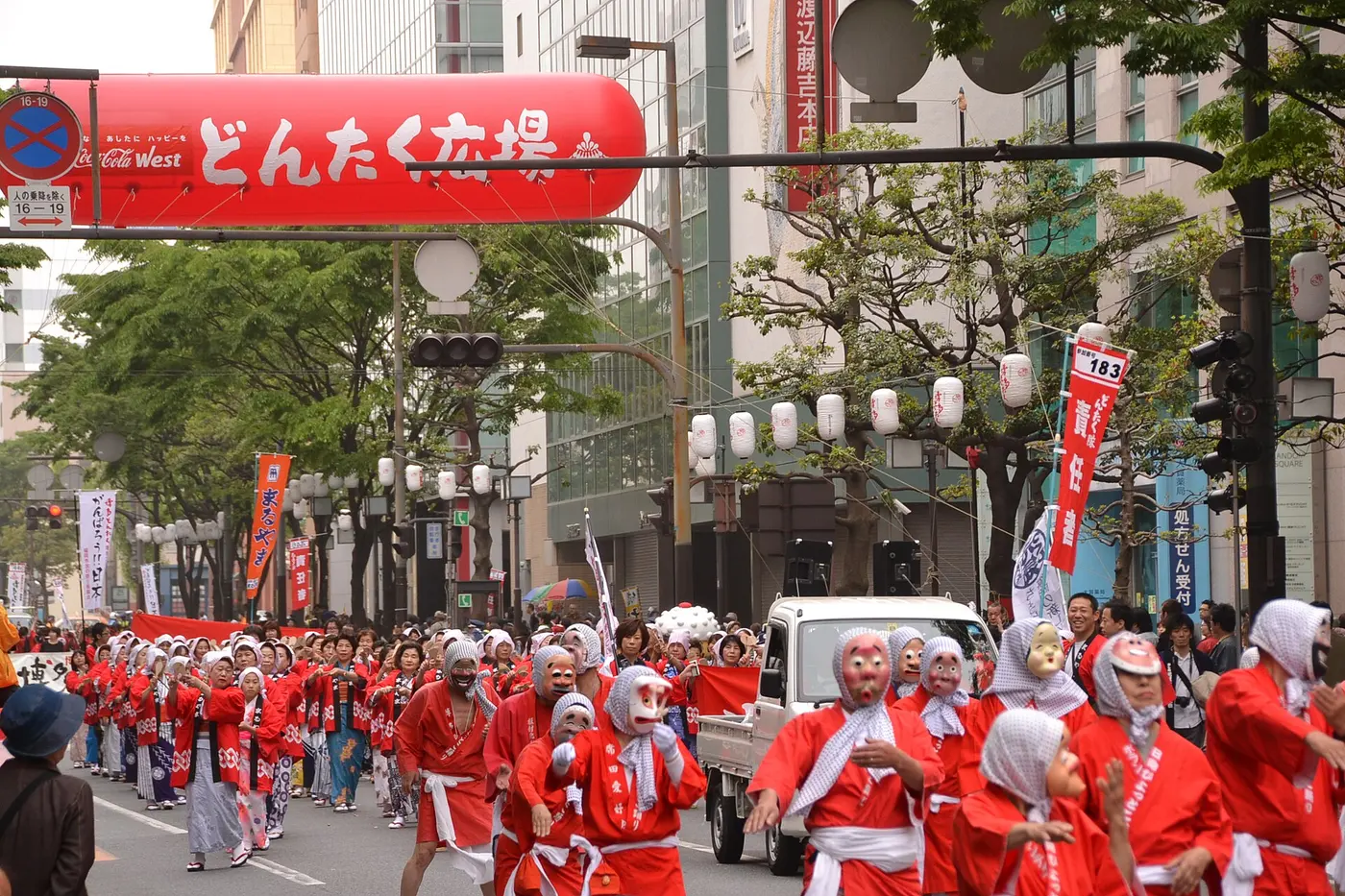

The festival has moved around the calendar over the years. Since 1949 it has been held on May 3 and 4, beginning with Constitution Day, and today it draws more than 2 million visitors. A Dutch word for Sunday is still the name of the party.