When did Japanese people start saying “itadakimasu” before meals?
It is thought to have become a common mealtime greeting only after the Meiji era, especially from the Shōwa era on.
You sit down at the table, put your hands together before picking up your chopsticks, and say “itadakimasu” (いただきます). For anyone raised in Japan, it is a phrase repeated without a second thought since early childhood. When introducing Japanese food culture to people from other countries, many Japanese point to this greeting as a lovely custom.
It certainly looks like an age-old tradition. But it seems that households all over Japan began saying it not so very long ago.
“Itadaku” means to place something on your head
Let’s start with how the word was formed. Itadakimasu is the polite form of the verb itadaku, written with the kanji 頂く or 戴く. The noun itadaki (頂) means a summit, as in a mountaintop: the very highest point. On a person, that is the crown of the head. Itadaku originally described the act of placing something on top of your head.
In the old days, when people received something from someone of high rank, they would raise it high above their heads and accept it reverently. From there, itadaku became a humble way of saying “to receive,” and later came to be used as a humble word for “to eat” and “to drink” as well. Some say this use of itadaku for eating began with rituals before the gods, in which offerings of food were raised to the level of the head or forehead before being eaten.
A surprisingly new mealtime habit
The word itself was in use from medieval times, but the custom of the whole family saying “itadakimasu” together before a meal is another matter. According to interviews conducted by Japan’s National Museum of Ethnology in the 1980s, in the era of the hakozen, when each family member kept their own dishes in a personal box and ate off its lid as a tray, “itadakimasu” was by no means a common greeting.
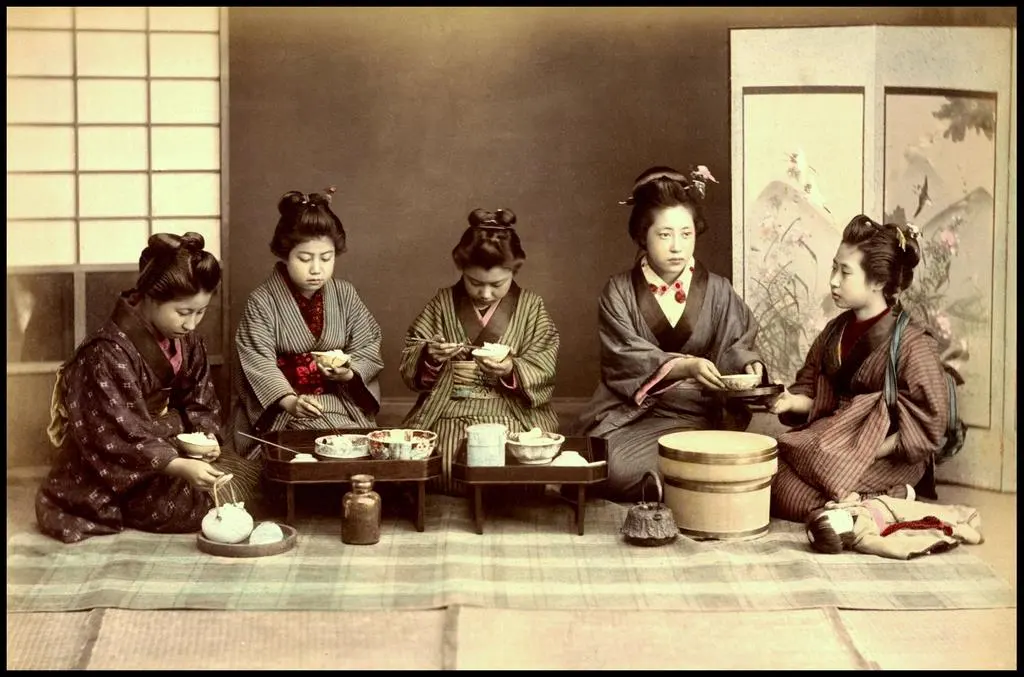

Greetings before and after meals varied from region to region and household to household, and it seems many families simply started eating in silence. The folklorist Yanagita Kunio also left writings to the effect that “itadakimasu” was a phrase that had spread only recently. Searching through written records, mentions of saying “itadakimasu” before picking up one’s chopsticks appear around the middle of the Meiji era.
How schools spread “itadakimasu”
So how did the greeting spread across the country? Schooling is thought to have played a major role.
From the end of the Meiji era into the Taishō era (1912–1926), books on etiquette and manners began telling readers to say “itadakimasu” at the start of a meal and “gochisōsama” at the end. Then in the Shōwa era (1926–1989), through discipline at school and wartime education, the custom of everyone saying it in unison took hold. After the war, school lunches carried it on, and classes putting their hands together as one became a familiar sight in classrooms throughout Japan. At home, too, families came to gather around a single low table called a chabudai instead of eating from individual trays, which is thought to have encouraged the habit of greeting the meal together.
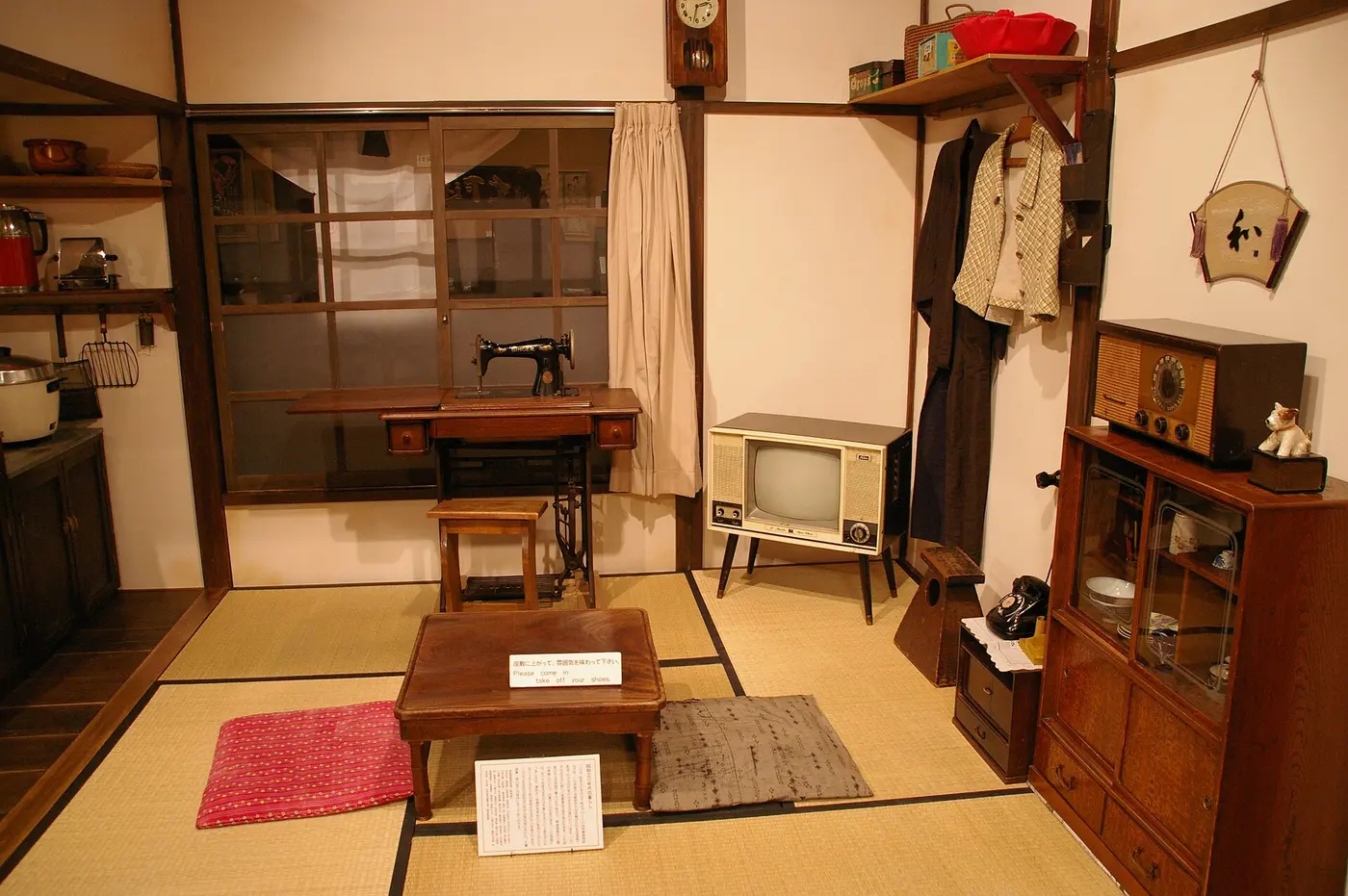

Because putting the hands together resembles the Buddhist gesture of prayer, “itadakimasu” is often explained as expressing gratitude for receiving the lives of the plants and animals we eat. It is a lovely interpretation, but it seems best kept separate from the history of how the word was formed and how the custom spread.
A word at tables around the world
It is hard to find an exact equivalent of “itadakimasu” in other languages. The French “bon appétit” literally means “good appetite.” It is said to the people you are eating with, inviting them to enjoy their meal, which points in the opposite direction from “itadakimasu,” a humble phrase spoken about oneself.
In Christian households, there is the custom of saying grace before meals to thank God. It is similar in expressing gratitude, but a prayer of several sentences has a different feel from a one-word greeting. A single short word that honors both the food and the person who prepared it, “itadakimasu” really does seem to be an expression unique to Japanese.