Is the Japanese word “donmai” made-in-Japan English?
It comes from the English “don’t mind,” but using it to cheer up someone after a mistake is uniquely Japanese.
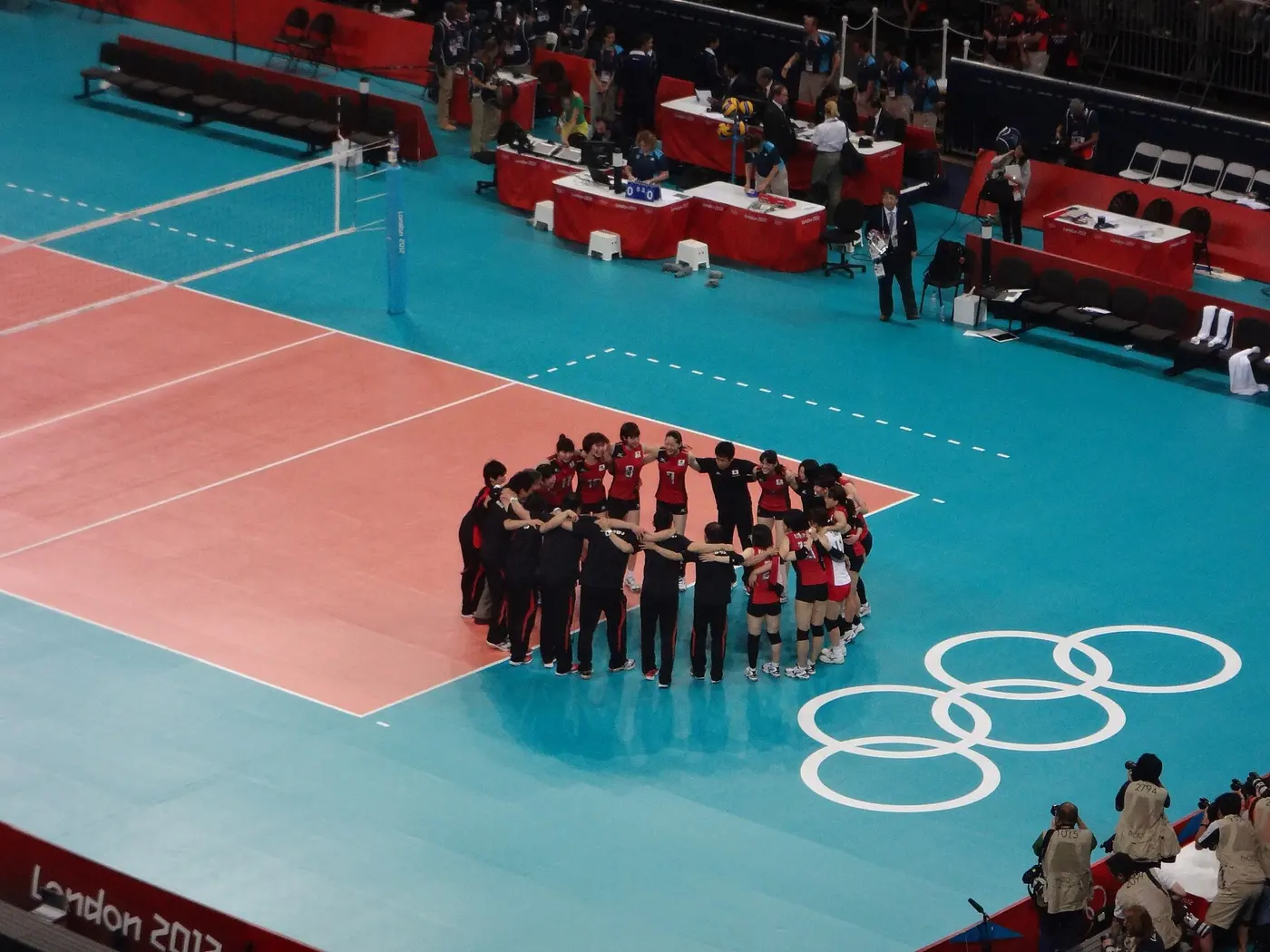
A volleyball serve clips the net. A baseball slips out of a fielder’s glove. As the player hangs their head, the whole team calls out: “Donmai, donmai!” (ドンマイ). Don’t worry about it, you’ll get the next one. With that single word, the mood instantly lightens.
“Donmai” comes from the English “don’t mind.” So would an English speaker understand it as is? As it turns out, it’s not that simple.
Not a stock phrase of encouragement in English
In English, “mind” means to care about something or to object to it. Typical uses are phrases like “I don’t mind” (it’s fine with me) or “Do you mind if I sit here?”
So “I don’t mind” means “it doesn’t bother me” or “either way is fine”; it isn’t something you say to cheer up a teammate who has slipped up. To tell someone not to worry, English speakers would usually say “Never mind” or “Don’t worry about it.” In sports, you are more likely to hear calls like “Shake it off” or “Nice try.”
Add what not to mind, as in “Don’t mind him,” and you get natural English. But shouting “Don’t mind!” on its own is not a common stock phrase of encouragement. The word is built from English material, but its meaning and use grew up in Japan. In that sense, “donmai” belongs to the family of wasei-eigo, or “made-in-Japan English.”

Already in a 1930 dictionary
So how long has “donmai” been around?
The Nihon Kokugo Daijiten, Japan’s largest historical dictionary, defines it as “a cry of encouragement to someone who is discouraged after making a mistake in a sports match or the like,” and cites as an early example the Ars Shingo Jiten, a dictionary of new words published in 1930 (the fifth year of the Shōwa era). If it made it into a dictionary of new words, it was probably already fairly well known by the early Shōwa period. It may feel like a product of the postwar sports boom, but the word actually has nearly a century of history.
It is telling, too, that the dictionary calls it a “cry.” Donmai is not something you say in a long, heartfelt talk; it is a short call tossed out on the spur of the moment as the game goes on. That it is so often doubled—“donmai, donmai”—is part of its rhythm as a shout.
Exactly who first used it, and in what situation, is not clear. Presumably the “t” of “don’t” dropped away to make it easier to say, giving the form donmai, and it spread as a casual call of encouragement.
English that arrived with sports
Behind the birth of donmai lies the arrival of many Western sports in Japan between the Meiji era (1868–1912) and the early Shōwa era. Baseball is said to have begun around 1872, when an American teacher named Horace Wilson taught it at a school in Tokyo, and it soon became wildly popular among students.
Along with the sports came a host of English terms and calls. Many of them changed in form or meaning as they were used in Japan. Words made by combining English material in Japanese ways are especially common in the world of sports, and donmai is one of the best-known examples.


Today, “donmai” isn’t limited to sports; people also say it to friends or coworkers who have made some small mistake. It sounds lighter than saying “don’t worry about it” in Japanese and doesn’t weigh on the other person. Perhaps that breezy quality is why the word has been loved for so long.
So if an English-speaking friend is ever feeling down after a slipup, try saying “Don’t worry about it.” The words are different, but the feeling behind them is exactly the same as “donmai.”