Who wrote the Iroha poem?
Nobody knows. It is famously credited to the monk Kūkai, but its language shows it was written after his time.
“Iro wa nioedo / chirinuru wo / wa ga yo tare zo / tsune naramu / ui no okuyama / kyō koete / asaki yume miji / ei mo sezu”
The Iroha is a remarkable poem: it uses each of the 47 kana, the syllables of Japanese writing, exactly once, and still makes sense. Roughly translated, it says: “Though the blossoms are fragrant, they scatter; in this world of ours, who lasts forever? Crossing today the deep mountains of change, I shall not dream shallow dreams, nor be drunk.” It has long been read as an expression of the Buddhist idea that nothing is permanent.
So who wrote such an ingenious poem?
“Written by Kōbō Daishi”
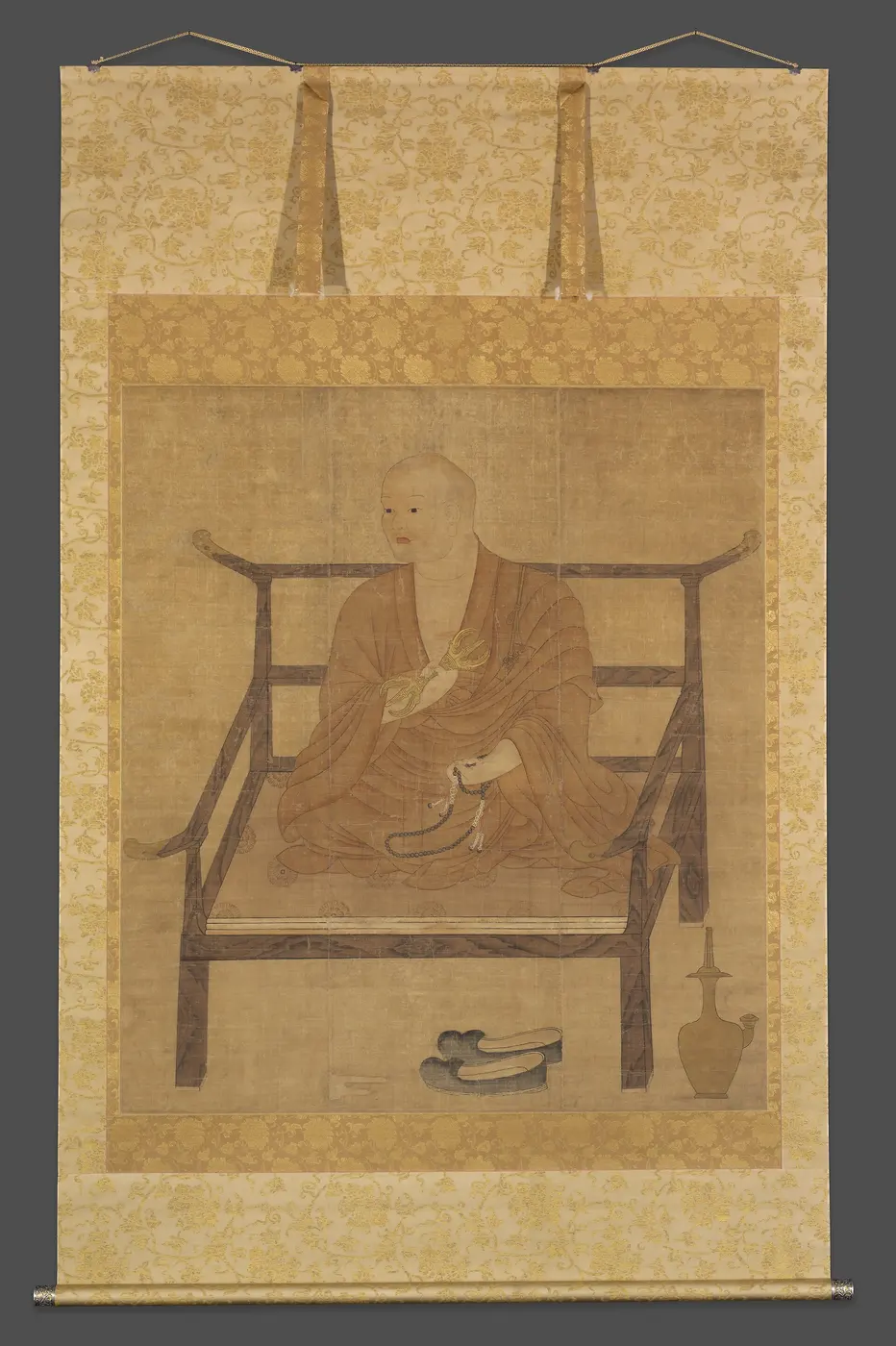
The best-known answer is Kūkai (774–835), also called Kōbō Daishi, the monk who founded the Shingon school of Buddhism in Japan. He was also a legendary calligrapher, so famous that Japanese has a saying, “Even Kōbō sometimes slips with the brush,” the equivalent of “even Homer nods.” It sounds like just the sort of thing he would have written.
The attribution is old. Kakaishō, a commentary on The Tale of Genji written in the fourteenth century, records the scholar Ōe no Masafusa (1041–1111) as saying that the Iroha was Kōbō Daishi’s work. And the late Heian-period monk Kakuban explained the poem as a Japanese rendering of a verse from the Nirvana Sutra that begins “All things are impermanent.”

What the language reveals
Look closely at the language of the poem itself, though, and things don’t fit Kūkai’s era.
Ōya Tōru, a scholar of the Japanese language in the Meiji era (late nineteenth and early twentieth centuries), pointed out that verse built from four lines of alternating seven and five syllables, the Iroha’s form, did not yet exist in Kūkai’s day. What is more, Japanese at that time still distinguished two different sounds for syllables such as ko, a distinction the Iroha does not make.
Comparing it with similar teaching verses points the same way. The Ametsuchi no kotoba, thought to date from the early Heian period, has 48 kana and writes two different e sounds separately; the Iroha has 47 and makes no such distinction. And Kuchizusami, a primer for a young reader compiled by Minamoto no Tamenori in 970, includes another such verse but does not mention the Iroha at all.
For these reasons, the Iroha is thought to have been written between the late tenth and mid-eleventh centuries, more than 150 years after Kūkai’s death. The oldest known record of it is in a dictionary of a Buddhist sutra written in 1079, where the poem is written in Chinese characters used for their sounds, divided into groups of seven. In the end, the real author is unknown.
A hidden message?
There is another curious story about the Iroha. Write it out in rows of seven kana, and the last letters of the rows spell toka naku te shisu: “to die without having done wrong.”
This has inspired theories that the author was someone who died after being falsely accused. Ōya Tōru, however, dismissed the idea as far-fetched. It is most likely just a coincidence.
Unknown author, lasting legacy
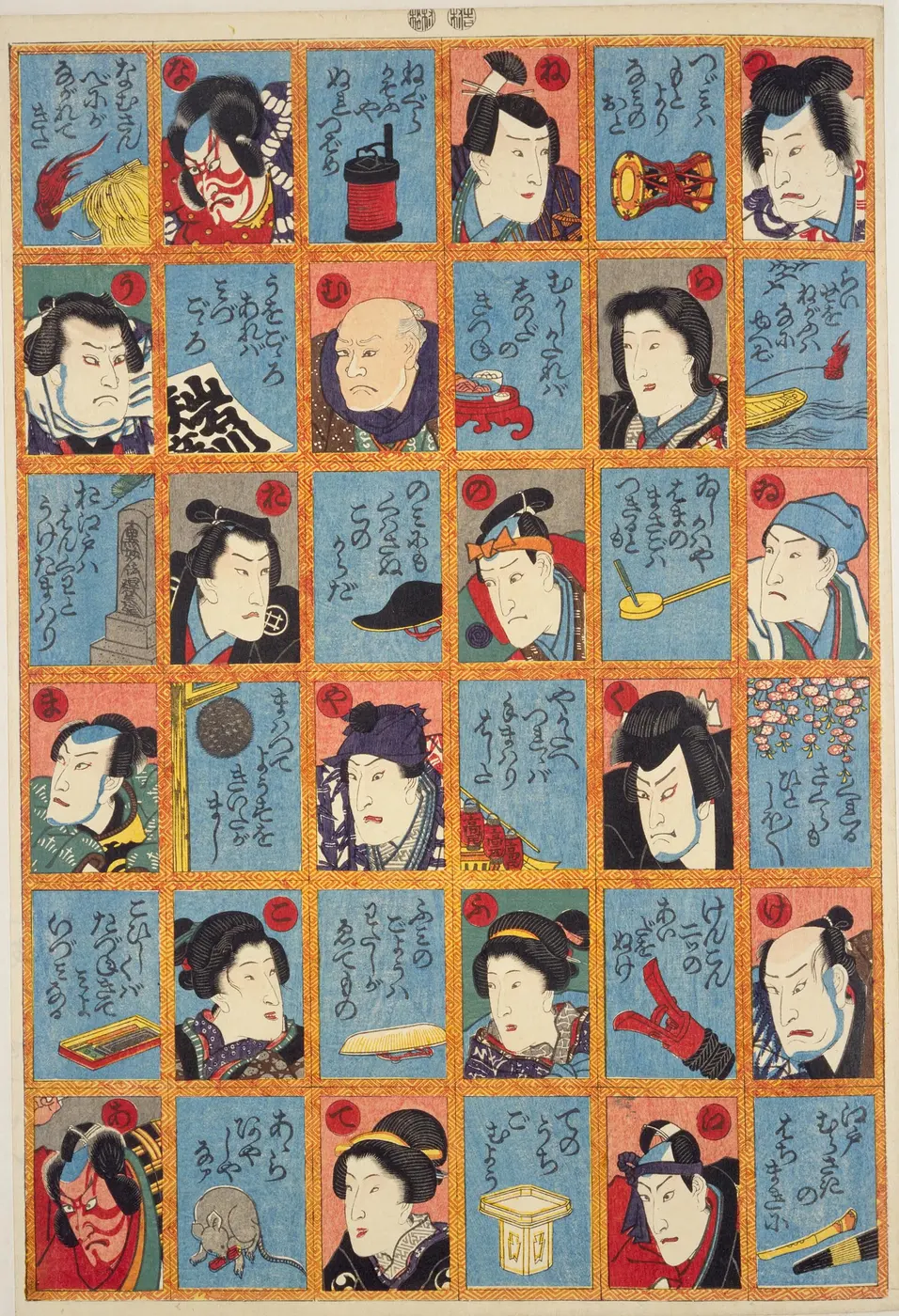

Whoever wrote it, the Iroha became deeply rooted in Japanese life. From the Middle Ages through the Edo period, “Iroha order” was widely used to arrange dictionary entries and to number things, much as we use ABC order, and children learned their kana by copying it out. In the Edo period came iroha karuta, a card game assigning a proverb to each kana, so children could learn their letters through play. Even the Japanese name for C major, ha-chōchō, uses ha, the third kana of the Iroha.