Does the word “emoji” come from “emotion”?
No. It comes from the Japanese emoji, made of e, “picture,” and moji, “character.” The resemblance to “emotion” is pure coincidence.
176
Every day, phones around the world send and receive a staggering number of emoji. The word has settled so comfortably into English that it is easy to forget it is a borrowing.
Look at the spelling, and it seems to point to “emotion.” Emoji are, after all, mostly about feelings. But the word did not grow out of English at all. It comes from Japanese.
Picture plus character
The Oxford English Dictionary added emoji in its December 2013 update. Its notes on the new entry explain that the word comes from the Japanese e, “picture,” and moji, “letter, character.” The similarity to “emoticon,” the dictionary observed, makes the word easy for English speakers to remember, but “the resemblance is entirely coincidental.” Emoticon, by contrast, really is English, formed from “emotion” and “icon.”
The Japanese word is much older than mobile phones. It originally meant pictographic writing, the kind of early script that records things with pictures, and Nipponica, a Japanese encyclopedia, describes it as a translation of the English “picture-writing.” According to the OED, the Japanese word was in use by 1928 at the latest.
Born on Japanese phones
Emoji in today’s sense, small pictures that each take up the space of a single character, spread from Japanese mobile phones in the 1990s.
According to Emojipedia, the online emoji reference, the carrier NTT DoCoMo added a heart symbol to its pagers in 1995. In November 1997, J-Phone (now SoftBank) released a handset with 90 emoji. It sold poorly, though, and its emoji could not be displayed on other phones, so they never caught on.
The real breakthrough came in 1999 with i-mode, DoCoMo’s mobile internet service. Shigetaka Kurita, who worked on the project, drew a set of 176 emoji, each on a tiny grid of 12 by 12 pixels. He later told BuzzFeed Japan that he had wanted something to soften the cold impression of digital communication. He also recalled how high school girls of the time used the heart symbol constantly on their pagers, something he called revolutionary.
Kurita has described emoji as a product of Japanese visual culture. He points to manga, with its rich vocabulary of symbols for feelings, and to pictograms, a style of design that took off in Japan with the 1964 Tokyo Olympics. With the services on i-mode in mind, his set also included weather symbols, the signs of the zodiac and sports.
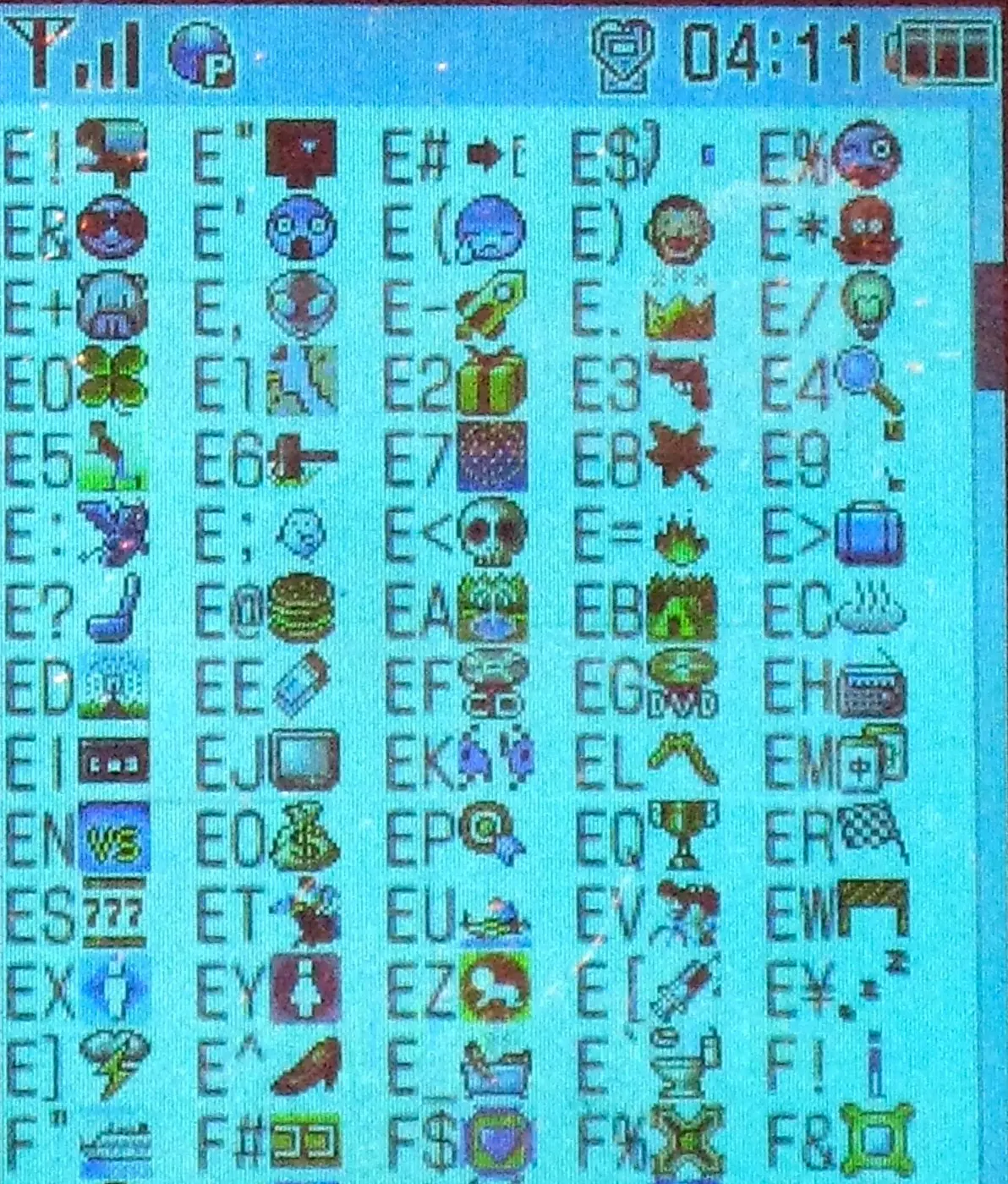

To the world, and the museum
Each Japanese carrier had its own set of emoji, and in time they were brought into Unicode, the international standard for encoding text. According to the Unicode Consortium’s technical report on emoji, following proposals from engineers at Google and Apple, a set of 722 characters was defined to cover the emoji used by all the Japanese carriers. Of these, 114 went into Unicode 5.2 in 2009, and the remaining 608 were added in Unicode 6.0 in 2010. From then on, emoji could travel between phones all over the world.
In October 2016 the Museum of Modern Art in New York announced that it had acquired DoCoMo’s original 176 emoji for its collection, recognizing them as a design that changed digital communication.
An emoji as word of the year
In November 2015, Oxford Dictionaries chose the “Face with Tears of Joy” emoji as its word of the year, the first time an emoji had been picked. It beat a shortlist of ordinary words that included “Brexit” and “refugee.” According to research by the keyboard app maker SwiftKey, it was the most used emoji in the world that year, making up 20 percent of all emoji used in the United Kingdom and 17 percent in the United States.


So a Japanese word built from “picture” and “character” made its way into the great dictionary of the English language, and then a picture took the title of word of the year. Its accidental likeness to “emotion” may well have helped it settle in so easily.