What did the Japanese word “dōmo” originally mean?
An adverb meaning “no matter how” or “somehow.” Clipped from phrases like “dōmo arigatō,” it became a greeting.
Someone holds the elevator door for you: “Ah, dōmo.” You run into an acquaintance you haven’t seen in ages: “Hey, dōmo, dōmo.” You accidentally step on someone’s foot: “Dōmo, sumimasen.” “Dōmo (どうも)” is one of the hardest-working words in Japanese.
Think about it, though, and it’s a little odd. Arigatō means thanks and sumimasen means sorry; each has a clear meaning. So what exactly is “dōmo” saying? To find out, let’s trace the word back through time.
“Dō” plus “mo”
“Dōmo” was formed by attaching the particle mo (“even,” “also”) to dō (“how”), as in dō kangaete mo, “no matter how you think about it.” It started out not as a greeting but as an adverb that modified other words.
One of its oldest uses is in the negative pattern dōmo … nai, meaning “however hard you try, it just won’t work.” It is still used that way today, as in nando yatte mo dōmo umaku ikanai, “no matter how many times I try, it somehow doesn’t work.” The Nihon Kokugo Daijiten, Japan’s largest historical dictionary, cites an example of “dōmo” in this sense from a kyōgen script—kyōgen being the comic theater performed alongside Noh—dating from around the late Muromachi to early Edo periods (roughly the late 16th to early 17th century).
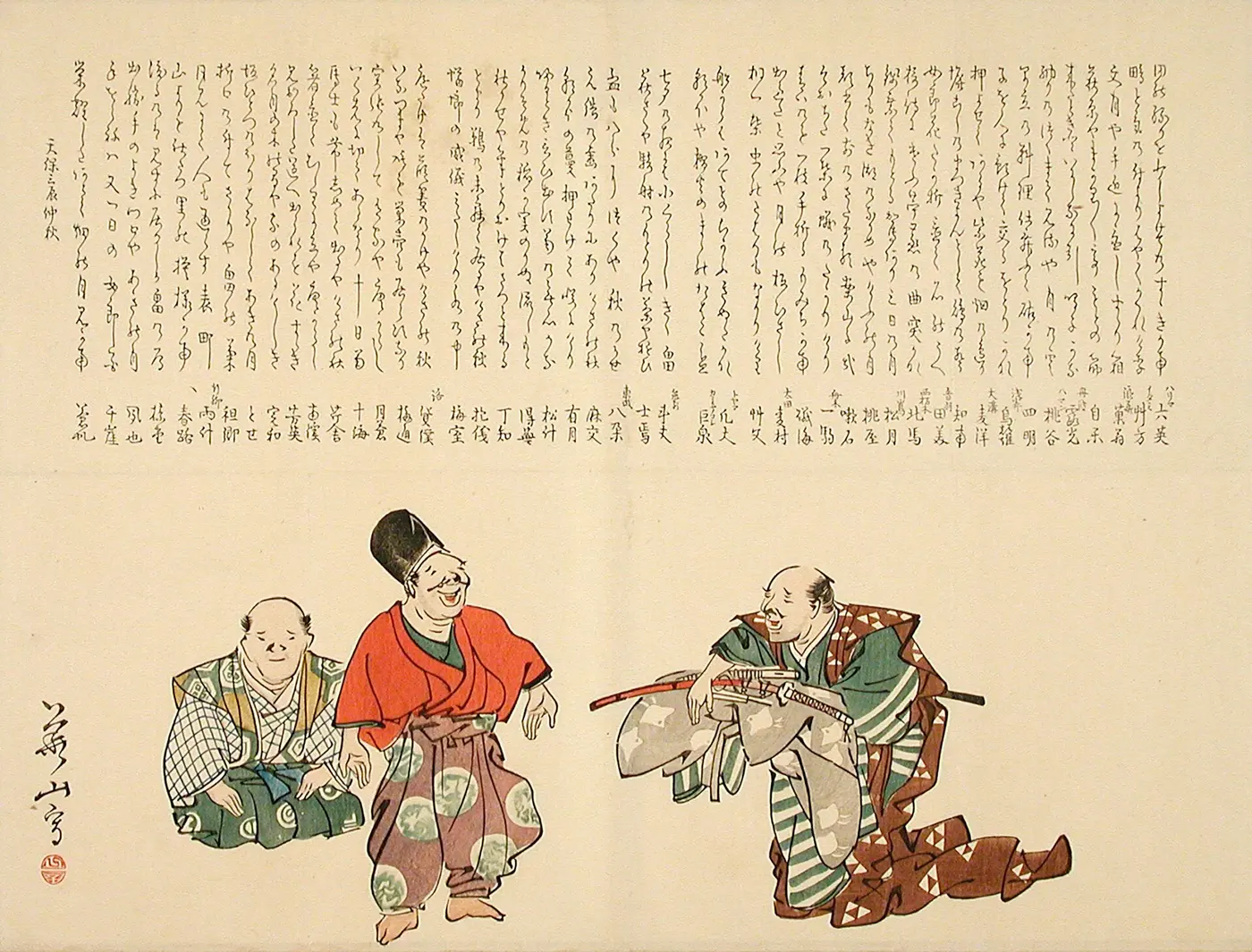

“Somehow” and “good grief”
In the Edo period (1603–1868), the uses of “dōmo” expanded considerably.
One was to express a feeling that words can’t quite capture, along the lines of “really” or “good grief.” An 18th-century book of comic tales contains the line dōmo nemui, “I’m just so sleepy,” and Shikitei Sanba’s comic novel Ukiyodoko (The Barbershop of the Floating World) features a “dōmo” full of exasperation.
Another was to express a vague guess, meaning “apparently” or “somehow.” This is the “dōmo” of dōmo ame ni narisō da, “it looks like it’s going to rain,” or dōmo chōshi ga okashii, “something seems off.” It already appears in “sentimental novels” (ninjōbon) of the late Edo period, and turns up in the Meiji-era fiction of Natsume Sōseki as well.
What all these uses share is the feeling of not being able to put something into words. However you think about it, however you say it, you can’t find quite the right expression. “Dōmo” was a word that carried that sense of frustration.
When “I don’t know how to say it” becomes thanks
This sense of the inexpressible eventually joined up with thanks and apologies. Dōmo arigatō conveys the feeling of “thank you so much that I don’t know how to put it.” Dōmo sumimasen works the same way: “I’m sorrier than words can say.”
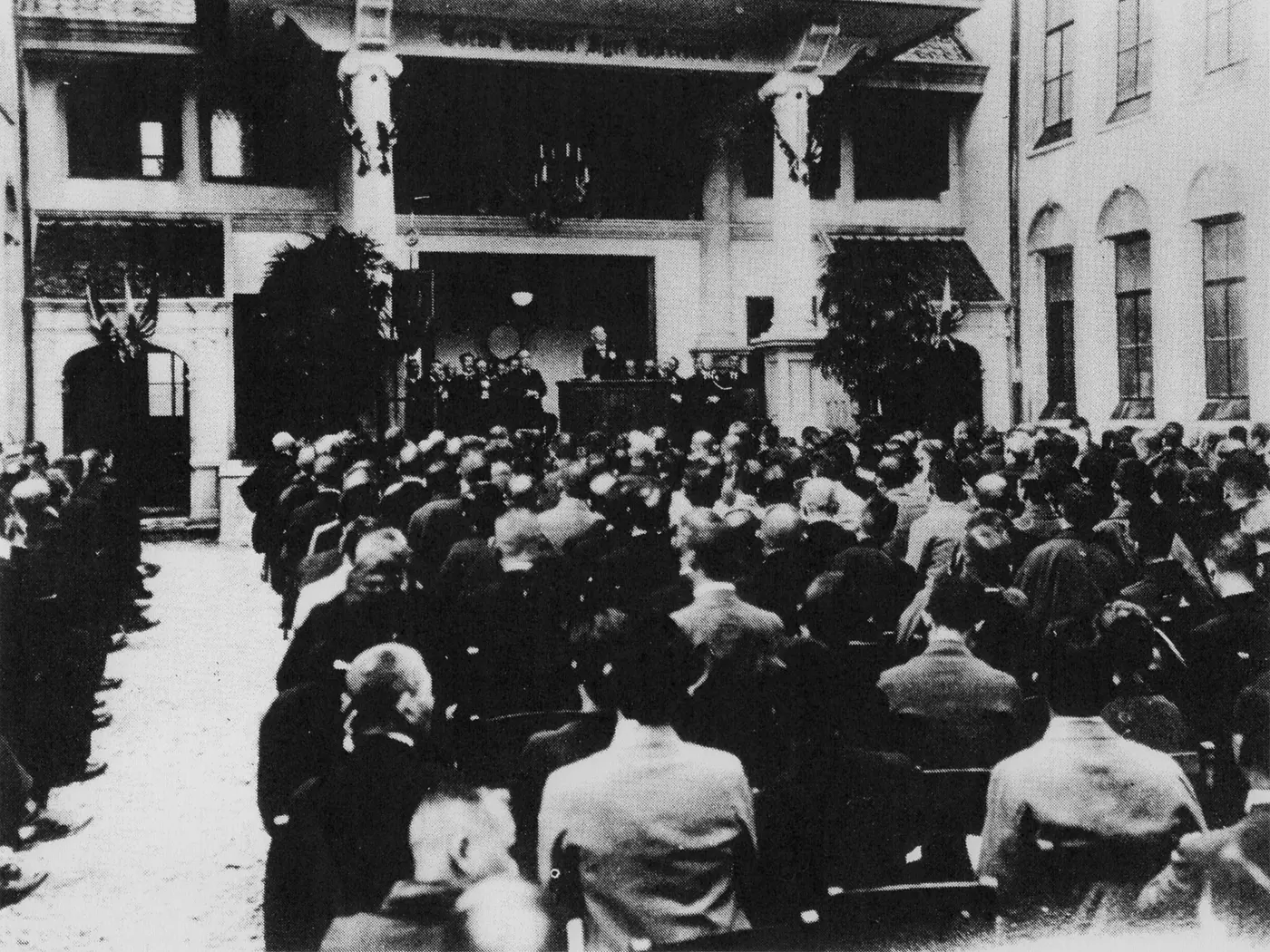
In Tsubouchi Shōyō’s novel Tōsei Shosei Katagi (The Character of Modern Students, 1885–86), there is a scene in which a character apologizes to someone he has kept waiting with “iya, dōmo.” By this time, “dōmo” as an intensifier attached to thanks and apologies seems to have been firmly established.

Cut short, it becomes a greeting
Here is where it gets interesting. People began to drop the arigatō from dōmo arigatō and the sumimasen from dōmo sumimasen, letting “dōmo” do the job on its own.
In Ozaki Kōyō’s novel Tajō Takon (1896), a character says senjitsu wa dōmo, “about the other day—dōmo.” Thank you for your help the other day? Sorry about the other day? The crucial part goes unsaid, and “dōmo” alone carries the feeling. So by the middle of the Meiji era (1868–1912), people were already using “dōmo” as a greeting much as they do today.
Thanks, apology, or simple hello? You don’t have to say; the situation and your expression make it clear. That is surely why “dōmo” became such a casual, handy little word. A word that once expressed what can’t be put into words gradually turned into a word that gets understood without being spelled out. Seen that way, the path “dōmo” has traveled has a certain charm.