Is the Japanese word “arubaito” German?
Yes. It comes from the German Arbeit (“work, labor”) and began as student slang before World War II.
“I’ve got baito today, so I’m heading off first.” Lines like this fly back and forth between Japanese students every day. Baito is short for arubaito (アルバイト), meaning a job you do on the side to earn money while studying or alongside your main work. It is so much a part of daily life that people rarely even think of it as a foreign word.
Most Japanese loanwords written in katakana come from English, but arubaito is different. Trace it back, and you arrive in Germany. What’s more, if you tell a German speaker you are doing “Arbeit,” they might not understand it the way a Japanese speaker would.
In German, Arbeit means work of all kinds
The source is the German word Arbeit. It means “labor,” “work” or “task”: a basic word covering every kind of working.
In German, Arbeit is also common in academia. Research and scholarly papers are called Arbeit too, and a doctoral dissertation is a Doktorarbeit. Japanese dictionaries likewise list “academic work” and “research achievements” as meanings of arubaito.
What Japanese means by the word, however—short-term work on the side of your studies or main job—would usually be called a Nebenjob (side job) or something similar in German. Japanese arubaito borrowed a German word and narrowed its meaning considerably.
Higher-school students and their German slang
So why German rather than English?
During the Meiji era (1868–1912), Japan eagerly studied many fields of learning from Germany, medicine above all. At the universities, and at the old-system higher schools (kyūsei kōtō gakkō) that prepared young people to enter them, German classes were given great weight, and German was a familiar foreign language to students.
Among those students, a distinctive way of talking with German mixed in took hold. Money was geru, from Geld; a meal was essen, from the German verb “to eat”; and a girl was metchen, from Mädchen. Japanese dictionaries note that geru and essen were student slang. Arubaito is thought to have come into use as part of this same trend.


From “labor” to “students’ side job”
According to the Nihon Kokugo Daijiten, Japan’s largest historical dictionary, arubaito first appears in a 1921 (Taishō 10) dictionary of new words, meaning simply “labor” or “work.” The earliest example it gives of the word meaning a student’s side job or extra work comes from a travel magazine article of 1934 (Shōwa 9). This suggests the meaning gradually shifted to the Japanese sense between the Taishō era (1912–1926) and the early Shōwa era.
Before the war, a student’s arubaito was something only certain struggling students did—young people who worked delivering newspapers, tutoring and the like to pay their tuition and living costs. Before that, such work was usually called naishoku, “side work.”
The word really took off right after World War II. As hardship forced more and more students to consider giving up their studies, universities and the government began helping students find work. Arubaito, a word with a somewhat modern, intellectual ring, is said to have caught on and settled into the language during that period.
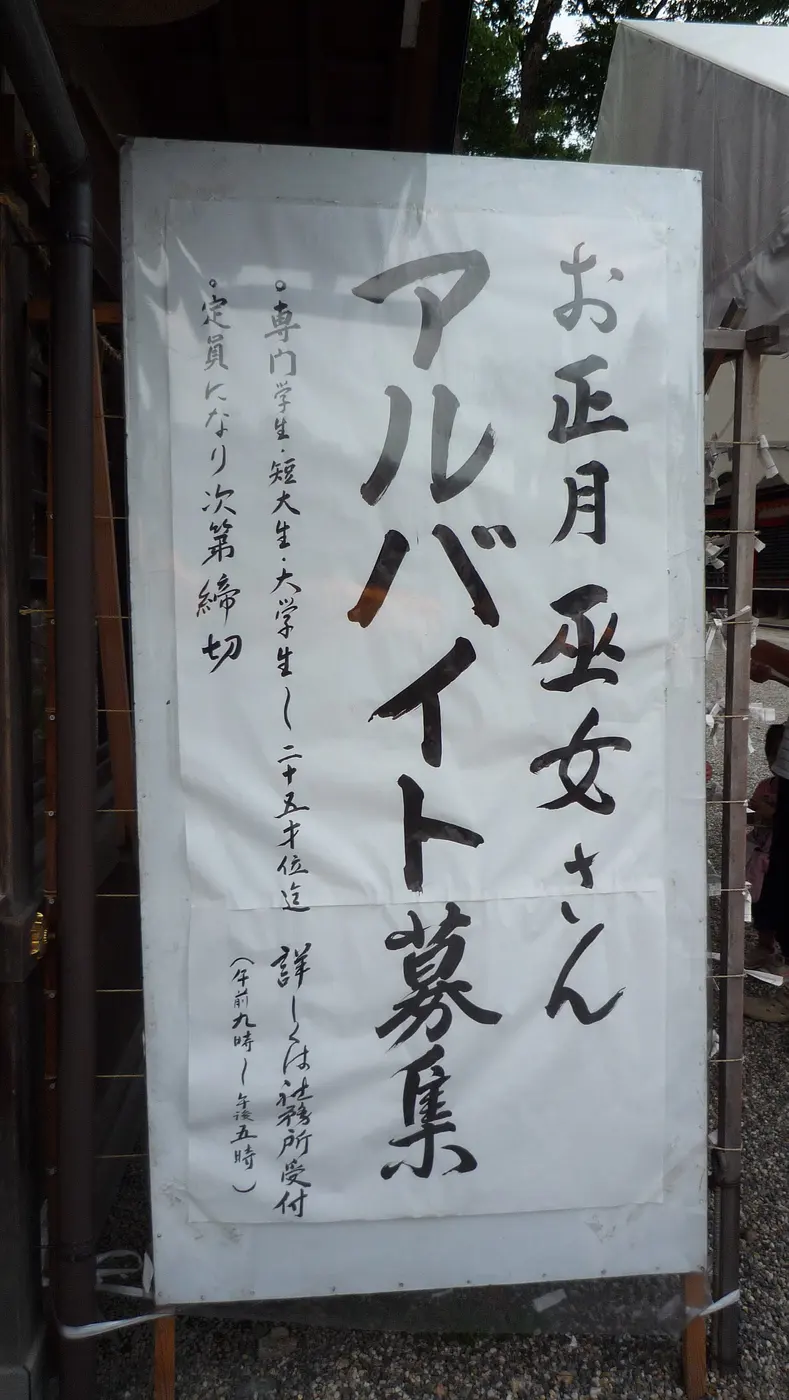

Later, as more people went on to university after Japan’s high-growth era, arubaito stopped being something only for struggling students. According to surveys by what was then the Ministry of Education, by the 1970s more than 80 percent of students were working part-time jobs. Today the word is used not only for students but also as a term for the employment status of people who work short hours.
Incidentally, the word is also used next door in South Korea, as areubaiteu (아르바이트), which young people shorten to alba (알바). It is said to have entered Korean by way of Japanese, and it’s amusing that the two languages clip it from opposite ends: Japanese keeps the end (baito), Korean keeps the beginning.