Can you really run across a pool of starch and water?
Yes. A thick mix of starch and water firms up for an instant when it is hit hard and suddenly, so if you keep running, you won’t sink.
Stir water little by little into a bowl of starch, using a bit more starch than water. What you get is a thick, white, runny liquid. Lower a finger into it slowly and it slides right in. But smack the surface with a spoon and it pushes back with a hard, almost solid click. Squeeze a handful and it forms a firm lump; open your hand and it oozes out between your fingers.
Is it a liquid or a solid? Fill a pool with it, and a person can run across the top. What on earth is going on?
A name borrowed from a picture book
In English-speaking countries, this mixture is usually made with cornstarch and goes by the nickname “oobleck.” The name comes from Bartholomew and the Oobleck, a 1949 picture book by Dr. Seuss.
In the story, a king grows tired of rain, sun, fog and snow, and orders his royal magicians to make something new fall from the sky. What comes down is oobleck: a green, gooey substance that gums up the palace bell and sticks the whole kingdom together. The book’s oobleck is a sticky green rain, rather different from the white kitchen mixture, but the strange name suited a strangely behaved liquid. The book was named a Caldecott Honor Book, a runner-up for America’s top picture-book award, in 1950.
In Japan, the usual ingredient is katakuriko, a starch sold for thickening sauces. It was originally extracted from the bulbs of the katakuri, a woodland lily, but most katakuriko sold today is actually potato starch.
Liquid when slow, solid when fast
Water and cooking oil have about the same thickness whether you stir them slowly or quickly. A thick starch suspension is different: the harder and more suddenly you push it, the thicker it becomes, and the change can be dramatic. This is called shear thickening. In Japan, the behavior is often referred to as “dilatancy.”
Strictly speaking, dilatancy is something a little different: the tendency of a tightly packed granular material, such as sand, to expand in volume when it is deformed. The British physicist Osborne Reynolds described it in a paper in 1885. Grains packed tightly together are interlocked, so before they can slide past one another, they have to move apart a little. The way wet sand at the water’s edge seems to dry and turn pale around your foot as you step on it is usually explained the same way: the grains under your foot spread apart, and water is drawn into the widened gaps.
A starch suspension is also crowded with tiny grains. Move it slowly, and the water between the grains acts like a lubricant, letting them slip past one another. Push it suddenly, though, and the grains are forced together before the water can get out of the way. They come into direct contact and lock together through friction. A computer simulation study published in 2013 showed that friction between the particles is essential for this sudden stiffening.
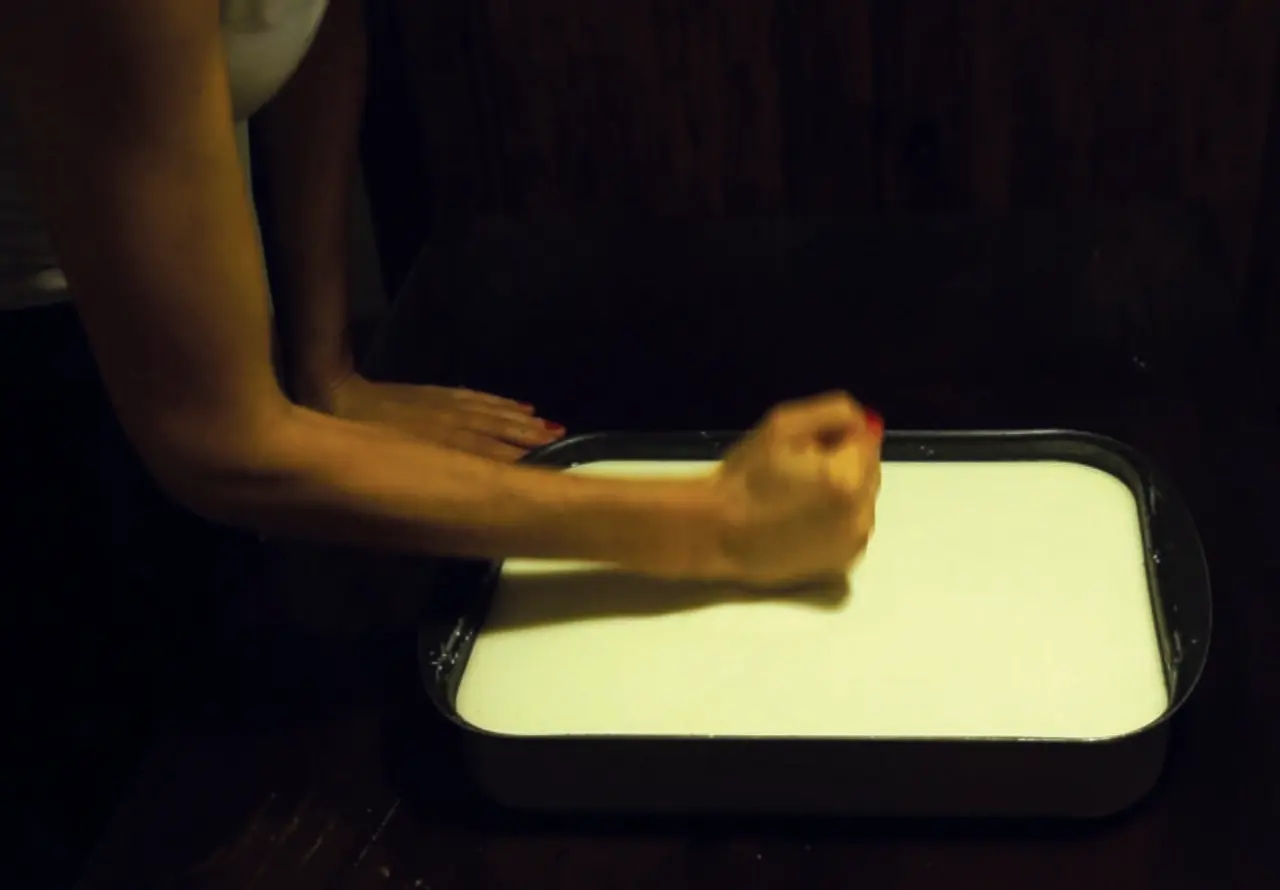

A traffic jam of grains
That still left a puzzle. Most earlier experiments had studied small samples being sheared, or slid sideways, continuously. The stiffness measured that way fell far short of explaining how a pool of the stuff could hold up a running adult.
In 2012, Scott Waitukaitis and Heinrich Jaeger of the University of Chicago reported an answer in the journal Nature. They drove a metal rod into a cornstarch suspension and tracked what happened inside it, using high-speed cameras running at 10,000 frames per second, X-rays and force sensors. The setup even included an industrial cement mixer. “It’s an incredibly messy experiment,” Waitukaitis said.
They found that a solid region of jammed grains formed directly beneath the rod and grew rapidly downward. The researchers compared it to pushing a shovel through loose snow: snow piles up in front of the blade and gets harder and harder to push. The stresses produced this way were about 100 times greater than the largest seen in the earlier shearing experiments.
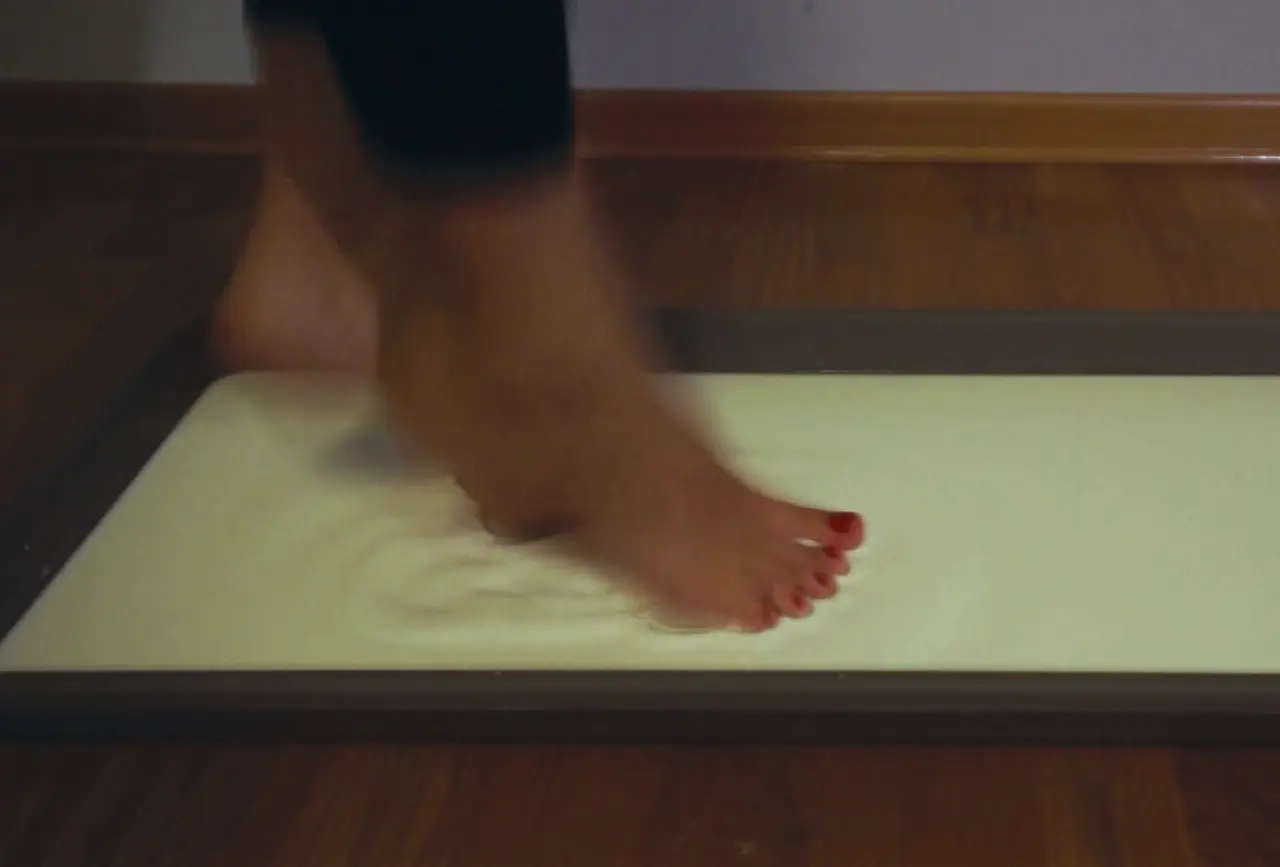

The same thing is thought to happen under a runner’s feet. Each time a foot strikes, a solid column forms beneath it for an instant and holds the runner up. But stop, and the jam of grains quickly loosens and the mixture turns back into a liquid. In a pool of oobleck, the moment you stand still, you start to sink.